


 Home
Home


ET AI Hackathon 2.0
Astrophysicist - As a career option
 0 min read
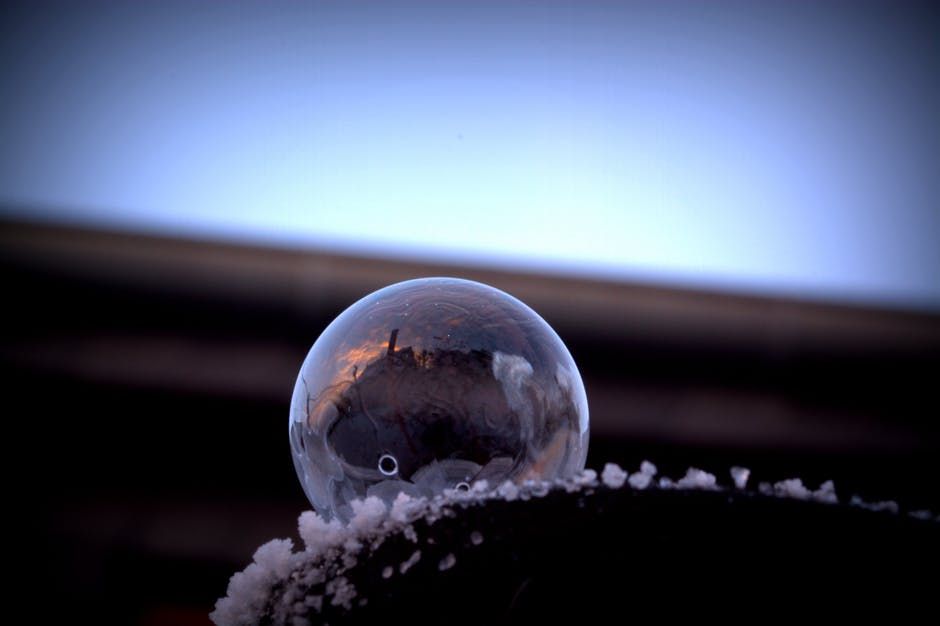
'To infinity… and beyond!” - Buzz Light year, Toy Story
In this infinite, expanding Universe, not much is definite. In the last century, so much has changed that the world of physics has been left reeling, and highly anticipate of the future of science. Looking up at the skies has always been an amazing source of knowledge - Newton’s gravity was heavily influenced by Kepler’s work on planetary orbits.
Copernicus’s heliocentric theory was met with so much scepticism from the church that he was jailed and considered an outcast! Today, the people who study the heavens are astrophysicists, and the career is considerably more rewarding,
Eligibility Criteria to Become An Astrophysicist
- +2: Students need to be from the Science stream and score an aggregate of 60%
- Bachelor’s Degree: Most universities that offer a basic Bachelor of Science degree in Physics allow for several electives like Astronomy and Astrophysics, Cosmology, and Satellite Theory that can tailor your education to astrophysics.
- There are also specialized programs, though rarer to find in India, that offer B.Sc's in Astronomy or Astrophysics alone.
- Master’s Degree: A Masters in Science in Astrophysics will be required for most teaching and consultancy jobs, while a PhD in related research fields will be expected to get into full-time academia or senior consulting.
In general, expect to study for a good 8-10 years in this field. Passion will be important.
What does an Astrophysicist work?
The job description of an astrophysicist can vary quite considerably. Theoretical astrophysicists study physical processes within our universe.
They often try to tackle questions like how the first black holes came into existence and how light behaves in the vicinity of different kinds of celestial superstructures.
On the other hand, observational astrophysicists usually work at a desk - they compare the results of intense mathematics and computer simulations with raw data in order to test theories and figure out reasonable explanations for different kinds of cosmological phenomena.
Astrophysicists also often teach undergraduate physics, design and deliver different courses, and introduce students to research.
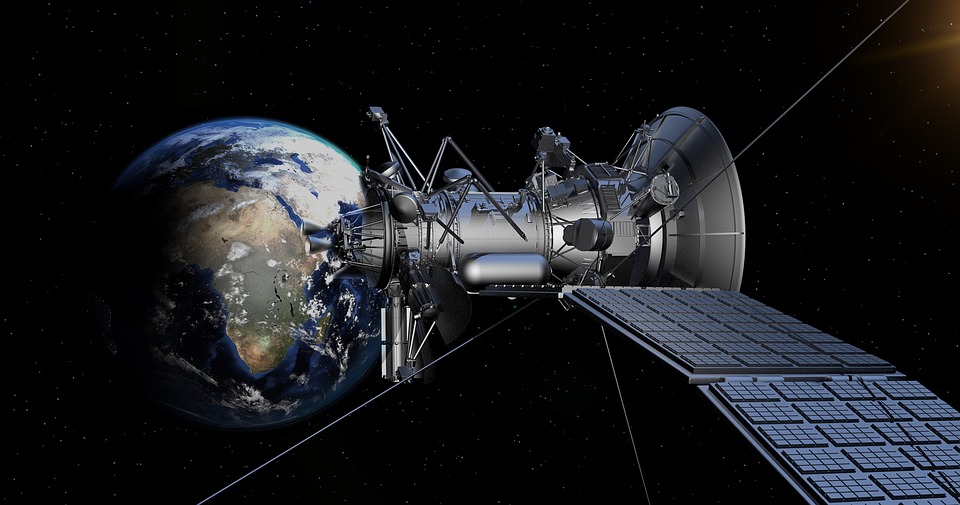
In any case, the bulk of an astrophysicist’s work involves using data analysis using computers, reading and writing research papers and attending conferences.
As with any niche field - there is not a huge demand for astrophysicists. While it’s possible to have a very lucrative career as one, it’s important that that isn’t the only driving factor.
As an astrophysicist, expect to have a rigorous education in celestial bodies, physics as well as topics you might have thought were slightly unrelated, like light and optics, as well as extensive mathematics.
Astrophysicists are usually hired in academia, space research and travel organisations, science centres, planetariums and government organisations.
Remember - your broad knowledge base and skill set as an astrophysicist will easily allow you to move into other rigorous fields like bioinformatics, data analysis, econometrics and even finance.
A Day in the Life of an Astrophysicist
Hi, I’m Ravi, and I work as an astrophysicist at a leading space organization. I completed a B.Sc and then an M.Sc in Physics with a focus on astrophysics, and am now pursuing my PhD with the support of my organization. Here’s what my day looks like.
7:30 AM: Wake up and breakfast quickly at the canteen. Our schedules are pretty tight as a result of having to monitor specific instruments at regular intervals.
I enter the lab where I’ve been appointed and make sure all the instruments are functioning properly - instruments that measure cosmic radiation are particularly sensitive, and sometimes, the entire night’s readings are useless because of interference or a miscalculation at some point in the night. Thankfully, all is well. This takes a good chunk of my time every day.

9:00 AM: I meet and discuss with my mentor about the status of the previous day’s readings. I report certain instruments that have been problematic, and we decide that the coming monthly maintenance check will be notified to address this specific issue.
Thereafter, we discuss the results we have both obtained for the curve fitting we were running on radiation from a rotating pulsar in our study of neutron star formation. I get to work on the code for this project. It often takes hours.
12:00 AM: I’m done with the image processing and data crunching code for our analysis. I run a few quick tests on corner cases (a blank white image, a perfectly black image), and everything seems to be running correctly. It’s time for a well-earned lunch break.
1:00 PM: Back to work. The hard part of being an astrophysicist is that while working with code is a part of your job, you’re not a software developer. Consequently, it’s not always easy to perform the practical aspects of the job.
In my case, I have to run this simple though calculation intensive code on nearly 15,000 images, which have been sorted into groups of between 15 and 45 on the basis of different parameters.
Some are images from different telescopes of the same star formation, while others are collections of photos across different points in time. The fact that our instruments don’t always provide reliable data means that the data isn’t evenly distributed in time or space.
Running the code on these images and storing the results in an organised way is going to take my constant supervision - and it’s simply not worth the effort to write an entire programmer just for this… or is it?
4:00 PM: Wow, I’m finally almost done. Just 3,000 images left. Guess that’ll have to wait for tomorrow. With an hour of working time left, it’s of utmost importance to back up the work for the day to a secure cloud server so it can be accessed by anybody else in the organisation, and also so it stays safe.
This is also a slow process. By 5 pm, I check all the instruments and lock up the lab and leave.

6:00 PM: I’m back in my room - time to work on my PhD project. Guess what - I’m working with a software engineer to design a convenient interface for calculations on image data from telescopes.
It’s a hugely complex project, and I have to collect data from multiple individual researchers about the kinds of code they need to run, the different categories of input as well as the metadata.
I document my code for the project and add some notes to the log on the online repository Github that I’m using to build it.
8:00 PM: That’s enough work for the day. Time for recreational activities. The nights are for socializing (usually in our relatively closed researcher circles) and for playing cards, and of course, for the occasional jog or run. I’ve been trying to exercise (nights turn into days as a researcher without you realizing!) but I decided to give it a pass today.
11:00 PM: After a few hours of enjoyment, it’s time to retire. I skim through a couple of research papers I’ve been meaning to read and put out the lights. It’s a demanding but disciplined life, and my work pushes the frontiers of science forward.
Did you find Astrophysicist's profession interesting? Are you planning to pursue it? Still confused? We hope that this article proved to be a fruitful one for you. Have your say in the comment box below. Enjoy Reading!
Login to continue reading
And access exclusive content, personalized recommendations, and career-boosting opportunities.
Don't have an account? Sign up

Never miss an
Update

Featured Opportunities

Top-Rated Practice by Students






Subscribe
to our newsletter





Comments
Add comment