



Unstop Pizza Internship
Automobile
 0 min read
Market Trends
- The size of the automobile industry in India stands at $118Bn currently and is expected to grow at a CAGR of 17% to reach $300Bn by 2026, showcasing an increasing curve after the covid crisis
- India became the 4th largest automaker in the world by overcoming Germany and is expected to displace Japan to become the 3rd largest in 2021
- The automobile industry in India accounts for 7.1% of India’s GDP with a share of 4.% in total exports
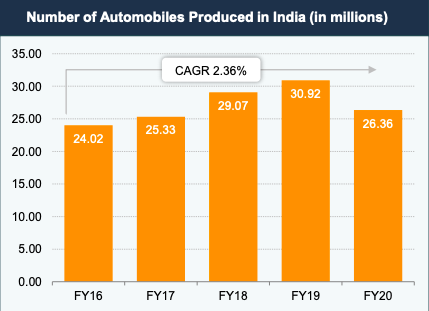
- Domestic production of automobiles in India churned out 26.36 million units in FY20 and grew at a CAGR of 2.36% between FY16-FY20
- On the other hand, domestic sales grew at a CAGR of 1.29% between FY16 and FY20 with 21.55 millions vehicles sold in FY20
- The auto industry in India is expected to record strong growth in 2020-2021, recovering from the effects of Covid 19 pandemic. The Electric vehicle's market is expected to grow at a CAGR of 36% till 2026

Market Size
Market Segments
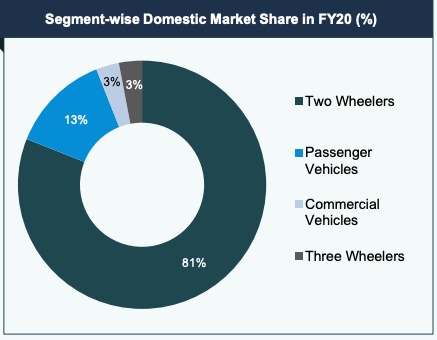
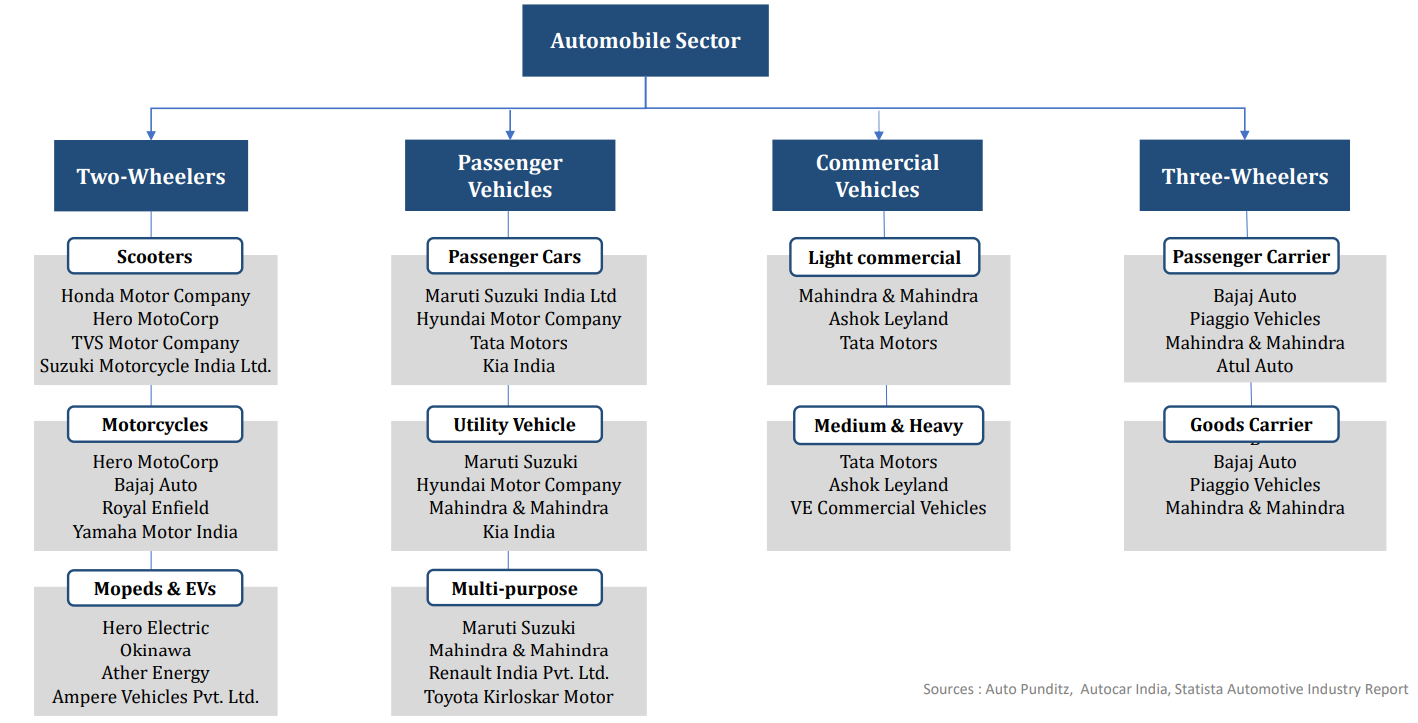
Two-wheelers and passenger vehicles dominate the auto market in India, accounting for 80.8% and 12.9% market share respectively
Passenger Vehicles- In FY20, passenger vehicles production, domestic sales and exports stood at 34,34,013; 27,73,575 and 6,77,211 respectively
Commercial Vehicles- In FY20, commercial vehicles production, domestic sales and exports stood at 7,52,022; 7,17,688 and 60,713 respectively
Two Wheelers- Hero Motocorp and Honda Motorcycles and Scooter lead the market with 36% and 27% market share respectively
Three Wheelers- Bajaj Auto is the market leader in the passenger vehicles segment whereas Piaggio leads the commercial three-wheeler market
Major Players
Government Policies
1. Automotive Mission Plan 2016-26
- The plan outlines the trajectory of growth of the automotive ecosystem in India
- The industry has the potential to generate USD 300 Bn revenue and 65 mn additional jobs by 2026, 12% contribution to GDP
- The plan also foresees India to be the first in the world in the production/sale of small cars, two-wheelers and three-wheelers, tractors, and buses
2. Draft National Automotive Policy 2018
- The policy estimates to scale up exports to 35-40% of the overall output making India a major automotive hub in the world
- Rollout CAFE norms till 2025
- Adopt a long term roadmap for emissions standards beyond BS VI and complement the same with the global standards by 2028
3. National Electric Mobility Mission Plan 2020
- The NEMMP initiative has been taken up to encourage consistent, affordable and competent xEVs
- The aim is to have 6Mn electric and hybrid vehicles per year on the road by the end of 2020
- India is expected to emerge as a leader in the two-wheeler and four-wheeler xEV market in the world by 2020. The total xEV sales projected as 6-7 mn units
4. Production Linked Incentive (PLI) Scheme
- In November 2020, the government approved PLI scheme in 10 sectors, including automobile and auto parts to boost India’s capabilities in manufacturing and exports
- The Union cabinet approved a financial outlay of $7.7 Bn for automobiles and auto parts
Growth Drivers
1. Policy Support
- Initiatives like Make in India, Automotive Mission Plan 2026 and NEMMP will give a huge boost to the sector
- Introduction of voluntary vehicle scrappage policy will boost demand for new vehicles
- Installation of electric vehicle supply equipment infrastructure for EVs
2. Growing Demand
- Rising income and a growing young population
- Availability of affordable credit
- Increase in demand for commercial vehicles with growing activity in the infrastructure sector
3. Investment
- From 2000 to 2020, 4.7% of the total FDI went into the automotive sector
- In October 2020, Japan Bank for International Cooperation agreed to provide $1Bn to State Bank of India for funding the manufacturing and sales of Japanese manufacturers
Broad Competitive focus
While consumers are seeking ways to reduce time spent in acquisition mode or to support routine maintenance, the modern vehicle buyer is also interested in immersive, high touch experiences while purchasing a car.
QCDF analysis of customers preferences in the banking industry are given below hierarchically:
- Convenience/Delivery (D) – Consumers are most interested in changes that will reduce unwanted friction in the vehicle buying and service experience - changes that will make their lives easier. The option of purchasing a new or second-hand vehicle, ease of access to dealerships and timely delivery of vehicle continue to be primary reason for driving purchase
- Personalization/Flexibility(F) – Automobiles depend heavily on consumer trends. They want their experience to be convenient, personalized and easy, based on their preferences and schedule. Consumers are looking for ways to immerse themselves in product details without the help of a sales representative
- Value/Quality (Q) – The preference is characterized by the distinctiveness of an individual’s expectations, for multiple options, the heavy tendency of abandoning brand loyalty and switching towards competitor brands that provide higher value. Comfort and performance are two important areas which are important with regard to their purchase decisions
- Cost (C) – While customers are very price-sensitive, there is an impact on the income of the customers, which is directly proportional to the price of the car. Customers are giving priority to the offers and benefits while taking the purchase decision
Porter’s Five Forces Analysis
Trends
Technology
- Scrapping Policy in India: The auto sector is expected to revive with the introduction of a scrappage policy in 2021, where consumers will be incentivized to exchange their old cars for new ones
- Rising Connectivity in cars: Although still in development, many automakers have started providing internet-powered connectivity features. This trend is expected to pick up over the years
- Innovation Ecosystem: Investments in innovation-centric mobility startups have amounted to $45 Bn in 2020
- Increased Partnerships and Collaborations: The pandemic has triggered a greater focus on partnerships in the Autonomous, Connected, Electric and Shared categories with 420 OEM collaborations in 2020 itself
- Emerging Technologies: Tech like urban air mobility, 5G, quantum computing etc are expected to impact the transformation of the industry
Impact of COVID-19
- Demand for personal vehicles – The pandemic has forced people to prefer personal mode of transport over public transport. This is expected to increase the demand for passenger vehicles post the pandemic
- Spurt in demand for used cars – Due to uncertainty around personal finance, the demand for used cars has gone up significantly
- Greater emphasis on health – Consumers now prioritize safety and health above everything else, therefore changing spending habits and mobility habits
- Micro mobility on the rise – Shared micro-mobility is expected to grow up by 3 percentage points and the usage of cycles by 5 percentage points
- Shift in Purchasing Habits – Consumers now prefer to purchase cars online, owing to health concerns and government regulations
Emerging Trends
- E-mobility: This includes battery-operated and hybrid vehicles, fuel cells, range extenders etc. By providing a wide array of products and services, the OEMs will begin to frame basic standards of autonomous driving and e-mobility and integrated mobility
- Rise of Sharing Economy: Due to an increase in the usage of the car and ride-sharing apps, investing in mobility platforms will help automobile companies make up for the possible loss in sales due to the trend. Companies are making sure to make dent in this market with the help of a customer-friendly app and strong brand presence
- Manufacturing 4.0: Improvement in the manufacturing process with extensive usage of technology, smart factories, advanced robotics, voice mechanisms and socially responsible workforce to increase efficiency and product quality
- Change in supplier condition: Due to the dynamic nature of market disruptions, suppliers are facing issues with liquidity and sometimes forced to shut shop
- Electrification of Public Transport: The current share of electrified vehicles in the public bus category exceeds that of passenger vehicles. Public transport is expected to lead the transformation to vehicle electrification
- Sustainability and Electric Vehicles: The current stock of electric cars in the world stands at 10.2 Mn, the number that is expected to reach 51 Mn in 2025 and 144 Mn in 2030, on a global level
- Strategic Long term Decisions: Auto companies may have to shift resources from R&D of advanced tech initiatives and other projects to the continued upkeep of their operations. They may decide on exiting unprofitable markets as well
- Contraction in Consumer Demand: The current work-from-home scenario of customers across the world might trigger a recession coupled with a loss of consumer confidence in the automobile sector
Recent Developments
- Setting up new NATRIP centers by the government to help India emerge as the new global R&D hub
- In January 2021, Tesla set up an R&D center in Bengaluru and registered its subsidiary as Tesla India Motors and Energy Private Limited
- Mahindra & Mahindra targeting to implement digital technology in business
- Hyundai Motor India set to enter hybrid and alternative fuel technology segment
- In 2019, Nissan Motor Company received a patent for wireless charging of EVs in India
- GM, Nissan, and Toyota announced their plans to make India their global hub for small cars
Login to continue reading
And access exclusive content, personalized recommendations, and career-boosting opportunities.
Don't have an account? Sign up

Never miss an
Update


Top-Rated Practice by Students






Subscribe
to our newsletter


Comments
Add comment