


 Home
Home


HP Power Lab 3.0
Table of content:
- Who is a Design Engineer?
- Types of Design Engineering Specializations
- Roles & Responsibilities of a Design Engineer
- How to Build a Career as Design Engineer
- Key Skills for a Successful Design Engineer Career
- Design Engineer Salary in India
- Design Engineer Salary in India
- Key Locations/Hiring Hubs for Design Engineering Jobs
- Alternative Career Options for Design Engineers
- Work Environment for Design Engineers
- Conclusion
- Frequently Asked Questions

Design Engineer Career: How To Become One, Skills, Salary, & More
Design engineering blends creativity and tech to build real-world solutions. Learn about job roles, industries, skills, salaries, and how to start your career.
 0 min read
A career in design engineering blends creativity with technical skills to build innovative products, systems, and solutions. From designing wind turbine blades to smart electronics and user-friendly apps, design engineers work at the intersection of function and innovation.
In this guide, you'll discover how to build a career as a design engineer, including who they are, the types of roles available, skills required, how to become one, salary insights, career growth, and more.
Who is a Design Engineer?
A design engineer is a professional who uses both creative thinking and technical expertise to plan, design, test, and improve products or systems. They often use CAD (Computer-Aided Design) software to create 3D models and simulate real-world performance.
Design engineers play key roles in sectors like:
- Automotive (car parts, safety systems)
- Construction (structures, utilities)
- Electronics (circuit boards, sensors)
- Software (interfaces, user experience)
- Energy (wind turbine blades, power systems)
They collaborate with different teams to ensure designs are cost-effective, functional, manufacturable, and aligned with client needs. This career is ideal for those who enjoy both problem-solving and design.
Types of Design Engineering Specializations
Depending on your interest and background, you can explore different branches of design engineering:
- Chemical Design Engineering: Designs equipment and systems for chemical processing in industries like pharma, food, and energy.
- Civil Design Engineering: Works on infrastructure projects (bridges, roads, buildings), ensuring safety, cost-efficiency, and structural integrity.
- Electrical Design Engineering: Creates electrical systems for buildings and machinery, focusing on wiring, circuits, and power efficiency.
- Electronic Design Engineering: Designs electronic components such as sensors, circuit boards, and microchips used in consumer and industrial electronics.
- Mechanical Design Engineering: Focuses on machines and tools in industries like automotive, aerospace, and manufacturing.
- Product/Industrial Design Engineering: Designs everyday products with a focus on aesthetics, usability, and manufacturing efficiency.
- Software Design Engineering: Plans software architecture and UI/UX for applications, focusing on how users interact with digital tools.
- Graphic Design: Creates visuals for digital and print media. While not strictly engineering, graphic designers often collaborate with product and software designers.
- Product Designer: Combines form and function, often overlapping industrial design and UI/UX to create user-friendly products.
Roles & Responsibilities of a Design Engineer
Design engineers manage every stage of product creation—from ideation to prototyping and final testing. Their responsibilities include:
- Understanding client requirements and project goals
- Researching and improving existing designs
- Explaining complex technical concepts clearly
- Creating concept sketches and CAD models
- Selecting materials and defining manufacturing processes
- Performing calculations to ensure safety and feasibility
- Building and testing prototypes
- Writing technical documentation and reports
- Managing project timelines, budgets, and teams
- Collaborating with engineers, designers, and production teams
- Adapting designs based on test results and feedback
How to Build a Career as Design Engineer
1. Choose the Right Subjects in School
Focus on subjects like mathematics, physics, and design or drawing in your senior secondary education. These subjects help you build a strong base in technical thinking and creativity, which are important for design engineering.
2. Clear Entrance Exams
After your schooling, the next step to building a career as a design engineer is to get admission to a college. For this, you must take entrance exams like:
- JEE Main/Advanced – for engineering courses
- UCEED, NID DAT, NIFT – for design-focused courses
3. Earn a Relevant Bachelor’s Degree
Pursue a B.Tech/B.E. in:
- Mechanical, Civil, or Electrical Engineering
- Product or Industrial Design
Coursework typically includes CAD, materials science, manufacturing, and product development.
4. Consider a Master’s Degree (Optional)
To specialize further, pursue M.Tech or M.Des in areas like:
- Product Design
- Automotive Design
- Structural Engineering
Most institutes require:
- A relevant bachelor’s degree
- 60%+ marks
- Entrance exams and/or interviews
5. Learn Design Software
Master tools like:
- AutoCAD, SolidWorks, CATIA – for 3D modeling
- Adobe Photoshop, Illustrator – for visual design
6. Gain Practical Experience
- Do internships and live projects
- Participate in design competitions
- Volunteer with engineering clubs
7. Build a Strong Portfolio
Showcase your best work—concepts, designs, prototypes, and final outcomes.
8. Get Certified
Certifications in CAD or software tools add credibility. Examples:
- Autodesk Certified Professional
- Dassault Systemes (SolidWorks)
9. Apply for Jobs or Apprenticeships
Start as a junior engineer or join apprenticeships to learn on the job.
10. Stay Updated
Join professional bodies like the Institution of Engineering Designers (IED) and keep learning through workshops or courses.
Key Skills for a Successful Design Engineer Career
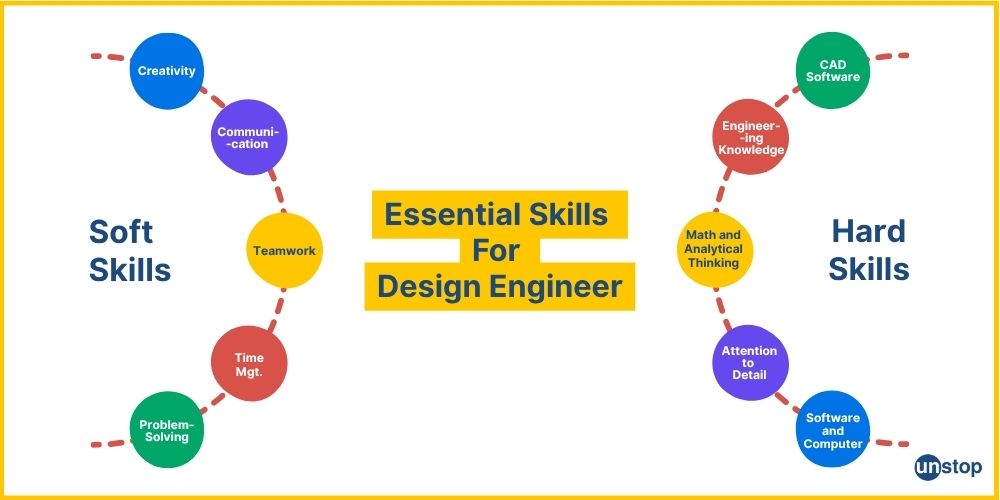
Design engineers need both technical and soft skills. Important ones include:
Soft Skills for Design Engineers
- Creativity: Design engineers often face unique problems and need to think of smart, new ways to solve them. Creativity helps them design new products or improve existing ones. It also helps in thinking outside the box when standard methods don’t work.
- Communication Skills: A design engineer must be able to explain their ideas clearly to others. They need to talk with team members, clients, and people from different departments (like marketing or production). Good communication helps everyone stay on the same page.
- Teamwork: Design engineers often work in teams with other engineers, designers, technicians, and managers. Being able to listen, share ideas, and work together helps the project run smoothly.
- Time Management: There are often deadlines in engineering projects. Design engineers need to plan their work, set priorities, and finish tasks on time. Good time management helps them avoid delays and handle multiple responsibilities.
- Problem-Solving Skills: Design engineers often face technical issues or unexpected challenges. They must find the root of the problem, think of possible solutions, test them, and choose the best one. This skill is important at every stage of a project.
Technical Skills for Design Engineers
- CAD (Computer-Aided Design) Software: Design engineers must be proficient in tools like AutoCAD, SolidWorks, or CATIA to make detailed drawings and 3D models of their designs.
- Engineering Knowledge: They must understand the basics of mechanical, electrical, and material engineering. This includes knowing how machines work, how different materials behave, and how products are made in factories.
- Math and Analytical Thinking: Design engineers use math every day to measure, calculate, and analyze their work. They need to understand geometry, algebra, and sometimes calculus to make sure their designs are correct and safe.
- Attention to Detail: Small mistakes in design can result in big problems, especially when it comes to unit of measurement. This is why attention to detail is essential for a successful career as design engineer.
- Software and Computer Skills: Besides CAD tools, design engineers may also use simulation software, spreadsheets, and project management tools. Being confident with computers and learning new software quickly is very useful in this field.
Design Engineer Salary in India
Design engineers need both technical and soft skills. Important ones include:
Soft Skills for Design Engineers
- Creativity - Design engineers often face unique problems and need to think of smart, new ways to solve them. Creativity helps them design new products or improve existing ones. It also helps in thinking outside the box when standard methods don’t work.
- Communication Skills - A design engineer must be able to explain their ideas clearly to others. They need to talk with team members, clients, and people from different departments (like marketing or production). Good communication helps everyone stay on the same page.
- Teamwork - Design engineers rarely work alone. They often work in teams with other engineers, designers, technicians, and managers. Being able to listen, share ideas, and work together helps the project run smoothly.
- Time Management - There are often deadlines in engineering projects. Design engineers need to plan their work, set priorities, and finish tasks on time. Good time management helps them avoid delays and handle multiple responsibilities.
- Problem-Solving Skills - Design engineers often face technical issues or unexpected challenges. They must find the root of the problem, think of possible solutions, test them, and choose the best one. This skill is important at every stage of a project.
Technical Skills for Design Engineers
- CAD (Computer-Aided Design) Software - Design engineers use tools like AutoCAD, SolidWorks, or CATIA to make detailed drawings and 3D models of their designs. These tools help them check how the product will look and work before it’s built.
- Engineering Knowledge - They must understand the basics of mechanical, electrical, and material engineering. This includes knowing how machines work, how different materials behave, and how products are made in factories.
- Math and Analytical Thinking - Design engineers use math every day to measure, calculate, and analyze their work. They need to understand geometry, algebra, and sometimes calculus to make sure their designs are correct and safe.
- Attention to Detail - Small mistakes in design can cause big problems later. That’s why design engineers must check their work carefully. They need to make sure all measurements are right and the design meets all the requirements.
- Software and Computer Skills - Besides CAD tools, design engineers may also use simulation software, spreadsheets, and project management tools. Being confident with computers and learning new software quickly is very useful in this field.
Design Engineer Salary in India
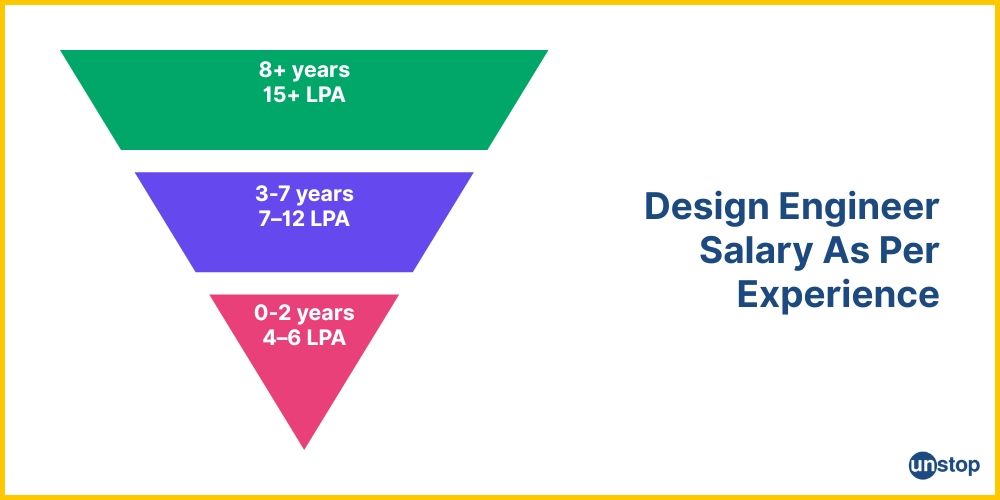
The salary of a design engineer depends on experience, skills, and location.
- Entry-Level (0–2 years): Freshers or engineers with less than 2 years of experience usually earn around INR 4 to 6 LPA. These roles include tasks like creating basic designs, learning design software, and assisting senior engineers.
- Mid-Level (3–7 years): With more experience, design engineers can earn about INR 7 to 12 LPA. At this stage, they handle complete design projects, lead small teams, and work closely with production or testing departments.
- Senior-Level (8+ years): Experienced professionals can earn INR 15 LPA or more per year. They often lead large projects, manage design teams, work with clients, and make important technical decisions.
Note: Salaries are higher in metro cities and specialized sectors like aerospace or product design.
Key Locations/Hiring Hubs for Design Engineering Jobs
Some of the top cities and industries hiring design engineers include:
- India: Bengaluru, Pune, and Chennai are popular cities for design and engineering companies, especially in IT, automotive, and manufacturing.
- United States: San Jose, Detroit, and Houston are known for technology, automobile, and product development industries.
- Europe: Germany, the United Kingdom, and Sweden are leaders in mechanical, automotive, and industrial design engineering.
- Asia-Pacific: Japan, South Korea, and Singapore are known for innovation in electronics, robotics, and product design.
Alternative Career Options for Design Engineers
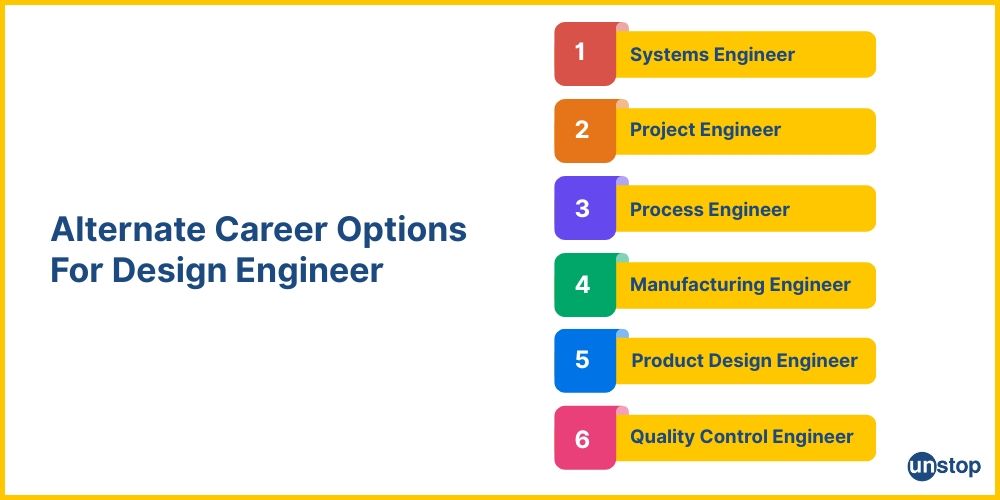
If you're interested in design but want to try something different, you can explore:
- Systems Engineer: Plans and builds complex systems combining hardware and software. Ensures smooth operation and solves technical problems.
- Project Engineer: Manages technical projects from start to finish, handling planning, scheduling, budgeting, and team coordination.
- Process Engineer: Improves how products are made by optimizing manufacturing steps for speed, safety, and cost-effectiveness.
- Manufacturing Engineer: Designs systems and tools used in factories to produce high-quality products efficiently.
- Product Design Engineer: Creates new products or improves existing ones using a mix of creative and technical skills.
- Quality Control Engineer: Checks products during and after manufacturing to ensure they meet standards; identifies defects and suggests improvements.
Work Environment for Design Engineers
Design engineers can work in various settings depending on their industry. Common work environments include:
- Construction and Architecture Firms: Help design buildings, structures, and construction systems.
- Engineering and Design Consultancies: Provide solutions, create new designs, and improve existing systems for clients.
- Pharmaceutical and Medical Equipment Companies: Design tools, machines, and systems for hospitals and labs.
- Power and Utility Companies: Work on systems that produce and distribute electricity, water, or gas.
- Aerospace and Aeronautical Firms: Design aircraft, spacecraft, and their components.
- Electronics and Consumer Goods Industries: Improve everyday items like phones, appliances, and gadgets.
- Automotive Companies: Design car parts, engines, and safety systems.
- Computer Hardware Companies: Create physical computer components like chips and motherboards.
- Home Goods Manufacturers: Design furniture, kitchen tools, and household items.
- Research Institutions: Develop new technologies and improve existing designs through R&D.
Conclusion
Design engineering is an excellent career for those who enjoy being creative and solving problems using technology. Design engineers work across industries like construction, electronics, software, and manufacturing—turning ideas into real products that are useful, safe, and efficient.
To become a design engineer, you'll need a strong foundation in science and engineering, proficiency in design software, and essential soft skills like communication, teamwork, and time management.
Whether you're designing a car, a mobile app, or a building, being a design engineer means making a real-world impact. If you love creating and improving things, this career could be the perfect fit for you!
Frequently Asked Questions
Q1. What does a design engineer do?
A design engineer creates and improves products or systems using engineering and design skills. They turn ideas into real things like machines, tools, apps, or buildings.
Q2. What skills do I need to become a design engineer?
You need technical skills (like math, CAD software, and problem-solving) and soft skills (like communication, teamwork, and creativity).
Q3. What degree is required for design engineering?
Most design engineers have a bachelor’s degree in engineering—mechanical, civil, electrical, or software engineering.
Q4. In which fields can design engineers work?
Design engineers can work in construction, electronics, software development, automotive, manufacturing, and more.
Q5. Is design engineering a good career?
Yes, it’s a great career if you enjoy solving problems, being creative, and working with technology. It also offers strong job prospects and career growth.
This article was contributed by Lovely Mahour, Unstop Campus Ambassador.
Suggested reads:
Login to continue reading
And access exclusive content, personalized recommendations, and career-boosting opportunities.
Don't have an account? Sign up

Never miss an
Update





Top-Rated Practice by Students






Subscribe
to our newsletter







Comments
Add comment