


 Home
Home


HP Power Lab 3.0
Table of content:
- What Is Fashion Designing?
- What Do Fashion Designers Do?
- How To Become A Fashion Designer?
- Skills Required For A Successful Career As Fashion Designer
- Salary In Fashion Designing By Experience
- Hiring Hubs/Hotspots For Fashion Designers
- Alternative Career Options In Fashion Design
- Future Of Fashion Designing
- Conclusion
- Frequently Asked Questions

Fashion Designer Career Guide | Education Path, Skills, & More
Do you dream of creating stylish clothes, unique accessories, and trendy footwear? A career in fashion design is the perfect place for you to bring your creativity and ideas to life.
 0 min read
The fashion design industry thrives on creativity and innovative ideas, beauty, aesthetics, and a lot of soul. A career in fashion design allows you to bring your ideas to life and shape the latest fashion trends. But how do you become a fashion designer? In addition to having the passion, creativity, and mind for it, you also need proper knowledge and training. This includes the perfect mix of artistic skills, knowledge of fabrics/textiles, and an understanding of fashion trends.
Education in fashion design helps you learn important techniques like sketching, pattern-making, and garment construction. Fashion designers can work with top brands, start their own labels, or specialize in areas like textile design and styling. With passion and dedication, you can turn your love for fashion into a successful and fulfilling career.
What Is Fashion Designing?
Fashion design is the art of designing and creating clothes, accessories, and other wearables. The intent is to express style, personality, and culture through what one wears. In this sense, fashion design is more than just making clothes– it’s about storytelling, self-expression, and innovation. Designers don’t just follow trends; they create them.
- Successful designs are both beautiful and practical and blend creativity with technical skills.
- In general, fashion designers use colors, fabrics, and patterns to bring ideas to life, shaping the way people dress and feel.
- They mix art, culture, and technology to craft pieces that inspire confidence and individuality.
- From glamorous evening gowns to everyday casual wear, fashion designers work in different styles and industries, creating unique outfits for all occasions and body types.
From luxury brands to individual/personal labels, fashion designers play a key role in shaping how people see and experience fashion daily. Their work goes beyond aesthetics, influencing culture, promoting sustainability, and redefining style for the future.
What Do Fashion Designers Do?
Fashion designers create unique and stylish clothes, accessories, and footwear. Their job is more than just making outfits—they set trends, tell stories through design, and solve fashion problems. Here are their main responsibilities:
- Research Market & Trends: They study market trends (past and present) to detect patterns in customer preference and consumption. And then use the trend analysis to anticipate the kind of designs, themes, and outfits that would appeal to their target customer base.
- Designing & Creativity: Create unique designs that fit the theme, select fabrics and other materials to be used, and make decisions regarding patterns, colors, and other specifics.
- Technicality & Garment Construction: In designing, they need to consider the technical aspect of garment construction, ranging from raw materials and fabrics to tailoring that goes into converting digital designs into actual physical products.
- Personalization & Customer Engagement: Customize clothing and offer a unique shopping experience to specific customers (entities, industries, or individuals).
- Sustainability & Ethical Fashion: With the growing concern over wastage in the fashion industry, it is the responsibility of every designer to inculcate eco-friendly materials and sustainable production practices in their work.
- Storytelling & Brand Building: They are responsible for telling the correct story to key stakeholders with the intent to build brand image and make the product marketable.
- Collaboration & Industry Networking: Fashion designers work with a diverse range of teams and industry stakeholders, such as manufacturers, suppliers, brand experts, clients, and other designers for collaborations. They must build a proper network to facilitate all stages of their work lifecycle.
- Problem-Solving & Innovation: Find creative solutions for design challenges and explore new materials.
How To Become A Fashion Designer?
Becoming a successful fashion designer involves having a passion for design/all things style but also the right education. In addition, you need to have a strong portfolio and practical experience in the field. Here’s a simple step-by-step guide to help you get started:
1. Educational Requirements
Education gives you the foundation to start your career in fashion. Here’s how you can begin:
Finish Your 10+2 (High School): You can choose any stream (Science, Commerce, or Arts) but must score at least 50% marks from a recognized board.
Choose the Right Course in Fashion Design: Depending on your interest and future plans, you can go for:
- Bachelor's Degree (3–4 Years): Offers deep knowledge in design, textiles, fashion tech, marketing, and CAD. You can pick from:
- Bachelor of Design (B.Des)
- Bachelor of Fashion Technology (BFTech)
- B.Sc. in Fashion Design
- Entrance Exams: Top colleges like NIFT, NIID, and Pearl Academy require you to clear entrance exams. It is essential to prepare for them early to increase your chances.
- Diploma in Fashion Design: While a bachelor's degree is common, some designers succeed through diplomas or self-learning, emphasizing the importance of a strong portfolio.
- These diplomas are non-degree, comparatively short-term courses that help you build a basic foundation in designing.
- These courses usually cover basics like sketching, fabrics, branding, trends, and essential tools.
- Master’s Degree (Optional): While not a mandatory requirement, some individuals choose to pursue further studies in designing to solidify and enhance their prospects of employability and success. Some choose to get a Master’s degree after working for a few years. Some degrees include:
- Master of Design (M.Des)
- Master of Fashion Technology (MFTech)
- Master of Fashion Management (MFM)
2. Portfolio Building
For creative fields like writing, designing, marketing, etc., it is a necessity to build a portfolio. It is like your visual resume that gives a peek into the actual work that you have done and has a better chance of conveying your skills. That is, it shows your creativity, skills, and personal style to potential employers or clients.
- Start Early: Collect your best sketches, illustrations, and design samples from the get-go, even if you are at the beginning of your learning years. You can always come back to update it.
- Some types of work you can include are:
- Sketches of outfits or designs
- Photos of garments you’ve made
- Mood boards and design concepts
- Digital designs created using software like Adobe Illustrator or Photoshop
- How To Keep It Digital: Use platforms like Behance to make an online portfolio, or make a personal website where people can see your work easily.
- Update Regularly: Keep adding your latest work and remove old or weak pieces.
- Make It Your Own: Your portfolio should reflect your unique fashion sense. It helps you stand out from the crowd.
3. Gaining Experience & Networking
Real-world experience and good connections help you grow faster in the fashion industry.
- Gain Experience: It is best to start gaining experience early on, which is possible by looking for internships. For example, you can work with established designers or fashion houses to learn the day-to-day work and more.
- Assist Professionals: Alternatively, you can assist professionals in the industry/segment of your domain. Remember, no matter how small you start (like helping backstage during a show), everything can be a learning experience.
- Participate in Events: Being a part of events at various levels, like college fashion shows, design competitions, and exhibitions, can help build your confidence and also garner visibility.
- Build a Network: Talk to seniors, professors, and industry professionals. Connecting with them can help you learn from their experience and also make it easier to get opportunities you are looking for.
- Stay Updated: The fashion industry is constantly evolving not only in terms fo trends and preferences but also in terms of technology. It is important for you to stay updated with all the latest advancements in your universe.
Skills Required For A Successful Career As Fashion Designer
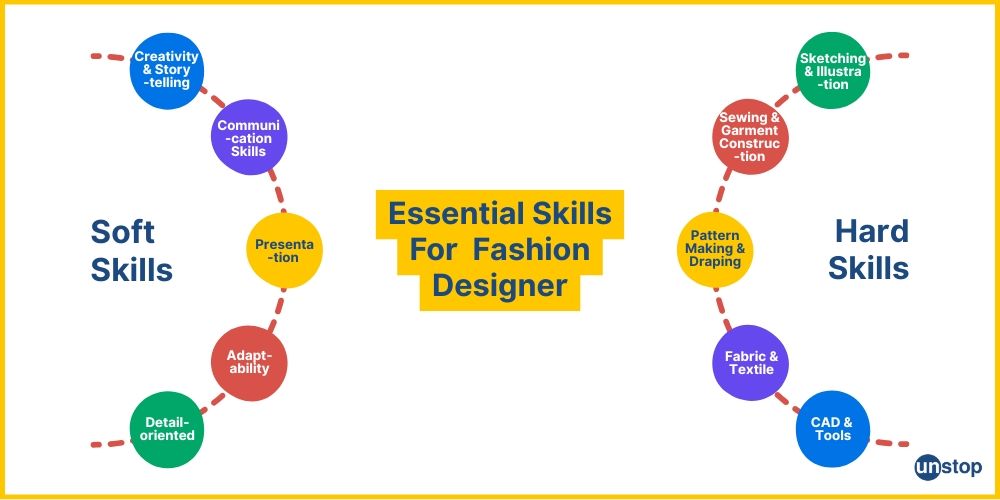
To succeed as a Fashion Designer, you need a combination of soft skills (personal attributes) and hard skills (technical expertise):
Soft Skills (Personal & Professional Skills)
- Creativity & Storytelling: The ability to develop original ideas, concepts, and styles while expressing them through visuals and fashion narratives.
- Communication Skills: Clearly sharing your design ideas and feedback while working smoothly with clients, teams, and production partners.
- Teamwork: Must know how to work with a team and collaborate with other teams to reach a common goal.
- Presentation Skills: Effectively showcasing your designs, mood boards, and collections to clients, brands, panels, or other stakeholders to properly convey your message and leave a strong impression.
- Detail Orientedness: A fashion designer must have an eye for detail, with much of their work depending on the difference between minute things.
- Adaptability & Willingness to Learn: Staying open to new trends, technologies, and market changes and evolving your skills accordingly.
Hard Skills (Technical Skills)
- Sketching & Illustration: A strong understanding of how to draw the idea you have by hand or digitally to bring them to life visually.
- Sewing & Garment Construction: Knowing how to cut, sew, and assemble fabrics into finished garments using both handwork and machines.
- Patternmaking & Draping: Crafting accurate paper patterns and draping fabric on mannequins to develop garment structure and fit.
- Fabric & Textile Knowledge: Understanding different types of fabrics, textures, their properties, and how they behave during construction.
- Computer-Aided Design (CAD): Using tools like Adobe Illustrator, CorelDRAW, or CLO 3D to digitally sketch, edit, and present design work.
- Business & Marketing Sense: Understanding fashion branding, consumer behavior, and market demand to create products that sell and succeed.
Salary In Fashion Designing By Experience
Salaries in fashion design depend on experience and location:
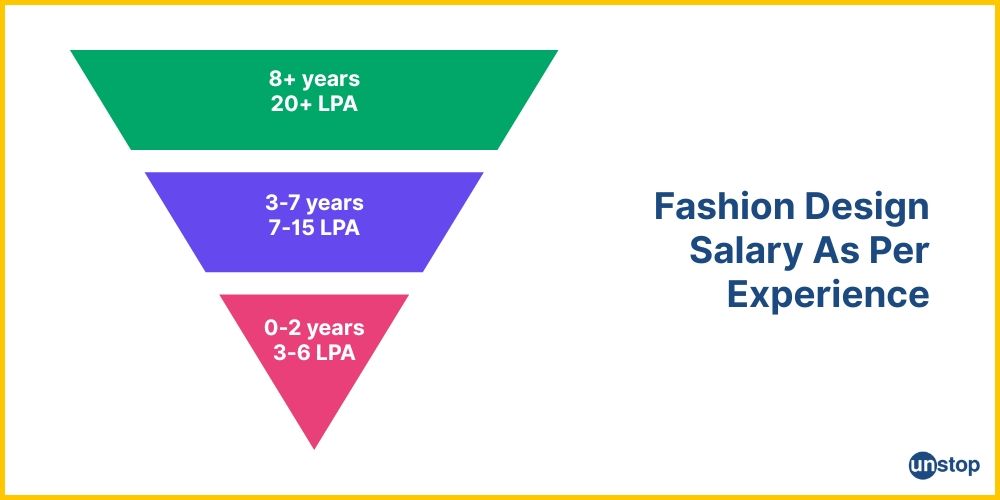
- Entry-Level (0-2 years): Junior designers and assistants earn INR 3-6 LPA by working under established brands or startups.
- Mid-Level (3-7 years): Experienced designers can earn anywhere between INR 7-15 LPA, taking on leadership roles in design teams.
- Senior-Level (8+ years): Creative directors and lead designers may earn INR 20 LPA+, and are usually responsible for shaping major fashion collections.
- Top Designers & Entrepreneurs: Successful designers can make INR 10+ million/year by launching their own brands and fashion houses.
Hiring Hubs/Hotspots For Fashion Designers
Some of the cities (national and global), as well as brands in India where fashion designers can find good employment opportunities include:
- India’s Fashion Capitals: Mumbai, Delhi, and Bangalore are the top cities for fashion jobs.
- Global Fashion Cities: Paris, Milan, New York, and London offer international opportunities.
- Luxury & Fashion Houses: Big brands/fashion houses like Sabyasachi, Anita Dongre (AND), Manish Malhotra, Anju Modi, Tarun Tahiliani, and House of Masaba are a few that provide employment opportunities to fashion designers in India.
- E-commerce & Fast-fashion Retail Brand: The e-commerce and retail business is a fast-growing segment of the fashion industries. Naturally, brands like Fabindia, Tata Cliq, Raymonds, Pantaloons, Ajio, H&M, Myntra, etc., are a few of the top recruiters for fashion designers in India.
- Textile & Garment Hubs: Surat, Jaipur, and Tirupur are key locations for textile and production jobs.
- E-commerce & Startups: Online brands and fashion startups in India provide new-age design roles.
- Film & Entertainment Industry: Bollywood and regional film industries offer costume design opportunities.
- Freelancing & Own Business: Fashion designers in India can also start their own labels or work as independent consultants.
Alternative Career Options In Fashion Design
If you're interested in fashion but not just as a designer, there are several other exciting career paths you can explore:
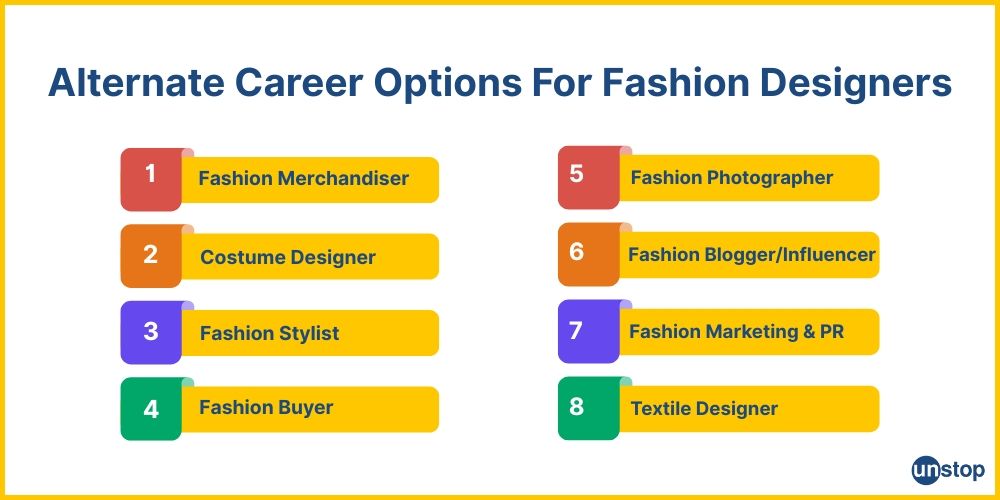
- Fashion Merchandiser: Work on planning, buying, and selling fashion products. You’ll have to ensure the right products are available at the right time and place.
- Costume Designer: Create costumes for movies, TV shows, or theatre productions, blending creativity with storytelling.
- Fashion Stylist: Help individuals or brands choose the right clothes and accessories for photoshoots, events, or personal styling, shaping their visual identity.
- Fashion Buyer: Works for retail stores or brands, primarily to choose the collections to be sold, track of market trends, and manage inventories.
- Fashion Photographer: This career option is appropriate for those who are into fashion designing but not as creators of the specific designs. That is, for those who see beauty and also capture it brilliantly by taking pictures of models, clothing, and fashion events for magazines, ads, or social media.
- Fashion Blogger/Influencer: Share your fashion knowledge, ideas, and opinions through blogging or social media, influencing trends and inspiring others.
- Fashion Marketing & PR: Promote fashion brands and products, managing campaigns, events, and press relations to build brand awareness.
- Textile Designer: Focus on designing the fabrics used in fashion, combining patterns, colors, and textures to create unique materials.
- Fashion Technologist: Focuses on integrating technology with fashion, such as developing smart clothing or using 3D printing for designs.
- Fashion Entrepreneur: Involves starting your own fashion business or brand, bringing creative ideas to the market, and managing all aspects of the company.
These career alternatives allow you to work with fashion differently and play a key role in the vibrant fashion industry.
Future Of Fashion Designing
The future of fashion design is filled with exciting possibilities driven by creativity, innovation, sustainability, and technology.
- Brands and large retailers are adopting AI and IoT elements for various purposes. This includes enhancing customer experience through personalisation, convenience, targeted marketing, etc., and using it to optimize regular processes from production to inventory management.
- The trend in the fashion industry is shifting towards the adoption of more sustainable practices. This includes embracing eco-friendly practices, incorporating unisex designs (to reduce wastage amongst other things), recycling, and minimalism, creating stylish yet conscious fashion.
- Smart/novel fabrics are revolutionizing the clothing industry and offering features like temperature adjustment, self-cleaning, and color-changing abilities.
- There have been experimental cases of materials that may even harness solar energy or glow in the dark, blending style with functionality.
As fashion continues to evolve, creative minds will play a key role in shaping trends and pushing the boundaries of design. Building a career in fashion design is hence becoming more lucrative in terms of qualitative and quantitative returns alike.
Conclusion
Fashion design is a fun and creative career for those who love style, art, and new trends. It gives you the chance to express yourself, try new ideas, and make a name in the fashion world. With the right skills, education, and passion, you can build a great future–whether by working with top brands, starting your own label, or exploring exciting roles like styling, marketing, or costume design. Fashion is always changing, and designers have the power to shape how people dress and feel. So, if you love fashion, go for it–your dream career is waiting for you!
Frequently Asked Questions
Q1. How to become a fashion designer after 12th in India?
- You can choose to go for a diploma course before starting to gain experience in the field.
- Or you can pursue a bachelor’s degree like B.Des, B.Sc., etc. Note that most colleges (like NIFT, NID, or UCEED) that offer degree courses require you to appear for an entrance exam.
- Additionally, you should focus on developing drawing/sketching skills, fabric knowledge, and stitching basics.
- Also, build a portfolio that showcases all your skills. This will come in handy when you look for internships or jobs.
Q2. Why choose fashion design as a career?
Fashion design is a creative and exciting career that allows you to express your ideas through clothes, accessories, and other wearable products. It gives you the freedom to bring your imagination to life. Studying fashion design opens doors for multiple careers besides fashion designer, such as stylist, merchandiser, fashion illustrator, and more. The fashion industry is also growing rapidly in India and around the world, which means there are plenty of opportunities with bright earning potential for skilled professionals
Q3. Which are the most popular fashion houses in India?
Some of the most popular fashion houses in India include Sabyasachi, Manish Malhotra, Anita Dongre, Ritu Kumar, and Abu Jani Sandeep Khosla. These designers are known for their unique styles and have made a big name in both the Indian and international fashion markets.
Q4. Is it essential to have a Bachelor's degree to become a fashion designer in India?
It is not essential to have a Bachelor’s degree to become a fashion designer in India. However, having a degree can be helpful as it teaches you important skills, gives you industry exposure, and can make it easier to get good job opportunities. Many successful designers have started their careers with diplomas or even by learning on their own.
This article was contributed by Lovely Mahour, Unstop Campus Ambassadors.
Suggested Read:
Login to continue reading
And access exclusive content, personalized recommendations, and career-boosting opportunities.
Don't have an account? Sign up

Never miss an
Update





Top-Rated Practice by Students



Subscribe
to our newsletter





Comments
Add comment