


 Home
Home


India's Biggest Creators' League
Meteorologist - As a career option
 0 min read
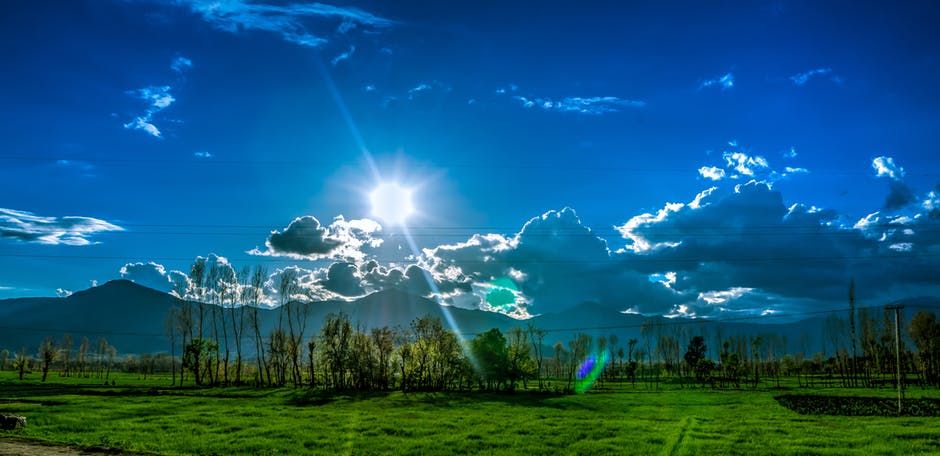
Remember that section on national news channels where they forecast the weather? Predictions made on that show segment about the weather are provided by the Meteorological Departments of respective countries.
Meteorology is, therefore, the study of weather and atmosphere through systematic and scientific means. Meteorological scientists study and analyse the prevailing weather conditions and their nuance as may be in the near future based on various physical conditions of the environmental agents.
The beginning of Meteorology can be traced back to ancient India from the accounts available in the Upanishads. It became a recognized study however by the efforts of Aristotle around 350 BC. Nice then till now, Meteorology has been a constant and vital part of human lives. Whether you’re planning a picnic or buying clothes for winter, a constant check on the upcoming weather is a prerequisite.
Does Meteorology have anything to do with Meteors?
The term meteorology comes from the Greek word ‘meteoron’ which means the atmosphere. Hence meteorology has nothing to do with meteors, however, in modern times it involves the study of the atmosphere with significant references from space satellite to provide a more holistic database of the upcoming weather conditions.
Meteorological phenomenon is observable weather events that are explained by the science of meteorology. These phenomena are described and quantified by the variables of variations and interactions of the following:
- Earth’s atmosphere
- Temperature
- Air pressure
- Water Vapour
- Mass Flow, etc.
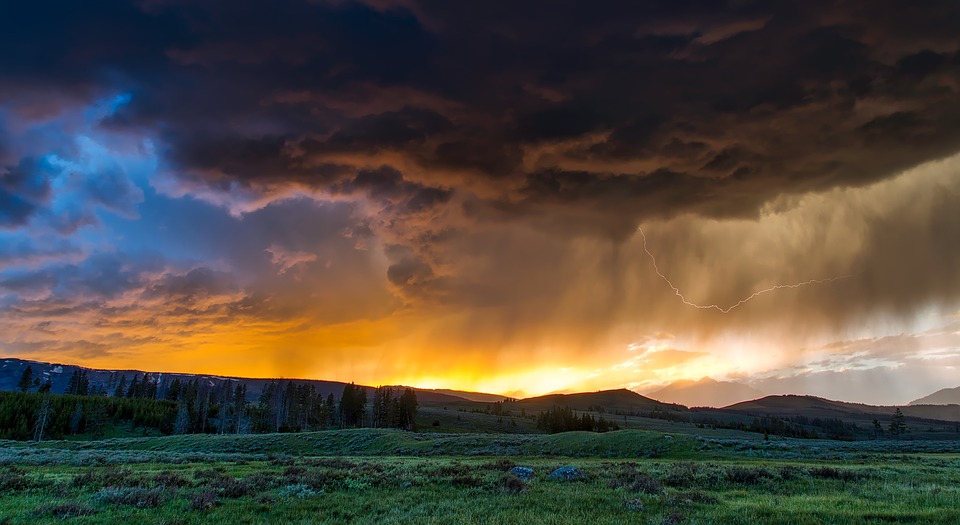
Every change in the weather is caused by a definitive pattern that is inclusive of wind, precipitation, sunlight and several other factors. Now the job responsibilities of Meteorological scientists is to extract the collective data and then present their reports based on proper studies.
Hence, the work of a meteorologist is far more complex than it seems. But then again, another way to look at it is that being a meteorologist you could know which day is perfect for a perfect rainy date or a sunny picnic or star-studded night.
Eligibility Criteria to become a Meteorologist
+2: Have to graduate in Science stream
Bachelor’s Degree: Bachelor in Meteorology/Atmospheric science
Master’s Degree: Master in Meteorology/Atmospheric science
Although meteorological scientists have a scope for a career all over the world, however in India students aspiring to seek a career in meteorology are looking for a position at the India Meteorological Department. Also referred to as the Met Department, the IMD is one of the six Regional Specialized Meteorological Centers of the World Meteorological Organisations.
IMD acts as an agency under the Ministry of Earth Sciences of the Government of India and principal responsibilities of the agency include:
- Meteorological observations
- Weather forecasting, and
- Seismology
Career aspirants in this field must be good at mathematics and science. To begin a career as a meteorologist one must have at least a bachelor degree in meteorology or atmospheric science.
A Bachelor degree in this respective field is of three/ four years in duration. A master degree in meteorology with relevant specialization is essential for positions such as:
Operational Meteorologists
They study information on air pressure, temperature, humidity, and wind velocity, and apply physical and mathematical relationships to make short and long-range weather forecasts.
Physical Meteorologists
They deal with the study of optical, electrical, acoustical, and thermodynamic phenomena in the atmosphere, including the physics of clouds and precipitation.
Synoptic Meteorologists
They are concerned with the analysis and prediction of large-scale weather systems, such as extra-tropical cyclones and their associated fronts and jet streams.
Environmental Meteorologists
They study how the overall atmospheric and weather conditions affect the earth and its human inhabitants.
Hydro-Meteorologists
They study the transfer of water and energy between the land surface and the lower atmosphere
Masters level programmes are of two-year duration. Candidates who are aspiring to become researchers and scientists must complete a PhD programme in Meteorology. Duration of a doctoral programme is normally over three years.
A course in meteorology will help in the development of various skills like data collection, data analysis, forecasting and computer modelling. Subjects covered by a course in meteorology include Fundamentals of Meteorology, Global Atmosphere, Weather Measurement & Analysis, Atmospheric Thermodynamics, Atmospheric Physics, Weather Analysis and Forecasting, Marine Meteorology etc.
A day in the life of a Meteorologist
Hello! I’m a meteorologist and I work at the IMD (India Meteorological Department). My job is to keep a look at the weather changes of the country and study any changes that may seem troublesome or alarming.
The work I do helps airlines, railways, and waterways, apart from the general masses. I’ve been fascinated by the shifting clouds in the skies and the other vivid shades of weather since an early age. Hence, the work I do is more passion-driven than anything else.
I very often have to do late night shifts and attend my work at odd hours, but I’m doing what I love and I love what I do. Here’s how an average day in my life goes:
2:30 AM: Buzz, goes my alarm and I know it’s time to get up. I’m doing an early shift these couple of days and I need to report to work by 3:30.
3:00 AM: Just had some cereal and with coffee in hand, I leave for work.
3:15 AM: I’m checking-in for work now. Do not be alarmed, I’m no insomniac. It’s just the nature of the job that bends the lifestyle of people like us and we adjust our sleep cycles accordingly.
3:30 AM: At the work desk now. Let’s see how are we doing here. The sunrise is at 5:22 this morning and there’s plenty of time before we hear any general bustle in the city. I’m gonna check my server and see how are things looking along the coastlines.
4:30 AM: I’m now typing the morning forecast that shall be sent over to the various departments of the government, along with airlines and railways, etc. This will include the wind temperature, precipitation, humidity, etc.
5:22 AM: 3.. 2.. 1.. and here we are! Gallant day-break. It’s a regular sight to see for a meteorologist, but I have a personal fascination for the sunrise.
7:00 AM: There’s an imminent storm possibility in the North Eastern region. This needs to be verified and checked. I’m going to call our North division office and check-up with them.
After a report exchange, if found to be dangerous we will raise an alert to the operational meteorological department of the northern-eastern region. As dangerous as it may sound, I still wonder the beauty of the sight of a snowstorm. Exciting, isn’t it?
7:45 AM: I just got done checking with our North division headquarter. It seems that we can rest for a while regarding that storm. Time for a teeny-tiny coffee break.
9:30 AM: Preparing the weekly temperature reports for the Indian Meteorological Department now. So the next several hours are spent analyzing observations, radar, raw snow totals, formulating event summaries and inputting the data. After this, I shall wrap up and take home whatever portion of it remains.
12:30 PM: I think I’m done here because the coffee is just not doing any good now. As unusual as it sounds, I’m done for the day. Time to go home, time to get some sleep.
This is how a typical day in my life looks like. Are you also fascinated by the change in weather every second? Then this must be the profession for you. We hope this article has added something valuable to your research about this profession. Have your say in the comment box below.
Login to continue reading
And access exclusive content, personalized recommendations, and career-boosting opportunities.
Don't have an account? Sign up

Never miss an
Update

Featured Opportunities

Top-Rated Practice by Students






Subscribe
to our newsletter







Comments
Add comment