


 Home
Home


ET AI Hackathon 2.0
Neurologist - As a career option
 0 min read
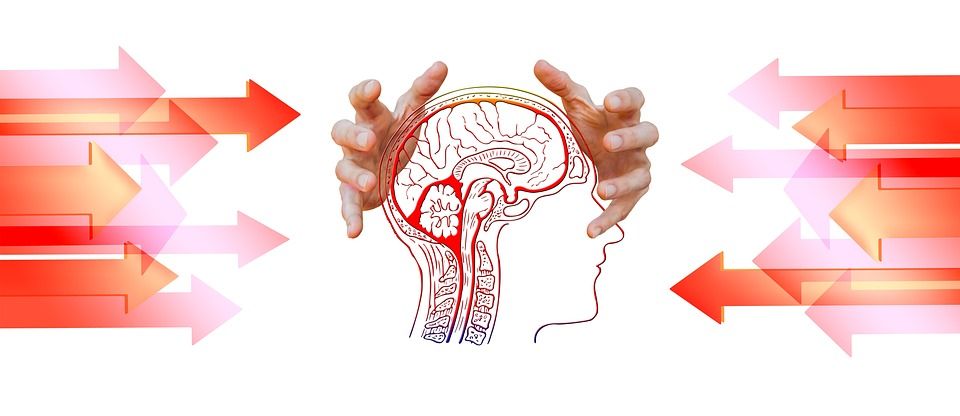
“You might be poor, your shoes might be broken, but your mind is a palace.” -Frank McCourt
Introduction
Every thought that floats into your mind is conceived somewhere in the interstices of your brain, and fascinatingly, even though human beings are advanced enough to reach Mars, they have no idea how this happens.
This is a mysterious journey through multitudes of neurons (brain cells) that gives rise to numerous other disciplines, from mathematics to philosophy to psychology to even literature and music.
The human brain has been hailed as one of the most complex objects in the history of time, and rightly so. In case you doubt this, look around yourself. You will see a little bit of brain working in every object before your eyes. It is the most advanced computer to ever exist and the most beautiful art ever to be experienced.
But like everything in this universe, humans have dedicated a systematic study to comprehend the brain’s working. Through science, man has deciphered most answers for almost all human activities, ranging from laughter and sadness to complicated and odd mental behaviours such as depression and seizures. It’s all happening due to a reason and the way our brains function.
In medical science, the branch dealing with the treatment of human brain diseases is called Neurology and doctors specializing in this sector are called Neurologists.
What is the role of a Neurologist?
A neurologist is a medical professional specializing in neurology and trained to investigate or diagnose and treat neurological disorders. Neurologists may also be involved in clinical research, clinical trials, and basic or transitional research.
While neurology is a non-surgical speciality, its corresponding surgical speciality is neurosurgery. Neurologists are medical doctors specializing in treating diseases of the nervous system.
The nervous system is made of two parts: the central and peripheral nervous system. It includes the brain, and the spinal cord and nerves.

Symptoms that commonly require a Neurologist
- Coordination problems Muscle weakness Change in sensation Confusion Dizziness
- People who are having problems with their senses, such as touch, vision, or smell, may also need to see a neurologist. Problems with senses are sometimes caused by nervous system disorders.
- Neurologists also see patients with Seizure disorders, such as epilepsy
- Epilepsy Stroke Multiple sclerosis Neuromuscular disorders (e.g.: Myasthenia Gravis)
- Infections of the nervous system (e.g.: Encephalitis, Meningitis, or Brain Abscesses)
- Neurodegenerative disorders (e.g.: Lou Gehrig’s disease and Alzheimer’s disease)
- Spinal cord disorders (e.g.: Inflammatory and Autoimmune disorders)
- Headaches (e.g.: Cluster headaches and migraines)
Neurologists examine patients who have been referred to them by other physicians in both the inpatient and outpatient settings. A neurologist will begin their interaction with a patient by taking a comprehensive medical history, and then perform a physical examination focusing on evaluating the nervous system.
Components of the neurological examination include assessment of the patient's cognitive function, cranial nerves, motor strength, sensation, reflexes, coordination, and gait.
In some instances, neurologists may order additional diagnostic tests as part of the evaluation.
Commonly employed tests in Neurology
- Computed Axial Tomography scans (CAT),
- Magnetic Resonance Imaging (MRI),
- Ultrasound,
- Electroencephalography (EEG),
- Needle electromyography (EMG),
- Nerve Conduction Studies (NCS) and
- Evoked Potentials
Eligibility criteria to become a Neurologist
Aspiring students must complete their 10+2 with the Science stream (with the combination of PCB) and then appear for medical entrance tests conducted by the the various state and independent bodies like PMT, taken by Punjab Government and AIPMT (Pre-Medical Test) taken by the CBSE to admit candidates in various medical institutions affiliated with it.
Separate tests are conducted by some of the highly rated medical institutions like AIIMS, PGI, GMCH, AFMC Pune etc.
After completion of this four and half year of MBBS degree course and one year, six months compulsory training one has to go for M.D.(Medicine). Aspiring MBBS doctors have to appear in Post Graduate Medical Entrance Tests like All India Post Graduate Medical Exam and Jawaharlal Institute of Post-Graduate Medical Education and Research Entrance Exam.
After completing M.D.(Medicine) the aspiring candidates can enrol for D.M.(Neurology): a 3 years course for specialization in the field of Neurology.
Best Institutes in India for studying Neurology
- Institute of Human Behavior & Allied Sciences (IHBAS), Delhi
- Post Graduate Institute of Medical Education & Research(PGI), Chandigarh
- Smt. N.H.L. Municipal Medical College (NHLMMC), Ahmedabad
- Bangalore Medical College and Research Institute (BMCRI), Bengaluru
After completion of three years of D.M.(Neurology) course and getting the requisite registration from Medical Council of India, the budding Neurologist can get jobs in reputed Government and Private Hospitals like AIIMS, SGPGI, etc.
Neurologists with good entrepreneurial skills can also open their own Neuro-Clinic and provide services to patients.
A day in the life of a Neurologist
Hi. I’m a Neurologist and I work at a leading neurological research and treatment facility under the Government of India. Apart from this I also have a private clinic and visitations at a private hospital twice a week.
I specialize in epilepsy and strokes and my work life comprises of a scheduled and systematic working. Here’s a day in my life:
9:00 AM: Just reached PGI. At present, the start of the day is typically when I have my clinic hours, so I’m going to be here for the next three hours attending to large queues of patients.
Most of them have waited months to find an appointment with me. While it’s a lot of work, I can’t say that I’m not honoured.
9:20 AM: The patient I’m seeing now is suffering from the sleeping disorder and complains additionally of headaches. The symptoms indicate several possible illnesses, such as migraine headaches, extreme stress and anxiety, delayed sleep phase syndrome, or even potentially life-threatening conditions such as brain aneurysms.
I advise an MRI and prescribe a typical prophylaxis therapy for a migraine in the meanwhile – I don’t typically prescribe sleeping pills to first-time patients, because too many substance-abuse prone people visit neurologists to get them.
9:45 AM: This next patient is a 55-year-old lady who has recently recovered from a massive cerebral attack. Well, when I say she ‘recovered’, I mean that her life is saved but one of her legs is paralyzed, perhaps permanently.
I examine the distressed lady at length, recommend regular physiotherapy sessions, review her medication, and recommend her family to get a psychiatrist’s advice before going home – depression is common among disabled patients, and it only worsens things.
11:45 AM: I’m almost done with the clinic hours – most of my patients are in varying levels of strain and suffering, and hopefully my treatment will bring about favourable results.
Neurology is still a very developing discipline, so neurologist go wrong possibly more than any other specialization among doctors.
1:00 PM: I’m going to pay in-patient visits at the hospital now. I’m walking to the Neurological Intensive Care Unit accompanied by two of my students. I have more students, but the NITU is not a place I will allow crowds into.
Most of my patients there are battling for life, and I hate to say this, but many will lose. Unfortunately, we’re still not there yet, when it comes to treating the brain…
3:00 PM: I’m out of the ward now – two of my patient, both victims of the same car accident, have been referred to a neurosurgeon in the hospital, who’ll be performing surgeries for brain lesions.
The damage is severe, and the inter-cranial pressure in one of them is quite alarming. I’m on the way to the doctor’s lounge now, and I’ll grab a quick bite before 4 PM when the families of my admitted patients come to visit.
4:00 PM: This is possibly the most painful time of the day. Naturally, families of patients with neurogenic shocks, brain tumours, or other similar conditions are in a massive amount of distress, and most beg me to save the lives of their loved ones.
Their tears move me, and I try my best, with the little that I can do. While being a neurologist requires you to be at the top of your class among doctors, becoming one only teaches you humility before your discipline. There is so much to investigate.
6:00 PM: I’m going to reach my own private clinic now that the hospital has been covered. The clinic helps because patients who have non-threatening medical conditions and aren’t free to stand in hundred-meter queues during the day can still see me in the evenings.
After two hours in the clinic, I’ll head home to my wife and daughter.
This is how a typical day in the life of a Neurologist looks like. Do you want to become Neurologist? We hope this article has provided some fruitful information. Have your say in the comment box below. Enjoy Reading!
Login to continue reading
And access exclusive content, personalized recommendations, and career-boosting opportunities.
Don't have an account? Sign up

Never miss an
Update




Top-Rated Practice by Students






Subscribe
to our newsletter







Comments
Add comment