


 Home
Home


ET AI Hackathon 2.0
Police Officer - As a career option
 0 min read
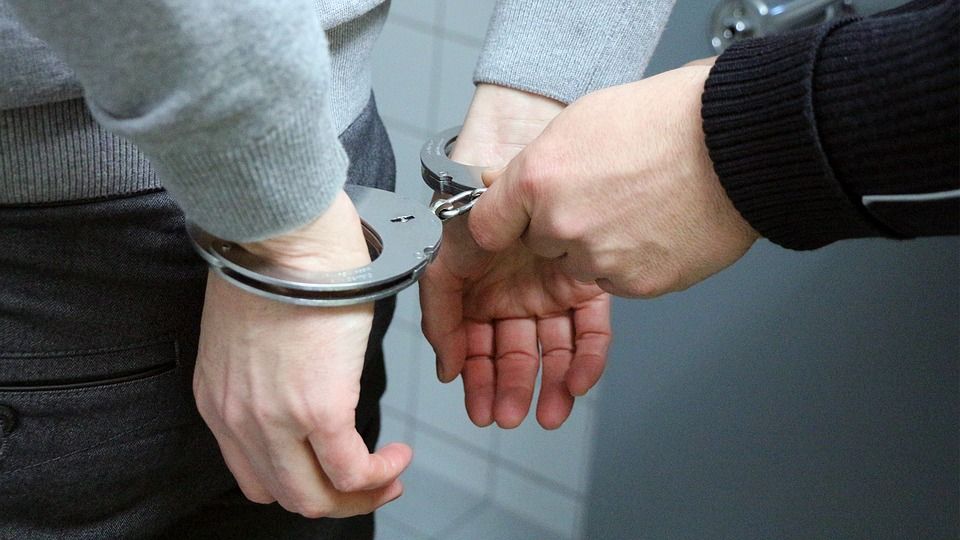
The law of India has a hold over every activity of the civilian life in the nation. Every public activity that floats into your mind consists of an aspect that is governed by the law.
To enforce these laws in civil life the government has appointed a special department. This department is called the Police Department or the Law Enforcers.
The police department plays a very crucial role in our lives. Whether it be the management of road traffic or criminal cases, the police are a constant part of our lives that binds our rights, responsibilities and duties in the society.
Our law enforcers are the true superheroes who protect and preserve our rights and at the same time empower us with an option of demanding quick justice in instances when it is required.
What is the extent of Law Enforcement in India?
Law enforcers act as agents of the government administering the public through the civil laws of the country. Of course, their role extends much farther than just that, but their primary aim is to maintain peace and order in the society by keeping an active check on the activities that are illegal in nature.
Therefore, the police is that branch of the government that does all the groundwork.
7 Types of Police Department in India
Border Security Force (BSF)
The BSF is responsible for policing India's land borders during peacetime and preventing trans-border crimes. It is a central police force operating under the Union Ministry of Home Affairs.
It is performing a variety of duties ranging from VIP security to election duties, from guarding of vital installations to the counter-naxal operations.
Central Industrial Security Force (CISF)
CISF is used to guard industrial installations around the country owned by the Central government as well as securing seaports, airports, railways, metros, etc.
CISF also provides security to certain NGOs, atomic power plants, space installations, mints, major ports, heavy engineering plants, steel plants and other installations partially or wholly run by the government.
Central Reserve Police Force (CRPF)
The CRPF is one of the largest Central Police organisations in the world. Its main objective is to assist and help states and union territories' law enforcement agencies in maintaining law and order and to contain the insurgency. It is also deployed as an anti-terrorist unit in various regions.
Indo Tibetan Border Force (ITBF)
ITBP is one of the five main Central Armed Police Forces, responsible for security along the Indo-Tibetan Border, covering 2115 km.
The ITBP personnel are trained in the fields of law & order, military tactics, jungle warfare, counter-insurgency and internal security.
National Security Guard (NSG)
The NSG is a commando unit originally created for counter-terrorism and hostage rescue missions. Raised in 1986, it is popularly known as the Black Cats for the uniform worn by its operators.
Like most elite security units in India, it is media-shy and the general public is largely unaware of its capabilities and operational details.
Special Protection Group (SPG)
SPG is the executive protection agency of the Government of India. It is responsible for the protection of the Prime Minister of India, and his/her immediate families.
It provides security 24/7 all over India to Prime Minister including ex-prime Ministers and their Family Members at any location across India.
Sashastra Seema Bal (SSB)
Formed in the year 1963, SSB is one of the five main Central Armed Police Forces and is deployed at the Indo-Nepal and Indo-Bhutan borders.
SSB has more than 82,000 personnel who are trained in the fields of law & order, military tactics, jungle warfare, counter-insurgency and internal security.
How to get into a Police Department?
Policemen act as agents of the government, administering the public through the civil laws of the country. Therefore, Police is that branch of the government that does all the groundwork.
The recruitment process differs according to the level of the position, and direct entry (where an applicant does not have to start at the lowest level) is possible.
The educational requirements increase with recruitment for higher posts. Deputy Superintendents of Police (DSP) or Assistant Superintendents of Police(ACP) are recruited every year by the UPSC(a wing of the central government) by an extremely competitive exam and are appointed into the Indian Police Service.
The IPS officers are then assigned to a state force. Superintendents of Police undergo rigorous training for 44 weeks. The training programme also involves external invitees such as lawyers and management consultants.
At the end of probation, they undergo orientation training of a few weeks at the assigned state's police academy.
Lower, non-managerial positions are selected by the state or central government and are trained at Police Recruit Schools. The duration of training for inspectors is roughly a year, and for constables is nearly 9 months.
The training staff for these schools is drawn from the police force itself. The recruitment process of State police is maintained by State Police Recruitment Boards. There are some eligibility standards that are set by Indian Government depending upon the demographics of a particular state. Those who fulfill these standards, are selected for the recruitment process.
A day in the life of a Police Officer
Hi. I’m the Circle Inspector of Police (CI) of a central division of a metropolitan Indian city. My job encompasses the overall law enforcement of the division. The position that I hold makes me work at odd hours and takes me through the crucial niches of society with harsh realities.
But it’s the responsibility and the power that comes with this job keeps me going. Here’s a typical day in my life:
9:30 AM: Sitting down in the office chair is the start of the day, and the busy schedule of the day will keep occupied wholly. While police officers rarely have strictly delineated work hours, our days normally begin in the mornings, and that’s when I get done most of my daily pile of paperwork.
10:00 AM: A press conference is being conducted with the press highlighting a murder from the last night. Helping the media in reaching out to the masses with the right details on every matter is an essential chapter of our duty.
It’s often impossible to throw promising light on newly-turned-up criminal cases, and this often leads to the police getting a bad name. Press conferences can be stressful, but one gets used to it!
11:00 AM: I’m going to visit the Councillor from this division of the municipal corporation now at his residence for a meeting regarding the traffic arrangements for tomorrow.
It’s not common for the police to brief ministers on trivial matters such as traffic - however, a recently unearthed terrorist threat has put the entire force on red alert. When the going gets tough…
1:30 PM: We’ve chalked out a schedule and hopefully the final one. My junior staff will now brief and debrief cadets throughout the next several days to keep the people of the nation safe and sound in case the worst comes to pass. One still worries, but it helps to know that we’re prepared.
2:30 PM: More paperwork; it might come off as surprising to an outsider, who is used to the police being portrayed living dynamic, almost superhero-like careers, to see how much paperwork is involved in being a policeman.
The higher up the ladder you get, the higher gets the stacks. Numerous orders, memos, complaints, vigilance issues, budgetary constraints and clearances, minutes of meetings, and other documents need to be attended to on a daily basis.
4:00 PM: I’m going on my rounds now. This is a routine activity where I visit the different, police stations in my division to oversee their working. The CI is, at the end of the day, responsible and answerable for all the police stations in their division.
I pay a visit to a handful of inspectors and sub-inspectors, get notified of crucial FIRs and risk factors, and ensure that there’s no room for slackers in the police force while I am in charge.
7:30 PM: Just got done with the rounds. I need to go to my residence and pack my things. I’m visiting a senior in the nearing district to discuss a matter where I need a senior’s advice and experience.
It’s going be a road travel and I shall stay for a day. But before that, I need to attend a gathering at the CM’s residence.
8:15 PM: My bags are packed and stacked in my car and I’m being driven to the CM residence now, wherefrom I shall leave to meet my senior official directly.
10:00 PM: I’m leaving from the CM’s residence now. It was a fine dinner. Gatherings like these are official and require mandatory attendance by officers like us. Next stop— Officer’s mess, in the neighbouring district.
It’s a hectic life, but they say that the esteem of helping one’s fellow human beings makes up for the physical toll. Can’t say that I disagree.
Login to continue reading
And access exclusive content, personalized recommendations, and career-boosting opportunities.
Don't have an account? Sign up

Never miss an
Update





Top-Rated Practice by Students






Subscribe
to our newsletter





Comments
Add comment