


 Home
Home


Infosys Ingenious - The Grand Finale 2026
Table of content:
- Objectives of Potential Appraisal
- Potential Appraisal Methods
- Steps in a Potential Appraisal System
- Advantages of Potential Appraisal
- Frequently Asked Questions

What is Potential Appraisal? Meaning, Purpose, Steps, Advantages
If performance appraisals are done regularly, why is there a need for potential appraisal? There is a need, indeed. Learn how potential appraisal helps companies to identify future leaders and drive strategic talent development.
 0 min read
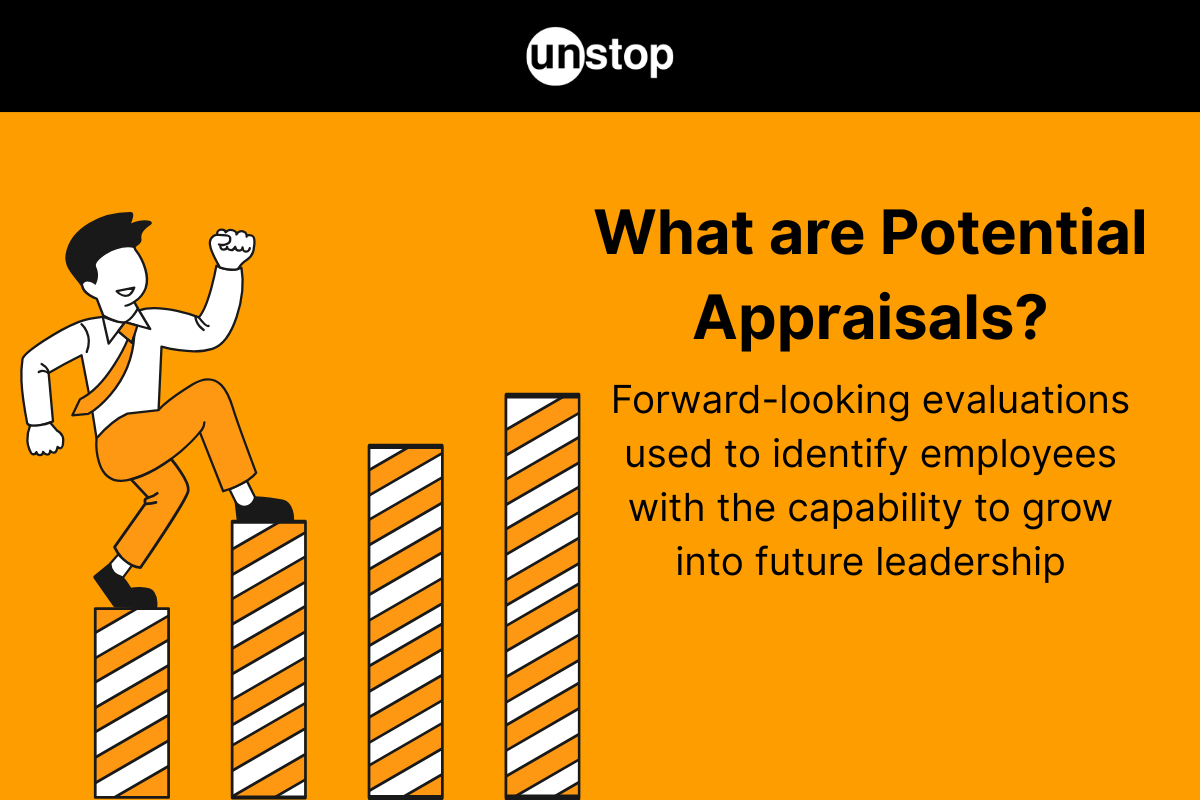
In a fast-evolving workplace, it’s not enough to just evaluate how employees are performing today. Organizations must also look ahead, identifying who can take on bigger roles, lead complex projects, and grow into future leaders. This is where potential appraisal becomes invaluable.
Unlike traditional performance appraisals that focus on past results, potential appraisal helps uncover what an individual can do in the future. Let's understand the intracacies.
What is Potential Appraisal?
Potential appraisal is the systematic process of identifying and assessing an employee's capacity to grow into higher roles or take on more complex responsibilities within the organization. It evaluates traits such as leadership ability, learning agility, emotional intelligence, and readiness to develop new skills.
Potential appraisal serves as a foundation for career planning, leadership development, and succession planning.
So, can we replace performance appraisal with potential appraisal? No, they serve different purposes and one cannot fully replace the other. An employee might be excellent in their current technical role (performance appraisal = high), but may lack the communication or strategic thinking skills needed to manage a team (potential appraisal = moderate). Without evaluating potential, promoting based solely on past performance could lead to poor leadership choices.
How It Compares with Performance Appraisal
Let's briefly understand the difference between performance appraisal and potential appraisal:
| Aspect | Performance Appraisal | Potential Appraisal |
|---|---|---|
| Focus | Past performance in current role | Future ability to grow into higher or different roles |
| Purpose | Measure productivity, goal completion, and behavior | Identify readiness for leadership or specialized responsibilities |
| Tools Used | Ratings, KPIs, supervisor feedback | Simulations, 360° feedback, psychometric tests, managerial judgment |
| Outcome | Salary revisions, bonuses, recognition | Career development plans, succession planning, promotions pipeline |
To sum up, performance appraisal is like evaluating how well someone ran their current race while potential appraisal is about assessing whether they are ready for a longer, more complex marathon.
Objectives of Potential Appraisal
Potential appraisal helps with the following aspects:
1. Forecast future leadership and managerial talent
Potential appraisal helps organizations identify employees who demonstrate leadership qualities early in their careers. These individuals may show strategic thinking, decision-making ability, and emotional intelligence - traits essential for managerial roles. Forecasting future leaders helps build a leadership pipeline, ensuring business continuity and reducing the risks of leadership gaps during transitions or expansion.
2. Align employee development with long-term business needs
As business goals evolve, so should employee capabilities. Potential appraisal ensures that employees are being developed in directions that align with where the business is heading. For example, if a company plans to enter international markets, it might assess employees for global mindset, cultural intelligence, and adaptability to lead future international operations.
3. Facilitate succession planning and internal promotions
Rather than scrambling to fill critical roles when they open up, potential appraisal allows companies to prepare talent in advance. By identifying successors early and grooming them with relevant experiences and mentorship, businesses can ensure smooth transitions and reduce disruption when key employees leave or retire.
4. Reduce the risk of hiring unfit external candidates for key roles
External hires may bring experience, but they also bring uncertainty. Internal candidates who have been through a potential appraisal process are already familiar with company culture, values, and workflows. Promoting from within, especially when potential has been assessed, helps reduce hiring errors and transition time.
5. Boost employee morale by showing a clear career path
Employees are more motivated when they see a future for themselves in the organization. Potential appraisal offers visibility into career progression, allowing employees to understand what competencies they need to develop. This sense of purpose and direction leads to increased satisfaction, loyalty, and proactive engagement.
6. Optimize Training Investments
Instead of offering generic training, potential appraisal helps focus learning and development budgets where they will have the most impact. High-potential individuals can be enrolled in advanced leadership, domain-specific, or cross-functional programs. This targeted development ensures ROI on training initiatives.
Potential Appraisal Methods
1. Assessment Centers
These involve a series of simulated exercises that mimic real job challenges. Activities like role-plays, case studies, in-basket exercises and group discussions help evaluate competencies such as leadership, collaboration, and problem-solving. Because these are behavior-based assessments, they provide a clear view of how an individual might handle higher levels of responsibility.
What are in-basket exercises? These are set of exercises that provide a practical simulation of future role. They are often used to assess high-potential employees being considered for:
- Team leadership
- Managerial roles
- Succession planning pipelines
- Cross-functional responsibilitie
For example, a candidate applying for a team leader role may be given 10 emails in an in-basket including a client complaint, a team member's leave request, a budget approval, and an urgent meeting invite. They must process everything within 30–60 minutes and justify their choices.
2. Psychometric Testing
These standardized tools measure underlying traits such as logical reasoning, personality, emotional intelligence, and leadership potential. Psychometric assessments provide objective insights that may not be visible through observation alone. For example, an introverted employee might score high on analytical skills and strategic thinking, making them ideal for a planning role.
3. 360-Degree Feedback
This method gathers input from multiple stakeholders - peers, subordinates, managers, and sometimes customers. It offers a well-rounded view of an employee’s interpersonal skills, influence, and ability to lead or collaborate. Used in potential appraisal, it highlights how others perceive an individual’s readiness to take on broader responsibilities.
4. Managerial Judgment
Managers often have the closest view of an employee’s performance and potential. Their judgments, when structured and supported by guidelines, can be valuable in spotting growth potential. However, to ensure objectivity, their insights are usually supplemented with other tools like feedback or testing.
5. Performance-Potential Matrix (9-Box Grid)
This tool plots employees based on their current performance and future potential. It categorizes employees into boxes like "Rising Stars," "Consistent Performers," or "Underperformers." It helps HR teams and managers decide who to invest in, promote, or support with development resources.
Steps in a Potential Appraisal System
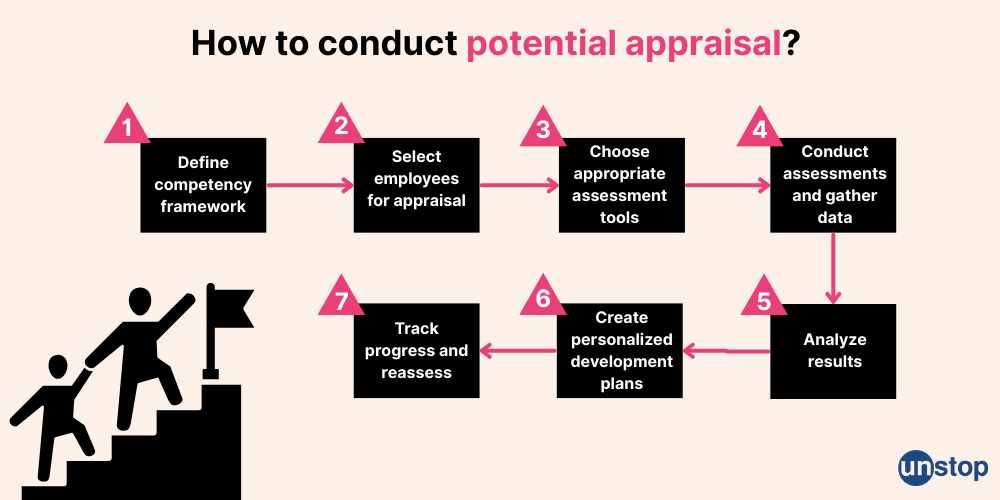
1. Define Competency Framework
Start by identifying the key traits and skills that matter for future roles in your organization. These could include leadership, critical thinking, innovation, or adaptability. A clear competency framework ensures that all assessments are aligned with strategic talent needs.
2. Identify Employees for Appraisal
Not every employee needs to be assessed for potential at once. Typically, high performers, emerging leaders, or those being considered for key roles are prioritized. Inputs from managers, HR, and career aspiration discussions can help narrow down the candidates for the process.
3. Choose the Right Assessment Tools
Select tools that match the competencies being evaluated. For example, if leadership is a focus, combine simulations with peer feedback and personality assessments. Choosing a mix of qualitative and quantitative methods ensures a well-rounded and accurate view of potential.
4. Conduct Assessments and Gather Data
Administer tests, conduct simulations, and collect feedback in a structured and standardized manner. It’s important to maintain consistency in how data is gathered to ensure fairness and credibility. Confidentiality and transparency should also be maintained during this phase.
5. Analyze Results
Interpret the data to understand each individual’s strengths, development areas, and future-fit potential. Look for patterns, gaps, and outliers. Often, cross-functional review panels are involved to ensure objectivity and to validate findings across departments.
6. Create Development Plans
Based on the results, design personalized development journeys. These could include mentorship, stretch assignments, job rotations, or specialized training. The goal is to help individuals bridge the gap between where they are now and where they can go.
7. Track and Review Progress
Potential is not static, it evolves. Regular check-ins, reviews, and reassessments are essential to see how individuals are growing. Use performance data, manager feedback, and updated assessments to track progress and adjust development plans accordingly.
Advantages of Potential Appraisal
1. Improves Leadership Pipeline
By continuously identifying and grooming future leaders, potential appraisal ensures there are no last-minute scrambles to fill critical positions. A strong leadership pipeline supports strategic growth, innovation, and continuity during times of change.
2. Enhances Employee Engagement
When employees see that their potential is being recognized and nurtured, they feel more connected to the organization. This builds trust, loyalty, and motivation—especially among high performers who want to feel valued and challenged.
3. Reduces Hiring Costs
Filling senior roles externally can be expensive and risky. By preparing internal candidates through potential appraisal, organizations reduce dependency on outside hires and save on recruitment, onboarding, and training expenses.
4. Informs Strategic Development Programs
Potential appraisal helps tailor learning initiatives to real organizational needs. Rather than offering blanket training, L&D teams can design programs based on future leaders’ actual gaps and strengths, resulting in better skill-building outcomes.
5. Boosts Organizational Agility
When potential is continuously assessed, organizations can respond quickly to change, whether it is market shifts, new projects, or sudden vacancies. Agility becomes a strength because talent is always in a state of readiness for what's next.
Potential appraisal is not just a tool; it is a forward-looking talent strategy. By identifying who can do what tomorrow, organizations prepare for the future with confidence. When done right, it helps employees envision a meaningful future and empowers companies to grow from within. In an era where talent is the true competitive advantage, spotting potential early is a game-changer.
Quiz Time!!!
Frequently Asked Questions
Q1. When should organizations conduct potential appraisals?
Potential appraisals are typically conducted during leadership development planning, succession planning exercises, or before internal promotions. They are especially useful when a company is growing, restructuring, or preparing for future business challenges.
Q2. Who is responsible for conducting a potential appraisal?
It is usually a collaborative effort involving HR professionals, line managers, and sometimes external consultants or coaches. The most effective potential appraisals combine managerial judgment with structured tools like psychometric tests and 360-degree feedback.
Q3. What are the signs that someone is a high-potential employee?
High-potential individuals often display learning agility, strong interpersonal skills, problem-solving ability, initiative, and a willingness to take on new challenges. They’re not just top performers, they are also adaptable, growth-oriented, and aligned with the company’s future goals.
Q4. Can potential appraisal backfire or be misused?
Yes, if not conducted objectively. Bias, poor assessment tools, or lack of transparency can lead to mislabeling employees and demotivating others. That’s why it's crucial to use clear criteria, reliable tools, and open communication throughout the process.
Suggested Reads:
Login to continue reading
And access exclusive content, personalized recommendations, and career-boosting opportunities.
Don't have an account? Sign up

Never miss an
Update

Featured Opportunities




Top-Rated Practice by Students






Subscribe
to our newsletter






Comments
Add comment