


 Home
Home


HP Power Lab 3.0
Table of content:
- What Is Textile Design?
- What Do Textile Designers Do? (Roles & Responsibilities)
- How To Become A Textile Designer In India?
- Essential Skills For Textile Designers
- Salary Expectations For Career In Textile Design
- Hiring Hubs & Industry Hotspots For Textile Designers
- Alternatives Options For Textile Designer Career
- Conclusion
- Frequently Asked Questions

Textile Designer Career In 2026: Roles, Skills, Salary, & More
In this guide, we discuss the multifaceted world of textile design and how to build a career in it. We explain roles, skills, educational pathways, expectations, prospects, etc., in this vibrant field.
 0 min read
Textile design is a dynamic field that blends artistic creativity with technical expertise to produce fabrics used in fashion, home decor, and various other industries. It involves crafting patterns, textures, and colors that enhance the aesthetic and functional qualities of materials. From the clothes we wear to the furnishings in our homes, textile design plays a pivotal role in our daily lives.
If this sounds interesting to you, then building a career as textile designer could be a great option for you. In this article, we will discuss everything you need to know to build this career and excel in it.
What Is Textile Design?
At its core, textile design is the art and science of creating designs for woven, knitted, or printed fabrics. This process encompasses developing patterns, textures, and color schemes that are applied to fabrics to produce visually appealing and functional materials. Textile design is integral to various industries, including fashion, interior design, and fine arts.
The field is typically divided into three main disciplines:
- Printed Textile Design: This involves applying patterns and designs to fabric surfaces using various printing techniques. Designers in this area create visuals for clothing, home interiors, and other products.
- Woven Textile Design: This discipline focuses on creating patterns through weaving, interlacing vertical (warp) and horizontal (weft) threads. It's fundamental in producing fabrics with specific textures and designs.
- Mixed Media Textile Design: This area combines various fabric manipulation processes, such as embroidery, pleating, appliqué, quilting, and laser cutting to produce unique textile designs.
Understanding these disciplines provides a foundation for exploring the diverse and innovative world of textile design.
What Do Textile Designers Do? (Roles & Responsibilities)
A textile designer is a professional who combines artistic vision with technical expertise to create designs for fabrics used in various applications, including clothing, home furnishings, and industrial products. Their role is pivotal in determining the aesthetic and functional qualities of textiles. Key Responsibilities of a Textile Designer:
- Pattern and Design Creation: Develop original designs and patterns for fabrics, ensuring they align with current trends and client specifications. This involves sketching ideas by hand or using computer-aided design (CAD) software to produce detailed representations.
- Material and Color Selection: Choose appropriate fabrics, textures, and color palettes that enhance the visual appeal and functionality of the textile products. An understanding of color theory and fabric properties is essential in making these decisions.
- Trend Research: Stay updated on industry trends, emerging technologies, and consumer preferences to create designs that are both innovative and marketable. This may involve attending trade shows, reviewing fashion publications, and conducting market analyses.
- Collaboration with Production Teams: Work closely with manufacturers, product developers, and other designers to ensure that designs are feasible for production and meet quality standards. This includes translating design concepts into technical specifications and overseeing sample production.
- Presentation and Client Relations: Prepare and present design concepts and prototypes to clients or stakeholders, effectively communicating the vision and details of the designs. Incorporate feedback to refine designs and meet client expectations.
- Experimentation with Techniques: Explore and implement various textile techniques such as weaving, knitting, and printing to achieve desired textures and patterns. Innovate by combining traditional methods with modern technology.
By fulfilling these responsibilities, textile designers play a crucial role in bringing creative concepts to life, influencing fashion trends, and contributing to the functionality and appeal of textile products.
How To Become A Textile Designer In India?
Embarking on a career as a textile designer requires a blend of formal education, practical experience, and continuous learning. Here's a structured pathway to guide aspiring textile designers:
1. Obtain a Relevant Education: The first step to becoming a textile designer is to get the right education. While, in general, there are no specific subjects in the higher education system that provide training for textile design, you can pursue a bachelor’s degree or courses to specialize in this field.
- Bachelor's Degree: Pursue a Bachelor's in Textile Design or related fields such as Fashion Design or Graphic Design. This foundational education imparts essential design principles, textile techniques, and industry knowledge.
- Diploma or Certification Courses: For those seeking specialized knowledge or a shorter study duration, diploma and certification courses in textile design are viable alternatives.
2. Develop Essential Skills
- Artistic Proficiency: Enhance skills in drawing, painting, and sketching to effectively translate ideas into tangible designs.
- Technical Expertise: Gain proficiency in computer-aided design (CAD) software and other digital tools prevalent in the textile industry.
- Understanding of Fabrics: Acquire knowledge about various textiles, their properties, and suitable design applications.
3. Gain Practical Experience
- Internships: Engage in internships with established textile designers or firms to gain hands-on experience and industry insights.
- Portfolio Development: Compile a diverse portfolio showcasing your designs, techniques, and creativity to present to potential employers or clients.
4. Stay Updated with Industry Trends
- Continuous Learning: Attend workshops, seminars, and courses to stay abreast of emerging trends, technologies, and sustainable practices in textile design.
- Networking: Join professional organizations and participate in industry events to connect with peers and stay informed about opportunities and advancements.
Essential Skills For Textile Designers
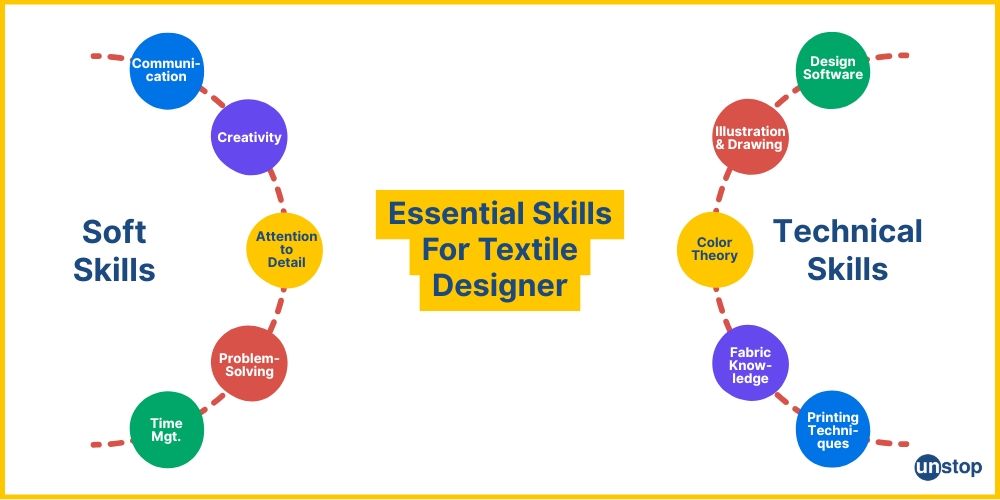
To excel as a textile designer, a blend of technical prowess and soft skills is essential.
Technical Skills:
- Design Software Proficiency: Mastery of tools like Adobe Photoshop, Illustrator, and Textile CAD is crucial for creating and refining designs.
- Drawing and Illustration: Strong abilities in sketching and illustrating facilitate the effective communication of design concepts.
- Color Theory: A deep understanding of color harmonies and contrasts is vital for developing appealing textile patterns.
- Fabric Knowledge: Familiarity with various textiles, their properties, and their applications ensures that designs are both functional and aesthetically pleasing.
- Printing Techniques: Knowledge of methods such as screen printing and digital printing is important for bringing designs to fruition.
Soft Skills:
- Creativity: The ability to generate innovative and unique designs is at the heart of textile design.
- Attention to Detail: Precision is key in ensuring patterns and designs are executed flawlessly.
- Communication Skills: Clear articulation of ideas and collaboration with clients and team members streamline the design process.
- Time Management: Efficiently handling multiple projects and meeting deadlines is essential in this fast-paced industry.
- Problem-Solving: Addressing design challenges and adapting to feedback are integral to refining and improving designs.
Developing these skills prepares aspiring textile designers to navigate the industry's demands and contribute meaningfully to the field.
Salary Expectations For Career In Textile Design
The salary of a textile designer depends on factors like experience, skills, job role, and industry sector. Here are some common job roles and their average yearly salaries:
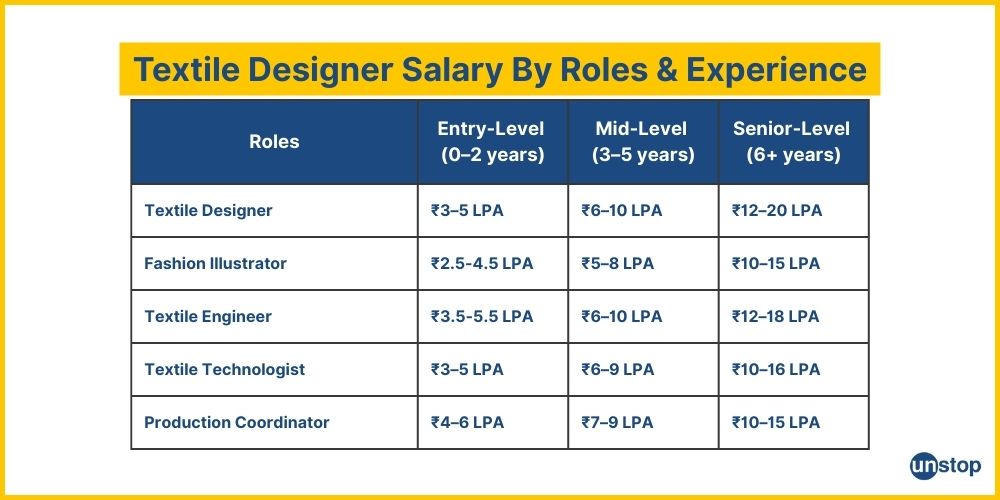
Textile Designer: These professionals create patterns and textures for fabrics used in clothing, home décor, and industrial use. They often work with both hand-drawn and computer-aided designs.
- Entry-Level (0–2 years): INR 3 to 5 LPA– Typically involved in assisting senior designers, creating basic patterns, and understanding fabric types.
- Mid-Level (3–5 years): INR 6 to 10 LPA– Designs full collections, works with clients, and develops original print designs.
- Senior-Level (6+ years): INR 12 to 20 LPA– Leads design teams, oversees entire fabric lines, and ensures trend relevance and market adaptability.
Fashion Illustrator: Fashion Illustrators transform design ideas into detailed visual representations, aiding in communicating concepts.
- Entry-Level (0–2 years): INR 2.5 to 4.5 LPA– Works on sketching under supervision and learning software like Adobe Illustrator.
- Mid-Level (3–5 years): INR 5 to 8 LPA– Works independently on illustrations for magazines, brands, and lookbooks.
- Senior-Level (6+ years): INR 10 to 15 LPA– Leads branding and illustration teams; works with luxury brands or fashion media houses.
Textile Engineer: Textile Engineers focus on the technical aspects of fabric production, including machinery, process optimization, and product development.
- Entry-Level (0–2 years): INR 3.5 to 5.5 LPA– Assists in production units, quality analysis, and machinery operation.
- Mid-Level (3–5 years): INR 6 to 10 LPA– Manages production lines and optimizes manufacturing processes.
- Senior-Level (6+ years): INR 12 to 18 LPA– Heads operations, leads innovations, and ensures regulatory compliance.
Textile Technologist: Textile Technologists focus on improving and testing textile materials, ensuring durability and sustainability.
- Entry-Level (0–2 years): INR 3 to 5 LPA– Engaged in lab testing and assisting in research and development.
- Mid-Level (3–5 years): INR 6 to 9 LPA– Conducts independent research and improves textile functionality.
- Senior-Level (6+ years): INR 10 to 16 LPA– Leads R&D divisions, patent development, and sustainable solutions.
Production Coordinator (Textiles) Production Coordinators in textile industries oversee operations, scheduling, and coordination between design and manufacturing.
- Entry-Level (0–2 years): INR 4 to 6 LPA– Assists in tracking production timelines and reporting issues.
- Mid-Level (3–5 years): INR 7 to 9 LPA– Coordinates teams and manages inventory and vendor communications.
- Senior-Level (6+ years): INR 10 to 15 LPA– Manages entire production cycles, budgeting, and supply chain logistics.
Hiring Hubs & Industry Hotspots For Textile Designers
Textile designers are in demand in various industries, including fashion, home decor, and manufacturing. Some of the top hiring locations and industries for textile designers include:
Top Hiring Cities In India
- Mumbai: A major center for the fashion and textile industry, hosting numerous fashion brands and export houses.
- Delhi NCR: Home to various textile export companies, retail brands, and design studios.
- Bengaluru: Known for its blend of traditional textile firms and tech-driven fashion startups.
- Kolkata: Renowned for its rich heritage in traditional textiles and weaving.
- Surat: A leading hub for textile manufacturing and printing.
- Tiruppur: Recognized as a major center for knitwear and garment exports.
Top Industries Hiring Textile Designers
- Fashion Brands: Companies like Fabindia, Raymond, and Zara hire textile designers.
- Textile Manufacturing: Firms such as Arvind Mills, Vardhman Textiles, and Reliance Textiles.
- Home Furnishings: Companies like D’Decor and Welspun India need textile experts for home fabrics.
- Export Houses: Work with global clients in textile design and production.
- E-commerce & Retail: Brands like Myntra, Amazon, and Flipkart recruit textile designers.
- Handloom & Craft Sector: Government and private initiatives promoting traditional weaving and textile arts.
Please note that the demand for textile designers can vary based on market trends and regional industry developments.
Alternatives Options For Textile Designer Career
If you have a passion for textiles but want to explore beyond traditional design roles, consider these options:
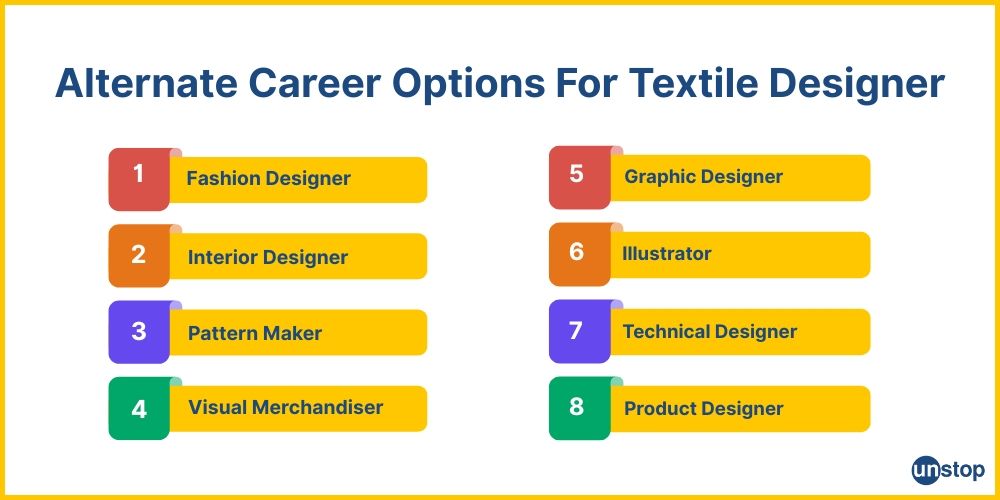
- Fashion Designer: A fashion designer creates stylish clothes and outfits. They use their knowledge of fabric, color, and design to make beautiful and trendy clothing. Textile designers can do well in fashion design because they already know how to work with different fabrics and patterns.
- Interior Designer: Interior designers make homes, offices, and other spaces look nice and comfortable. They choose furniture, curtains, and wall designs that match well. With a textile background, you can suggest the right fabrics and colors for a perfect look.
- Pattern Maker: Pattern makers create templates for making clothes, cushions, and other products. These patterns help in cutting fabric correctly. Textile designers often have great ideas for patterns and understand how to make designs that are easy to produce.
- Visual Merchandiser: These professionals design shop windows and store displays to attract customers. They use color and layout techniques to make products look appealing. A textile designer can use their design skills to create eye-catching displays.
- Graphic Designer: Graphic designers make images and layouts for websites, posters, logos, and ads. A textile designer who knows digital tools and design principles can do this job well, especially when working on fashion or product brands.
- Illustrator: These professionals draw pictures for books, websites, magazines, or products. If you enjoy drawing and using software, this career lets you turn your creativity into visuals for different media.
- Technical Designer: A technical designer works with fashion brands to make sure clothing designs are practical and easy to produce. They focus on how the clothes fit and are made. Textile designers understand fabrics well, which helps in creating good-quality products.
- Product Designer: This role requires one to help create new items like bags, home items, or gadgets. They focus on both how a product looks and how it works. Textile knowledge is useful when the product involves fabric, comfort, and style.
Conclusion
Textile design is a dynamic and integral component of various industries, including fashion, interior design, and manufacturing. It offers a harmonious blend of creativity and technical expertise, allowing designers to transform concepts into tangible products that resonate with consumers. The field presents a multitude of career opportunities, from traditional roles in fabric creation to innovative positions in sustainable and digital textiles. As the industry continues to evolve, embracing advancements in technology and shifts toward sustainability, textile designers remain at the forefront of shaping the aesthetic and functional aspects of everyday life. For those passionate about design and eager to make a tangible impact, a career in textile design offers a fulfilling and ever-evolving path.
Frequently Asked Questions
Q1. What educational background is required to become a textile designer?
A bachelor's degree in textile design, fashion design, or a related field is typically required. This education provides foundational knowledge in design principles, textile techniques, and industry practices.
Q2. What skills are essential for a successful career in textile design?
Key skills include creativity, proficiency in design software (such as Adobe Photoshop and Illustrator), a strong understanding of color theory, and knowledge of various fabrics and their properties. Effective communication and problem-solving abilities are also important.
Q3. What is the typical salary range for textile designers?
Salaries vary based on experience, location, and employer. Entry-level positions may start at a lower range, with potential for higher earnings as experience and expertise grow.
Q4. What are the primary responsibilities of a textile designer?
Textile designers create patterns and designs for fabrics used in clothing, home furnishings, and other products. They research trends, develop design concepts, select appropriate materials, and may oversee the production process to ensure design integrity.
Q5. Are there opportunities for career advancement in textile design?
Yes, with experience, textile designers can advance to senior designer roles, specialize in areas like sustainable textiles or digital printing, or move into related fields such as fashion merchandising or interior design.
Q6. How can I gain practical experience in textile design?
Pursuing internships, engaging in freelance projects, and developing a strong portfolio are effective ways to gain practical experience and showcase your skills to potential employers.
This article was contributed by Lovely Mahour, Unstop Campus Ambassadors.
Suggested reads:
- How To Ace The 'About Me' Section In Your Resume
- Career Options In Science - Ultimate Guide For Exploring Options
- How to Future-Proof Your Career as a Professional? Get the 10 Essential Skills
- Graphic Designer Resume 2026: Top Skills & Awesome Resume Samples
- 15+ Job-Winning Strengths In Resume (For Freshers & Experienced)
Login to continue reading
And access exclusive content, personalized recommendations, and career-boosting opportunities.
Don't have an account? Sign up

Never miss an
Update





Top-Rated Practice by Students






Subscribe
to our newsletter







Comments
Add comment