


 Home
Home


HP Power Lab 3.0
Table of content:
- What is Democratic Leadership?
- Key Characteristics of Democratic Leadership
- How Does Democratic Leadership Style Work?
- Examples of Democratic Leadership
- Benefits of Democratic Leadership
- Advantages of Democratic Leadership
- Drawbacks of Democratic Leadership
- How to Implement Democratic Leadership in Organizations?
- How to Become A Democratic Leader?
- Conclusion
- Frequently Asked Questions (FAQs)

What is Democratic Leadership? Definitions, Characteristics & Examples
Democratic Leadership, or participative leadership, is a management style that emphasizes collaboration, open communication, and shared decision-making. Read on for further details.
 0 min read
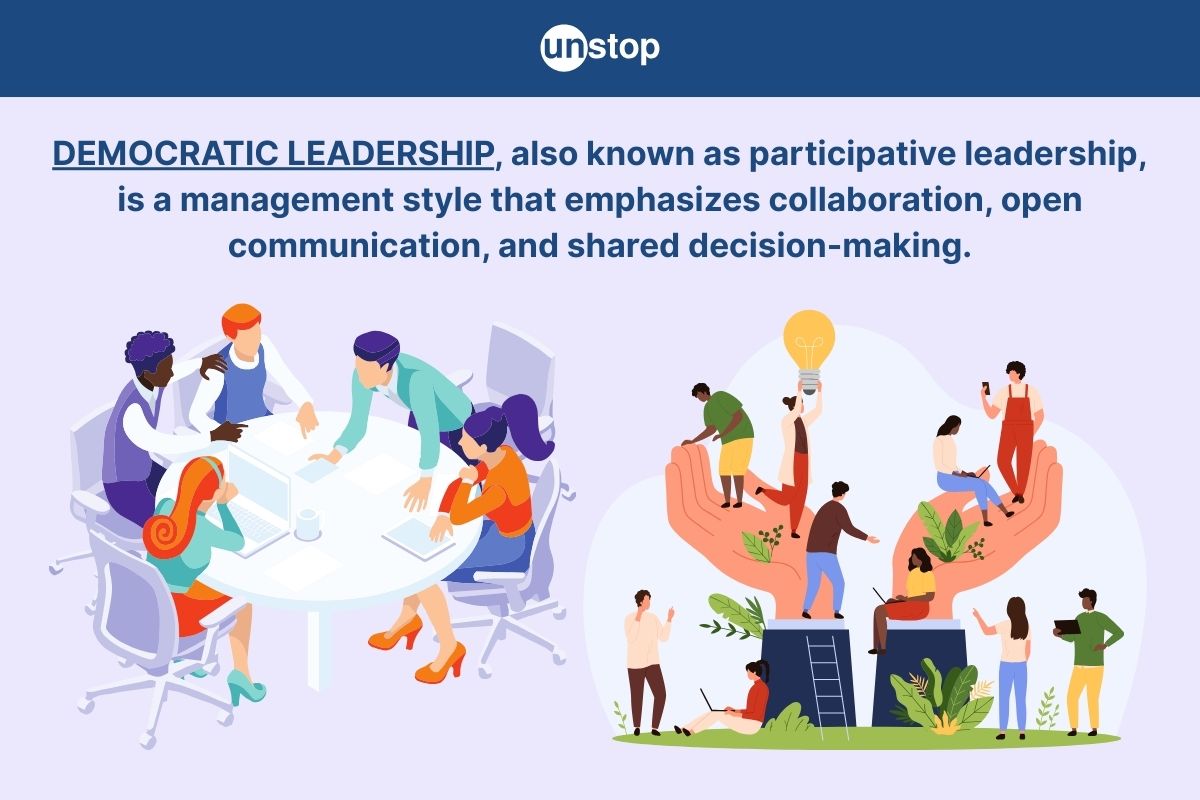
Democratic leadership is widely recognized for its effectiveness in organizations that prioritize creativity, innovation, and employee engagement, making it common in corporate settings, educational institutions, and political systems.
By encouraging teamwork and collective problem-solving, democratic leadership enhances motivation and productivity while promoting a sense of ownership among team members.
What is Democratic Leadership?
Democratic Leadership, or participative leadership, is a management style that emphasizes collaboration, open communication, and shared decision-making. In this approach, leaders actively involve team members in discussions, value their input, and foster an inclusive environment where diverse perspectives are encouraged.
While the leader retains the final decision-making authority, they prioritize team participation and collective problem-solving.
Key Characteristics of Democratic Leadership
Let us study some of the key characteristics of democratic leadership:
Transparency: Leaders share information openly with team members, ensuring everyone is informed and can contribute meaningfully.
Inclusivity: All team members are encouraged to share their ideas and opinions, fostering a sense of belonging and respect.
Collaboration: Decision-making is a collective process, leveraging the diverse skills and experiences of the team.
Empowerment: Employees are given the autonomy to take initiative, enhancing their commitment and accountability.
How Does Democratic Leadership Style Work?
The democratic leadership style is characterized by transparency, active participation, and a strong focus on teamwork. Leaders using this approach create an open environment where employees feel valued and empowered to share their ideas.
Democratic leaders facilitate discussions, encourage diverse perspectives, and ensure that decisions are based on the best available information. Unlike autocratic leaders, who act unilaterally, democratic leaders believe in consensus-building and shared accountability.
Examples of Democratic Leadership
Many successful leaders have embraced the democratic leadership style, fostering innovation and collaboration within their organizations.
Barack Obama (Political Leadership): As the 44th President of the United States, Obama was known for his inclusive approach, seeking advice from experts and encouraging open dialogue to address complex national issues.
Satya Nadella (Corporate Leadership): As CEO of Microsoft, Nadella transformed the company’s culture by promoting collaboration, openness, and innovation. He encouraged employees at all levels to contribute ideas, helping Microsoft regain its competitive edge.
Nelson Mandela (Social and Political Leadership): Mandela’s Leadership in post-apartheid South Africa exemplified democratic values, as he worked to unify a divided nation through dialogue, forgiveness, and inclusive decision-making.
Tim Cook (Business Leadership): Apple’s CEO, Tim Cook, is known for his participative leadership style, fostering a culture of teamwork and empowering employees to shape the company’s vision.
Richard Branson (Entrepreneurial Leadership): Founder of the Virgin Group, Branson believes in valuing employee input, encouraging risk-taking, and maintaining open communication, which has contributed to his business success.
Benefits of Democratic Leadership
Democratic leadership offers several advantages that contribute to a positive, engaging, and productive work environment. Here are some key benefits:
Enhanced Decision-Making: By involving multiple perspectives, decisions are more well-rounded, informed, and effective.
Increased Employee Engagement: Employees feel valued when their opinions are heard, leading to greater job satisfaction and motivation.
Boosts Creativity and Innovation: Open discussions encourage team members to share new ideas, fostering innovation and problem-solving.
Stronger Team Cohesion: Collaboration builds trust and strengthens relationships, improving teamwork and organizational culture.
Higher Productivity: When employees feel empowered and engaged, they take greater responsibility, leading to increased efficiency and performance.
Better Adaptability to Change: Organizations that practice democratic leadership can respond more effectively to challenges as they rely on diverse insights and collective problem-solving.
Encourages Skill Development: Team members develop leadership, communication, and critical-thinking skills by participating in decision-making processes.
Greater Employee Retention: A workplace culture that values employees' input and promotes inclusivity leads to higher job satisfaction and lower turnover rates.
Advantages of Democratic Leadership
Democratic leadership offers several benefits that contribute to a positive and productive work culture. It enhances team morale and motivation by making employees feel heard and respected. It also leads to better decision-making, as diverse perspectives contribute to well-rounded solutions.
Creativity and innovation thrive in this environment, as employees are encouraged to think independently and offer new ideas. Furthermore, democratic leadership promotes a sense of ownership and responsibility, increasing job satisfaction and team commitment.
Enhanced Decision-Making: By incorporating diverse viewpoints, decisions are more comprehensive and well-rounded.
Increased Innovation: An open environment encourages creative thinking and the exploration of new ideas.
Improved Job Satisfaction: Employees feel valued and heard, leading to higher morale and reduced turnover.
Stronger Team Cohesion: Collaborative efforts build trust and strengthen relationships among team members.
Drawbacks of Democratic Leadership
While democratic leadership fosters collaboration and inclusivity, it also presents certain drawbacks:
Time-Consuming Decision-Making: Involving multiple team members in discussions can lead to prolonged deliberations, potentially delaying action.
Potential for Conflict: Diverse opinions may lead to disagreements, requiring effective conflict resolution skills to maintain harmony.
Dependence on Team Competence: The success of this style relies on team members' expertise and commitment; lacking these can hinder effective decision-making.
Risk of Reduced Efficiency: Continuous consultations might impede swift decision-making, affecting productivity in time-sensitive situations.
How to Implement Democratic Leadership in Organizations?
Implementing democratic leadership in an organization requires a shift toward inclusivity, collaboration, and shared decision-making. Here’s how organizations can effectively adopt this leadership style:
Foster Open Communication: Create channels for employees to share their thoughts, concerns, and suggestions freely. Encourage transparency in decision-making to build trust.
Encourage Employee Participation: Involve team members in strategic discussions, brainstorming sessions, and important organizational decisions to make them feel valued and engaged.
Promote a Collaborative Work Culture: Establish teamwork-oriented processes where employees work together to solve problems and contribute ideas.
Empower Teams with Responsibility: Delegate decision-making authority to employees, allowing them to take ownership of tasks while providing necessary guidance.
Develop Strong Listening Skills: Leaders should actively listen to employees’ feedback and concerns, considering different perspectives before making final decisions.
Recognize and Reward Contributions: Acknowledge employees' efforts and ideas, ensuring they feel appreciated and motivated to participate further.
Encourage Continuous Learning and Growth: Ensure that team members get opportunities for professional development through mentorship, training, and open discussions.
Lead by Example: Leaders should demonstrate fairness, respect, and inclusivity, setting a positive example for the organization’s culture.
How to Become A Democratic Leader?
Becoming a democratic leader involves developing key skills and adopting a mindset that prioritizes collaboration, inclusivity, and shared decision-making. Here are some essential steps to cultivate democratic leadership:
Encourage Open Communication: Provide an ambiance for team members so that they feel comfortable sharing their ideas, opinions, and feedback.
Promote Collaboration: Involve team members in decision-making processes by listening to feedback and suggestions.
Be an Active Listener: Pay attention to different perspectives, acknowledge contributions, and consider various viewpoints before making decisions.
Develop Emotional Intelligence: Build strong interpersonal relationships by understanding and managing emotions, both yours and those of others.
Empower Your Team: Delegate responsibilities, trust your team members, and give them the autonomy to make meaningful contributions.
Encourage Creativity and Innovation: Support a culture that values new ideas and problem-solving through group discussions and brainstorming sessions.
Provide Constructive Feedback: Offer guidance and feedback that helps team members grow while also being open to receiving feedback yourself.
Lead by Example: Demonstrate democratic values through your actions, showing fairness, respect, and accountability in leadership decisions.
Conclusion
Democratic leadership is a highly effective approach that fosters collaboration, inclusivity and shared decision-making, leading to a more engaged and motivated workforce. By encouraging open communication, valuing diverse perspectives, and empowering employees, organizations can create a culture of trust and innovation.
While this leadership style may require time and effort to implement, its long-term benefits, such as increased creativity, higher job satisfaction, and improved team performance, make it a valuable strategy for modern workplaces.
Frequently Asked Questions (FAQs)
1. What is democratic leadership, and how does it work?
Democratic leadership, also known as participative leadership, is a management style where leaders encourage team members to contribute ideas and participate in decision-making. While the leader retains final authority, they value collaboration, open communication, and collective problem-solving to drive innovation and engagement.
2. What are the key advantages of democratic leadership?
Democratic leadership fosters creativity, improves employee morale, and enhances decision-making by incorporating diverse perspectives. It also encourages team collaboration, increases job satisfaction, and helps organizations adapt to change through shared insights and active participation.
3. What are the major challenges of democratic leadership?
While democratic leadership promotes inclusivity, it can slow down decision-making due to prolonged discussions. Disagreements may arise, requiring conflict resolution skills, and the approach depends heavily on the expertise and cooperation of team members. In fast-paced environments, this style may reduce efficiency.
4. Which well-known leaders use democratic leadership?
Prominent figures such as Sundar Pichai (CEO of Alphabet), Indra Nooyi (former CEO of PepsiCo), Barack Obama (former U.S. President), Richard Branson (Founder of Virgin Group), and Sheryl Sandberg (COO of Meta) are known for their participative leadership styles, fostering collaboration and valuing diverse viewpoints.
5. How can someone become a democratic leader?
To develop a democratic leadership style, one must encourage open communication, actively seek input from team members, promote teamwork, support skill development, and balance inclusivity with decisiveness. Leaders should also adapt their approach based on team dynamics and organizational needs.
Suggested reads:
- Contingency Theory of Leadership: A Flexible Leadership Approach
- What Is Charismatic Leadership? Types, Characteristics & Examples
- What Is Trait Theory of Leadership? Origin, Benefits & Criticisms
- What Is Situational Leadership? Definition, Model, Theory & Examples
- What Is Transformational Leadership? Definition, Traits & Theories
Login to continue reading
And access exclusive content, personalized recommendations, and career-boosting opportunities.
Don't have an account? Sign up

Never miss an
Update




Top-Rated Practice by Students






Subscribe
to our newsletter






Comments
Add comment