


 Home
Home


HP Power Lab 3.0
Table of content:
- What is Thought Leadership?
- Characteristics of Thought Leadership
- Importance and Benefits of Thought Leadership
- How to Become an Effective Thought Leader?
- Examples of Thought Leadership
- Limitations and Drawbacks of Thought Leadership
- Thought Leadership Framework & Strategies
- Conclusion
- Frequently Asked Questions (FAQs)

What Is Thought Leadership? The Power of Influence And Innovation
Thought leadership is the capacity or ability to influence and guide others through innovative ideas, deep expertise, and insightful perspectives in a particular field. Read on to get a detailed explanation.
 0 min read
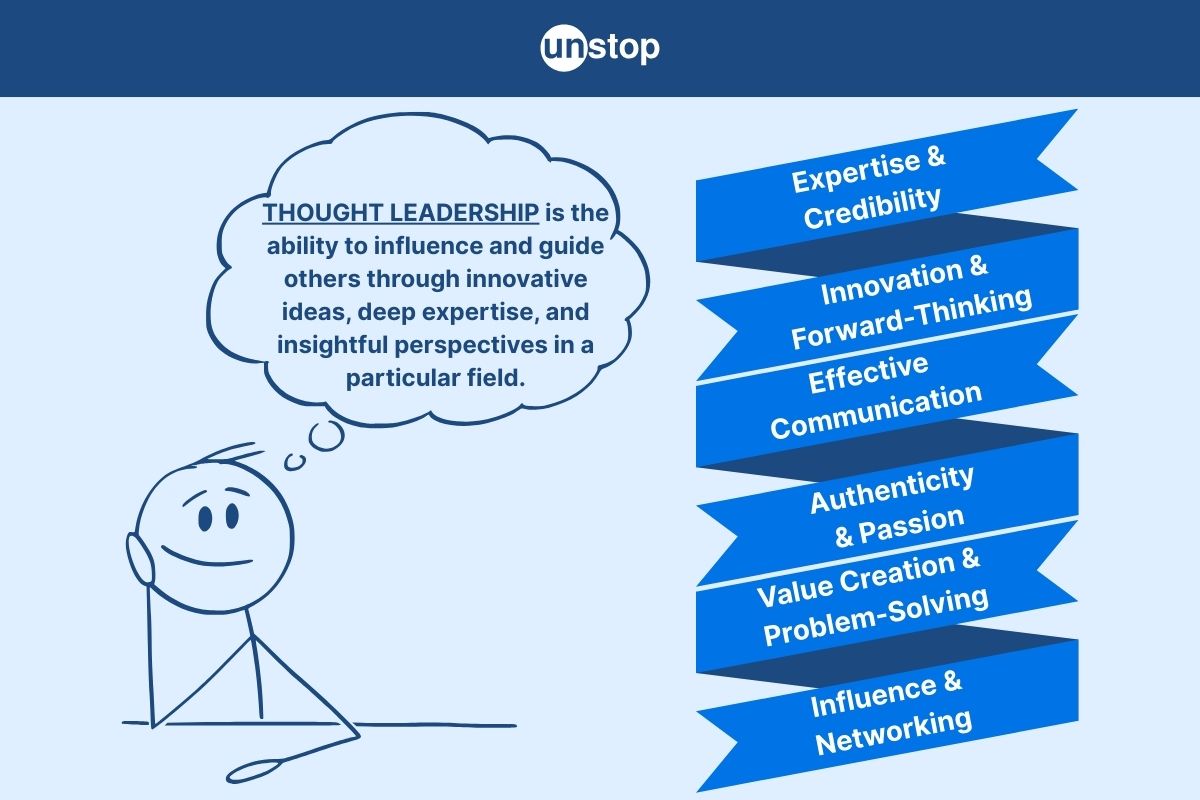
Thought leadership involves sharing valuable insights, challenging conventional perspectives, and driving conversations that shape industries and communities. Thought leaders establish credibility by consistently providing knowledge, solutions, and visionary perspectives, positioning themselves as trusted authorities in their field.
What is Thought Leadership?
Thought leadership is the capacity or ability to influence and guide others through innovative ideas, deep expertise, and insightful perspectives in a particular field. It is not just about having knowledge but also about sharing that knowledge in a way that inspires, educates, and drives meaningful change.
A thought leader is someone who is recognized as an authority in their domain, shaping conversations and setting trends.
Characteristics of Thought Leadership
Expertise and Credibility: Thought leaders possess deep industry knowledge backed by experience, research, and achievements, establishing them as credible authorities.
Innovation and Forward-Thinking: They anticipate trends, challenge conventional wisdom, and offer fresh, transformative ideas that drive change.
Effective Communication: They articulate complex ideas clearly and engage audiences through writing, speaking, and digital content.
Authenticity and Passion: Thought leaders are genuinely passionate about their field and maintain an authentic, trustworthy voice that resonates with others.
Value Creation and Problem-Solving: They consistently provide insights, solutions, and actionable strategies to address industry challenges and help others grow.
Influence and Networking: They build strong connections, foster discussions, and inspire others, amplifying their impact within their industry.
Importance and Benefits of Thought Leadership
The role of thought leadership is crucial in shaping industries and influencing audiences. Some key benefits include:
- Enhanced Credibility and Trust: By consistently providing valuable insights, thought leaders establish themselves as reliable and credible figures in their field.
- Increased Influence and Authority: Thought leadership helps individuals and organizations shape industry trends, influence decision-making, and drive meaningful change.
- Opportunities for Growth and Innovation: Engaging in thought leadership encourages continuous learning and fosters innovation, leading to new opportunities.
- Stronger Professional and Business Networks: Sharing insights and engaging in discussions with peers helps thought leaders build strong relationships and partnerships.
- Competitive Advantage: By positioning themselves as experts, thought leaders gain a strategic advantage over competitors and become the go-to resource in their industry.
How to Become an Effective Thought Leader?
Becoming a thought leader requires dedication, expertise, and the ability to communicate ideas effectively. Here are key steps to establish yourself as a thought leader:
Develop Deep Expertise: Focus on mastering your domain by consistently learning and staying ahead of industry trends.
Create and Share Valuable Content: Regularly publish blogs, whitepapers, and videos that provide unique insights and solutions.
Engage With Your Audience: Actively participate in team discussions, answer questions, and interact with your audience on social media and professional networks.
Speak at Events and Conferences: Establish authority by sharing your expertise through keynote speeches, webinars, and panel discussions.
Network With Other Experts: Collaborate with other thought leaders to expand your reach and credibility.
Be Consistent and Authentic: Thought leadership requires ongoing effort. Be genuine in your insights and maintain consistency in your message.
Examples of Thought Leadership
Some of the most influential thought leaders have transformed industries and reshaped public perception through their expertise. Here are a few examples:
- Elon Musk (Technology & Innovation) - By consistently pushing boundaries in space travel, electric vehicles, and artificial intelligence, Musk has positioned himself as a visionary thought leader. He once said, “Some people don’t like change, but you need to embrace change if the alternative is disaster.”
- Simon Sinek (Leadership & Motivation) - With his concept of the "Golden Circle" and books like Start With Why, Sinek has changed the way people think about Leadership and purpose-driven business. His famous quote, “People don’t buy what you do; they buy why you do it.” encapsulates his thought leadership approach.
- Brené Brown (Vulnerability & Leadership) - Through her research on courage, vulnerability, and Leadership, Brown has influenced how individuals and organizations approach personal and professional growth. She advocates, “Vulnerability is not winning or losing; it’s having the courage to show up when you can’t control the outcome.”
- Seth Godin (Marketing & Business Strategy) - Known for his groundbreaking ideas on marketing and business, Godin challenges conventional wisdom and promotes innovative thinking through his books and blogs. He believes, “Marketing is no longer about the stuff that you make, but about the stories you tell.”
- Indra Nooyi (Corporate Leadership & Strategy) - As the former CEO of PepsiCo, Nooyi's thought leadership in sustainable business practices and corporate strategy has made a lasting impact. She once stated, “Leadership is hard to define, and good Leadership even harder. But if you can get people to follow you to the ends of the earth, you are a great leader.”
Limitations and Drawbacks of Thought Leadership
While thought leadership offers many benefits, it also comes with challenges and limitations:
- Establishing credibility as a thought leader requires consistent effort, research, and engagement over time.
- Risk of Oversaturation - With many professionals vying for thought leadership, standing out requires originality and genuine insights.
- Criticism and Scrutiny - Being a public figure in your industry means facing criticism and differing opinions, which can be challenging to manage.
- Pressure to Stay Relevant - Thought leaders must continuously innovate and adapt to maintain their credibility and influence.
- Monetization Challenges - While thought leadership builds reputation, converting it into direct business opportunities can be complex.
Thought Leadership Framework & Strategies
Thought Leadership Framework
A structured approach to thought leadership involves the following key components:
Expertise & Credibility: Build deep knowledge in your field and establish trust through experience, research, and accomplishments.
Unique Perspective: Offer fresh insights, challenge conventional thinking, and drive meaningful discussions.
Value-Driven Content: Consistently create and share valuable content that educates, informs, and inspires your audience.
Engagement & Influence: Foster relationships, network with industry peers, and actively participate in discussions.
Consistency & Visibility: Maintain a strong presence through various channels, such as articles, public speaking, podcasts, and social media.
Adaptability & Growth: Stay open to learning, embrace new trends, and refine your thought leadership approach over time.
Strategies to Develop Thought Leadership
Create Your Niche: Identify a specific area of expertise where you can provide unique value.
Create High-Quality Content: Publish blogs, articles, videos, or podcasts that showcase your knowledge and insights.
Leverage Social Media: Actively share your ideas with your audience and get involved in relevant industry conversations.
Speak at Events & Webinars: Position yourself as an authority by sharing expertise in conferences, panels, and workshops.
Collaborate & Network: Build relationships with other thought leaders, influencers, and industry experts.
Be Consistent & Authentic: Thought leadership is built over time—maintain regular engagement and stay true to your values.
Use Data & Trends: Support insights with research, case studies, and real-world examples to enhance credibility.
Encourage Interaction: Foster discussions, answer questions and invite conversations to establish yourself as a trusted voice.
Conclusion
Thought leadership is a powerful tool that enables individuals and organizations to influence industries, drive innovation, and inspire change. It requires deep expertise, a commitment to sharing knowledge, and the courage to challenge conventional thinking.
Whether you are an entrepreneur, a corporate leader, or an industry expert, embracing thought leadership can help you build credibility, expand your influence, and create a lasting impact. However, it is essential to recognize the challenges and invest the necessary time and effort to sustain long-term influence.
Frequently Asked Questions (FAQs)
What is the main goal of thought leadership?
Thought leadership aims to establish credibility and influence by sharing valuable insights, innovative ideas, and expert knowledge. It helps shape industry discussions, inspire change, and position individuals or organizations as trusted authorities.
2. How can someone become a recognized thought leader?
To become a thought leader, one must develop deep expertise and share valuable insights through blogs, speeches, and social media. Engaging with audiences, networking with industry experts, and staying updated on trends are essential. Authenticity and consistency are key to gaining recognition.
3. What are the benefits of thought leadership for businesses?
Thought leadership enhances brand credibility, attracts customers, and opens doors to new opportunities. It helps shape industry trends, provides a competitive edge, and fosters strong relationships with audiences, leading to greater trust and long-term success.
4. What is the difference between a thought leader and an influencer?
Thought leaders gain recognition through expertise, industry knowledge, and valuable insights, shaping discussions and driving change. Influencers, on the other hand, rely on popularity and engagement, often promoting brands rather than introducing new ideas.
5. What are common mistakes to avoid in thought leadership?
Common mistakes include focusing on self-promotion rather than providing value, lacking originality, ignoring audience engagement, and failing to stay updated with industry trends. Consistency, authenticity, and meaningful contributions are crucial for success.
Suggested reads:
- Contingency Theory of Leadership: A Flexible Leadership Approach
- What Is Charismatic Leadership? Types, Characteristics & Examples
- What Is Trait Theory of Leadership? Origin, Benefits & Criticisms
- What Is Situational Leadership? Definition, Model, Theory & Examples
- What Is Transformational Leadership? Definition, Traits & Theories
Login to continue reading
And access exclusive content, personalized recommendations, and career-boosting opportunities.
Don't have an account? Sign up

Never miss an
Update




Top-Rated Practice by Students






Subscribe
to our newsletter






Comments
Add comment