


 Home
Home


HP Power Lab 3.0
Table of content:
- Understanding the Cybersecurity Talent Gap
- Craft an Inclusive Cybersecurity Hiring Strategy
- Building a Cybersecurity Talent Playbook
- Championing Diversity & Inclusion in Cybersecurity Hiring
- Onboarding & Retention Strategies for Cybersecurity Talent
- Conclusion

Hiring & Retaining Cybersecurity Talent: The Playbook For HRs
Get practical insights essential for HR recruiters to attract, evaluate, and retain cybersecurity professionals while fostering diversity and long-term growth.
 0 min read
The demand for cybersecurity experts has never been higher, yet organizations struggle to find qualified candidates. According to the World Economic Forum, around 4 million cybersecurity positions are needed worldwide. In the US alone, there are over 500,000 unfilled cybersecurity roles, putting businesses at risk. HR departments should view cybersecurity recruitment as a strategic priority, developing a clear and adaptable approach to effectively tackle these challenges.
When hiring cybersecurity professionals, you need to follow a multifaceted approach. HR teams must collaborate closely with security leaders to clearly define roles, expand outreach channels, and emphasize diversity. The following sections outline actionable strategies and best practices to help HR recruiters build a robust cybersecurity recruiting process and for cybersecurity specialists to find cybersecurity career opportunities.
Understanding the Cybersecurity Talent Gap
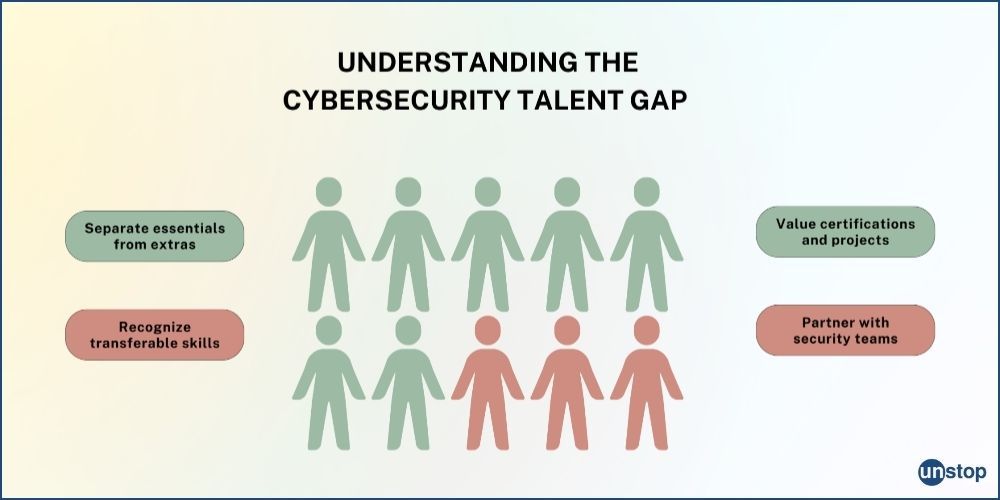
The difficulty in cybersecurity hiring is not just about unfilled positions; it’s about a mismatch between employer expectations and the available talent pool. Many organizations set requirements that unintentionally shrink their candidate base, such as demanding years of prior cyber experience for entry-level jobs or listing every advanced certification as mandatory.
Another challenge is the fast pace of change. Skills in areas like cloud security, identity management, and AI-driven threat detection are evolving faster than traditional education pipelines can adapt. As a result, many technically capable professionals are overlooked simply because they don’t fit the “perfect” profile on paper.
For HR recruiters, the key is reframing the problem: instead of waiting for an ideal candidate to appear, build pathways that allow motivated individuals to grow into roles.
What Does this Mean?
Separating essentials from extras: Clearly define which skills are critical for day one and distinguish them from those that can be learned on the job.
Recognizing transferable skills: Candidates with IT, risk management, or even analytical backgrounds may bring valuable problem-solving capabilities.
Valuing certifications and projects: Practical training, hackathon participation, or security bootcamps often demonstrate readiness more effectively than a degree alone.
Partnering with security teams: Ensure job descriptions align with real-world role needs, rather than relying on outdated templates.
By focusing on adaptable talent and potential rather than rigid checklists, HR recruiting professionals can reduce the pressure of the talent gap and uncover strong candidates hiding in plain sight.
Key Point: Cybersecurity recruiting demands strategy and careful planning. HR should partner with IT/security leadership to conduct a thorough needs assessment. Then, list critical job functions (e.g., threat analysis, incident response, cloud security), skill levels required, and any certifications or clearances needed.
Create precise job descriptions that balance needed expertise with realistic entry criteria. As ISC2 research finds, over 90% of security managers will consider candidates with IT experience or a basic cybersecurity certification over those with only a degree. Emphasizing hands-on skills (like CTF participation or projects) and relevant certs can expand the candidate pool beyond traditional computer science graduates.
Craft an Inclusive Cybersecurity Hiring Strategy
To compete, HR must become proactive and creative. Traditional recruiting (social posts, staffing agencies) remains important, but successful teams are broadening their pipelines. Consider the following approaches:
1. Internships and Apprenticeships:
Make early career hiring a priority. Studies suggest that 55% of companies use online internships and 46% use apprenticeships to attract cyber talent.
Developing a formal internship/apprenticeship program provides a talent pipeline and allows training on your tech stack. Partner with universities or bootcamps to offer semester projects or hackathon sponsorships, and interns can become full-time hires.
2. Non-Traditional Recruiting:
Look beyond cybersecurity majors. HR should also target applicants from unrelated fields – communications graduates, psychology majors, veterans – who demonstrate aptitude. According to a survey, 25% of early-career hires came from non-IT backgrounds.
For example, employees from helpdesk, finance, or even marketing with logical thinking skills have succeeded when given training. Emphasize on-the-job training and mentorship to bring them up to speed.
3. Cybersecurity Communities:
Engage with niche talent pools. Sponsor or attend events like DEF CON, BSides, and Women in Cybersecurity (WiCyS) forums. Advertise openings on industry job boards and in cybersecurity associations. Organize coding challenges or “capture the flag” contests, and winners often demonstrate real skill and enthusiasm.
4. Flexible Workforce:
The cyber skills shortage spans geographies. Expand recruiting to include remote talent, contract or freelance security specialists, and global talent if visa policies allow. However, HRs should coordinate with legal and finance teams to manage international hires or remote contracts.
5. Employer Brand:
Promote the mission of cybersecurity and company culture. Many candidates care about meaningful work and learning opportunities. Highlight cybersecurity’s role in protecting customers and data.
Feature interviews or testimonials from current security team members to show career pathways and success stories. Competitive salary is vital, but so are perks like paid certifications, training budgets, flexible hours, and remote work, benefits that attract top security talent.
By diversifying sourcing channels and emphasizing a security-first culture, HR recruiters can uncover hidden talent and make their organizations an employer of choice in cyberspace.
Building a Cybersecurity Talent Playbook
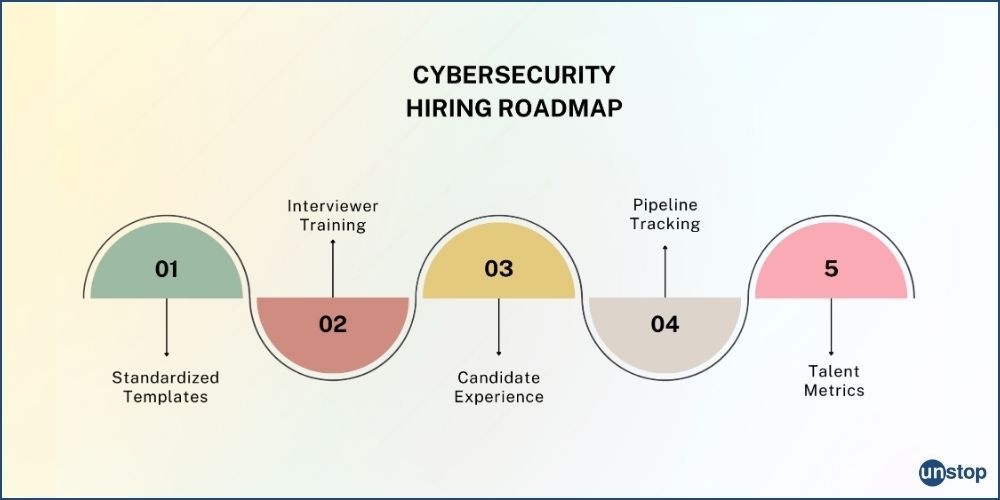
Recruiting for cybersecurity is an ongoing discipline that requires structure, consistency, and foresight. A structured framework guides cybersecurity hiring end-to-end, serving as a roadmap to scale teams while ensuring efficiency, consistency, and a positive candidate experience.
Standardized Templates:
Ready-made job descriptions, interview questions, and evaluation rubrics for various cyber roles (analyst, engineer, CISO). Having templates ensures consistency and reduces time-to-hire. However, you must customize templates as and when needed.
Interviewer Training:
Educate HR and hiring managers on cybersecurity roles. Brief them on technical basics and desired skill sets so they can ask relevant questions and avoid overly vague screening. This alignment helps spot qualified candidates even if they come from unconventional backgrounds.
Candidate Experience:
Outline best practices for communicating with applicants. The cyber market is candidate-driven; lengthy, opaque processes risk losing top talent. For example, streamline the number of interview rounds, provide feedback, and keep the process moving quickly.
Pipeline Tracking:
Keep a database of past applicants and passive prospects. After recruiting rushes, you might revisit candidates who were a “near fit” for one role for another position. Nurture relationships via mailing lists or networking events.
Talent Metrics:
Define success recruitment metrics (time-to-fill, acceptance rate, diversity ratios). Regularly review them in HR meetings to identify bottlenecks and areas of improvement.
Human resource professionals can treat this playbook like a product: test new approaches (pilot a coding test, evaluate a new job board), measure outcomes, and update the playbook accordingly. Just as a security team has an incident response plan, the organization should have a documented plan for “security team growth” that HR owns and iterates.
Sample Cybersecurity HR Recruiting Process
A simplified checklist example:
- Role Analysis: HR meets with IT/security to finalize the job profile (skills, responsibilities, salary range).
- Source Candidates: Post on niche platforms (e.g., InfoSec job boards), attend cyber career fairs, and leverage employee referrals (with bonuses).
- Pre-Screen: Use basic skills tests or initial screening calls to verify interest and general background.
- Technical Assessment: Include a practical challenge or ask about relevant projects/certifications during interviews. For junior roles, focus on problem-solving scenarios rather than expecting deep technical answers.
- Panel Interviews: Combine an HR representative, a security manager, and a technical staff member in the interview panel for a rounded evaluation.
- Offer and Onboarding: Once a candidate is selected, accelerate the onboarding process. Provide resources like company logins, training materials, and assign a mentor from day one.
This structured approach, backed by strategy, forms the core of the cybersecurity talent playbook for HR.
Championing Diversity & Inclusion in Cybersecurity Hiring
A strong framework must address the well-known diversity gap in cybersecurity. According to an industry report by programs.com, relatively few women work in cybersecurity, with the average female representation in the security team’s workforce at about 24%. This imbalance represents a missed opportunity. Women often bring complementary skills; for instance, research indicates women applicants have 52.5% more soft skills, like leadership and communication, than men.
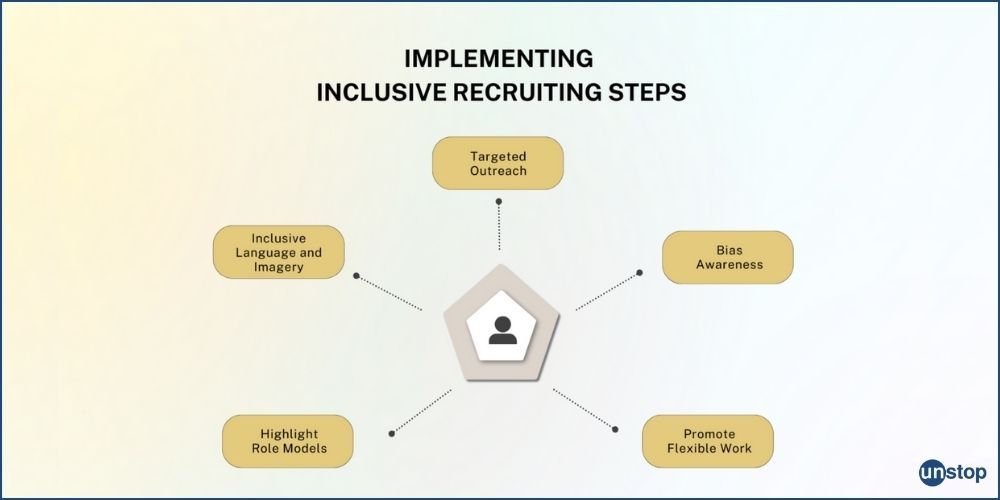
Diverse teams are better at catching threats and innovating, since attackers come from all walks of life. HR can help close this gap by implementing inclusive recruiting steps:
- Inclusive Language and Imagery: Ensure job ads and careers pages use gender-neutral language and highlight diversity. Feature images of diverse team members, and explicitly state commitment to inclusion.
- Targeted Outreach: Partner with organizations like Women in Cybersecurity (WiCyS), Black Girls Hack, or veteran tech groups. Sponsor scholarships, bootcamps, and mentorship programs for women and minorities interested in cybersecurity. Participate in conferences that focus on diversity in tech.
- Bias Awareness: Train recruiters and hiring managers about unconscious bias. Standardize interview questions so candidates are evaluated on relevant criteria.
- Promote Flexible Work: Emphasize flexible schedules or remote work to accommodate those (often women) who may balance career with family responsibilities. Policies like parental leave, childcare support, or four-day workweeks can make the field more accessible.
- Highlight Role Models: Showcase success stories of women and diverse cybersecurity leaders. Seeing role models reduces fear of entering a "technical" field. HR can host talks or webinars where diverse employees share their career paths.
By proactively recruiting women and underrepresented groups, organizations not only fill roles faster but also enrich their security culture.
Onboarding & Retention Strategies for Cybersecurity Talent
Finding talent is only half the battle won. Retaining skilled cybersecurity staff is equally important, especially given the high market demand. Onboarding should go beyond paperwork; it must immerse new hires in the security culture. Consider:
1. Structured Onboarding: Provide new team members with a clear 30-60-90-day plan. Include initial projects (like a systems audit or research task), training on tools, and introductions to key stakeholders. Rotate them through different security functions (e.g., network security, incident response) so they see the big picture.
2. Mentorship: Pair each new hire with a senior mentor. This accelerates learning and demonstrates the company’s investment in its growth.
3. Continuous Education: Cybersecurity evolves rapidly. Offer budgets or reimbursements for certification courses (e.g., CISSP, cloud security certs) and support attendance at conferences.
As a survey noted, 75% of hiring managers keep a budget for employee development, reflecting that ongoing learning is expected. The research also claimed that training entry-level staff to be cost-effective results in a high-potential return.
4. Career Pathing: Outline clear advancement paths. Some candidates enter as analysts and aspire to become architects, managers, or CISOs. Clarify how skills translate to promotions and new responsibilities.
5. Recognition and Culture: Create a security-positive culture where contributions are celebrated. Quick wins (stopping an attack, earning a cert) should be recognized by peers and leadership. A sense of purpose and camaraderie helps reduce turnover.
Remember, the cost of turnover in cyber roles is high: replacing a specialist can take months of recruiting and training. Investing in retention (through supportive policies, engaging work, and fair compensation) is hence as crucial as recruiting itself.
To strengthen bonds within new and existing teams, HR can also organize activities like a team-building scavenger hunt, where employees solve challenges together. These exercises encourage collaboration and reinforce problem-solving skills that are essential in real-world threat detection.
Conclusion
Finding the right professionals to protect an organization is never simple, but it becomes far more manageable with the right approach. Success lies in combining clear expectations, creative sourcing, and inclusive practices with a strong focus on growth and retention. When HR teams treat recruitment as a continuous process rather than a quick fix, they create a pipeline of motivated individuals who can evolve with the challenges ahead. A thoughtful playbook not only helps attract skilled people but also builds a culture where they want to stay and thrive.
Suggested reads:
- Hiring Inexperienced Talent: The Benefits & Challenges
- A Detailed Guide To Online Recruiting AKA The Future Of Hiring
- Recruit Talent Using A Hackathon To Revolutionize Your Hiring Process
- Transforming Hiring Landscape - Harnessing AI And ML For Talent Acquisition
- Golden Handcuffs: Definition, Purpose, Types, And Real-World Examples
Login to continue reading
And access exclusive content, personalized recommendations, and career-boosting opportunities.
Don't have an account? Sign up

Never miss an
Update





Top-Rated Practice by Students





Subscribe
to our newsletter


Blogs you need to hog!
Organize Hackathons: The Ultimate Playbook With Past Case Studies
Shivani Goyal

What is Campus Recruitment? How To Tap The Untapped Talent?
Shivangi Vatsal
Lateral Hiring: A Complete Guide To The Process, Its Benefits, Challenges & Best Practices
Srishti Magan
Step-By-Step Approach To Building A Winning Campus Recruitment Strategy
Srishti Magan

Comments
Add comment