

Recruiters Reading List
What is A Competency Assessment? Types, Benefits, Importance & More!
Competency assessments have emerged as vital tools, enabling companies to evaluate the skills of their employees or potential candidates accurately. Let's explore this in detail.
Top 7 Technical Assessment Platforms For Smarter Recruitment
Discover the must-have features, strengths and weaknesses of top technical assessment platforms and how to choose the best platform for your hiring needs. Read ahead!
Talent Assessment Trends In 2026: Gamification, Skill-Based Evaluations & More
What are the top talent assessment trends in 2024? What ideas are shaping the recruitment landscape? How are companies planning to engage and evaluate Gen-Z? Find answers to all these questions here.
Identifying Comprehensive Skills & Developing Assessments For Top Talent!
Let's understand comprehensive skills, take a closer look at competency management, and see how it helps to identify, develop, assess, and optimize employees’ skills, abilities, and behaviours.
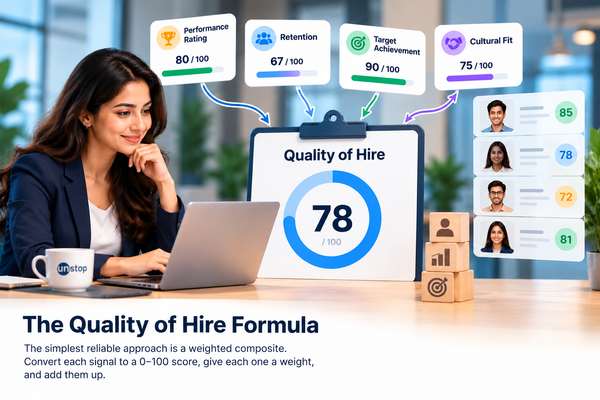
Quality of Hire: How to Define, Measure and Improve It
Quality of hire measures how effectively new employees perform, meet targets, and stay with the organization. Learn how to calculate quality of hire using a weighted formula, track key metrics, measure progress over the first year, and improve hiring outcomes with data-driven recruitment strategies.

The End-to-End Recruitment Process: 10 Stages From Requisition to Onboarding
Explore the 10 stages of end-to-end recruitment, from candidate sourcing to onboarding. Learn how clear ownership, AI-powered hiring, and data-driven best practices help recruiters hire faster and improve candidate experience.
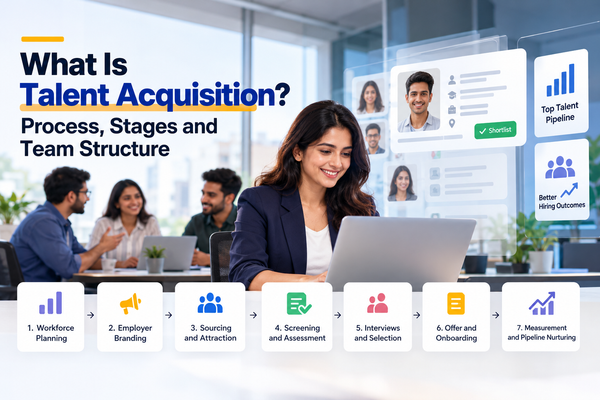
What Is Talent Acquisition? Process, Stages and Team Structure
Talent acquisition is a strategic approach to planning, attracting, assessing, and hiring talent for long-term business growth. Discover the seven stages of the talent acquisition process, key team roles, essential hiring metrics, and practical strategies to build an effective talent acquisition team.
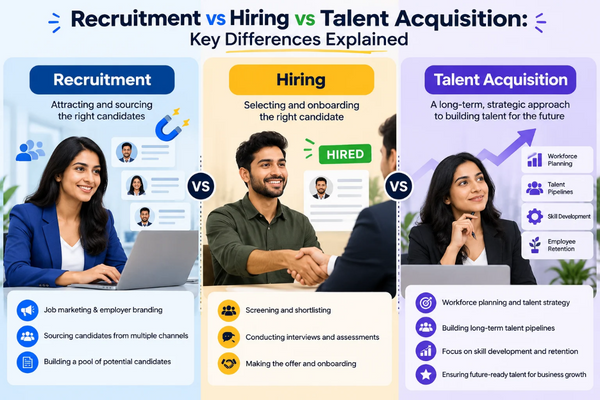
Recruitment vs Hiring vs Talent Acquisition: Key Differences Explained
Recruitment focuses on attracting and screening candidates, hiring involves selecting and onboarding the right person, and talent acquisition takes a long-term approach to workforce planning, employer branding, and building talent pipelines. This blog explains their key differences, processes, metrics, and importance in helping businesses hire the right talent efficiently.

How to Run a Tech Hackathon for BFSI Hiring
A practical guide to using tech hackathons for BFSI hiring, covering challenge design, suitable roles, evaluation criteria, data safety, hiring funnel integration, implementation timeline, budgeting, and measuring hiring ROI.

Hackathon vs Internship Hiring: Which One Actually Delivers Better ROI?
Compare hackathon vs internship hiring on cost, conversion, scalability, and ROI to identify the right early-talent hiring strategy for your business.
What to Do After a Hackathon If You Actually Want to Hire From It
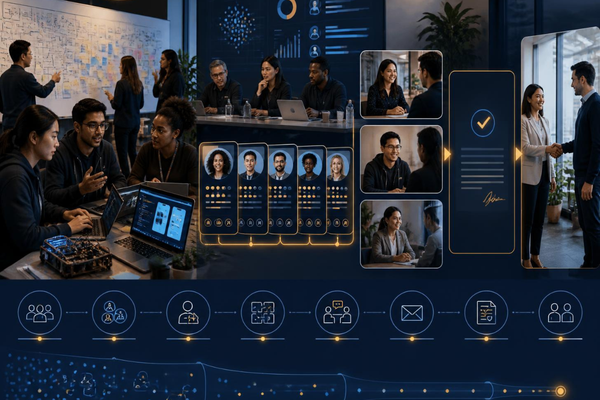
A practical guide to converting hackathon participants into hires - covering candidate segmentation, scoring, targeted interviews, recruiter outreach, and full funnel tracking from participation to joining.
How to Judge a Hackathon When You're Actually Trying to Hire Someone
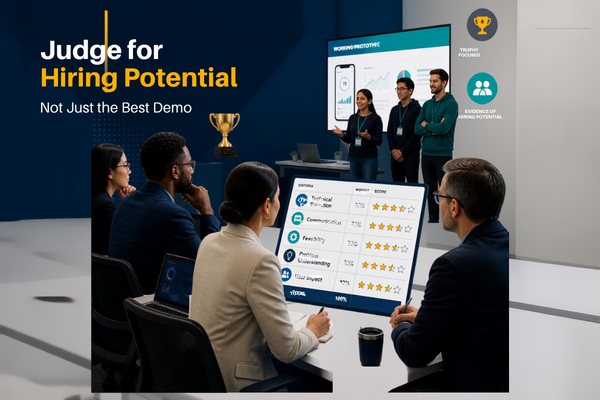
This blog explains how to judge hackathons for hiring potential, using a weighted scorecard, fair evaluation practices, and a process to turn hackathon performance into hiring decisions. The focus is on job-relevant skills and individual contribution, not just winning the hackathon.

10 Best Practices for Reducing Bias in Skills Assessments
Learn 10 practical ways to reduce bias in skills assessments, including job-aligned testing, standardized scoring, accessibility, clear language, AI validation, data analysis, and continuous audits to create fairer and more reliable hiring decisions.

Agentic AI in Recruitment: What It Is & How Unstop's AI Agents Work
Agentic AI in recruitment means AI agents that plan and execute multi-step hiring tasks toward a goal, not just react to prompts like automation or copilots. This piece explains that distinction and walks through how Unstop's seven AI agents work together across sourcing, screening, and hiring, plus where a human recruiter still needs to step in.

10 Signs Your Employer Brand Isn't Resonating with Students
Learn the 10 key signs that your employer brand isn’t resonating with students, from low campus engagement to weak application conversions. Discover practical ways to improve student perception, engagement, and build a stronger campus talent pipeline.

10 Best Campus Ambassador Program Ideas for Employer Branding
Discover 10 effective campus ambassador program ideas to boost employer branding, engage students, and build stronger campus relationships. From student-led events and workshops to competitions, creator programs, and talent communities, learn how to turn campus engagement into a warmer talent pipeline.

How to Run a Virtual Hiring Drive: Complete Employer Guide
A practical, employer-focused playbook for running a virtual hiring drive covering how to plan the funnel, source and screen candidates, run structured virtual interviews, and pick the right technology. Includes a problem/fix table for common failure points (missed links, no-shows, drop-off) plus a pre-launch, interview-day, and post-drive checklist.

Candidate Experience Best Practices for Employers
A practical, no-fluff guide to candidate experience for employers, covering the full candidate journey from job ad to onboarding handoff. Breaks down why hiring processes actually fail (not just "communicate more"), how to fix the biggest drop-off points, and how to measure candidate experience beyond a single survey score.

10 Signs Your Employer Brand Isn't Resonating with Students
Discover 10 signs your employer brand isn't resonating with students and learn how to improve engagement, employer perception, and your campus talent pipeline.

10 Best Campus Ambassador Program Ideas for Employer Branding
Explore 10 effective campus ambassador program ideas to strengthen employer branding, engage students, build campus communities, and create a stronger early talent pipeline.