


 Home
Home


HP Power Lab 3.0
Table of content:
- What Is the DRDO Internship Scheme?
- How to Apply for DRDO Internship?
- Eligibility Criteria to Get DRDO Internship
- Tips to Increase Your Chances of Getting a DRDO Internship
- Common Pitfalls & How to Fix Them
- Conclusion
- Looking for the Perfect Internship for Yourself?

How To Apply For DRDO Internship: Complete Guide For Students
Learn everything you need to know to get a DRDO internship that gives you not only exposure to defense R&D and mentorship, but also the experience of working on a real project.
 0 min read
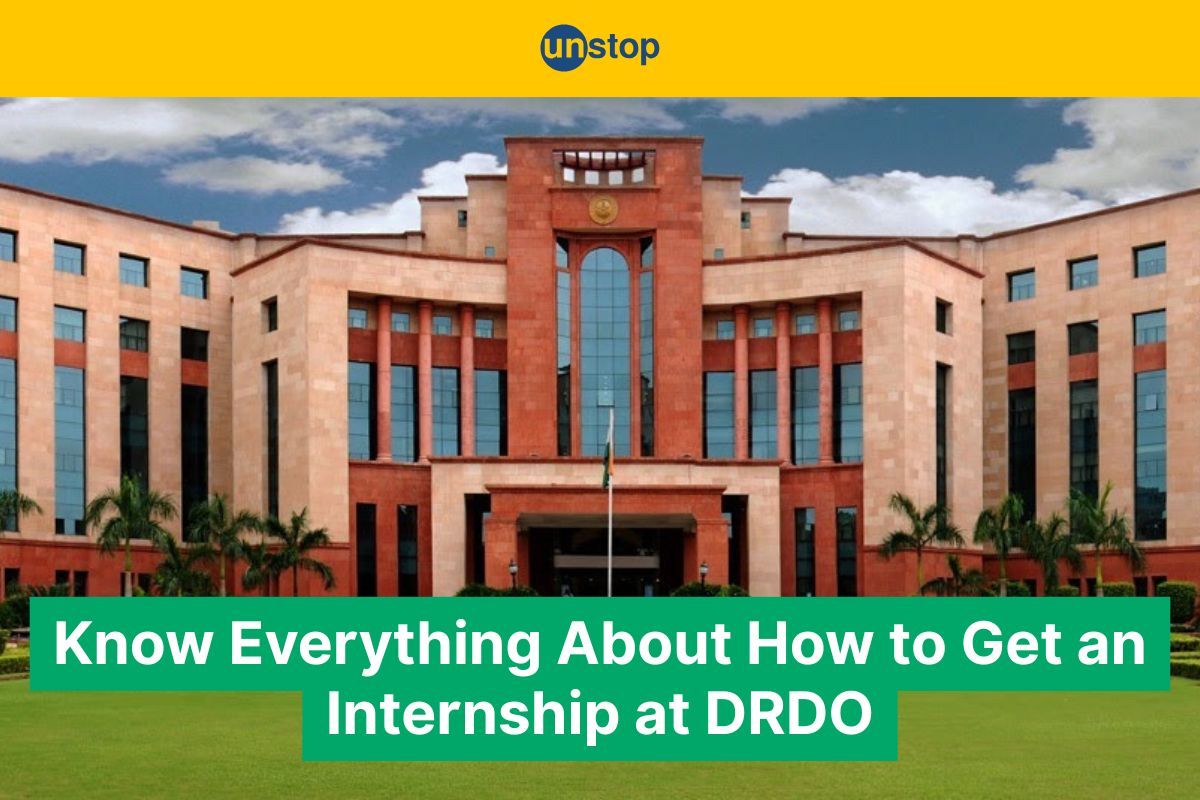
The Defence Research & Development Organisation (DRDO) is India’s premier agency responsible for research and development in defense technologies. Interning at DRDO is not just a resume booster; it offers rare exposure to state-of-the-art R&D, mentorship by top scientists, and a chance to contribute to projects of national importance.
In this blog, we will explain how to apply for a DRDO internship, laid out in clear, actionable steps, along with the structure and nature of the DRDO Internship Scheme, eligibility rules, timelines, tips to boost your chances, and common pitfalls. Whether you’re an engineering, science, or technology student, this guide is meant to help you approach DRDO internships strategically.
What Is the DRDO Internship Scheme?
The DRDO internship schemes and trainee programs are the agency's way of training and providing exposure for undergraduate and postgraduate students in engineering, general sciences, and allied disciplines. The aim is to let interns/ trainees work on ongoing research, understand defense-related projects, and gain hands-on experience in unclassified domains of DRDO labs.
Key Features & Mechanism
- Project Training in Relevant Fields: Interns are placed in labs aligned with their domain, such as engineering, electronics, materials science, life sciences, etc., to assist in R&D tasks.
- Unclassified Work Only: Interns are strictly permitted to work in unclassified areas. Classified or sensitive projects are off limits.
- Training Duration Flexibility: The period of internship generally ranges from 4 weeks to 6 months, depending on project scope and the lab director's discretion.
- Approval by Lab Director & Vacancies Based: Internships are offered subject to available positions and approval by the head of the specific DRDO lab.
- Internship Locations & Labs: DRDO has many labs across India such as Advanced Systems Laboratory (ASL) in Hyderabad (working in solid propulsion and system design), High Energy Materials Research Laboratory (HEMRL) in Pune (specializing in high energy materials & explosives), Defence Research Laboratory (DRL) in Assam (research in environmental / defense science), among others. These labs span diverse technical domains.
How to Apply for DRDO Internship?
Below is a step-by-step process you (the applicant) should follow when applying for a DRDO internship, with tips and examples for each stage.
1. Determine Relevant DRDO Lab & Research Area
- DRDO’s Scheme of Internship for Students allows interns to work in labs on unclassified research areas.
- Start by exploring DRDO’s list of laboratories and their research domains (aeronautics, electronics, materials, life sciences, defense systems, etc.).
- Choose a lab aligned with your academic field and career goals. This helps you craft a more tailored application and improves your chances.
- Check out the official pages of the lab or DRDO’s official page to check for open internship schemes. For example, say DRDO has labs under the DG Aeronautical Systems for which a Paid Internship Scheme 2026–26 is open. When this happens, the organisation provides all the details for the internship in the official notification available on the official website.
- Alternatively, you can also contact the lab’s official webpage or the director’s office for possible internship slots and domain alignment.
DRDO Labs & Their Research Areas
Below is a curated list of DRDO labs & their focus areas (not exhaustive, but covering many key ones):
|
Lab / Establishment |
Location / Key Domain |
Key Research / Work Areas |
|
Advanced Systems Laboratory (ASL) |
Hyderabad |
Missile systems, launch vehicle structures, propulsion, systems integration |
|
Aerial Delivery Research & Development Establishment (ADRDE) |
Agra |
Aerial delivery systems, parachutes, airdrop technologies |
|
Aeronautical Development Establishment (ADE) |
Bengaluru |
Aeronautics, aircraft systems, avionics (aircraft R&D) |
|
Armament Research & Development Establishment (ARDE) |
Pune |
Armaments, weapons systems, and energetics. |
|
Centre for Air Borne Systems (CABS) |
Bangalore |
Airborne sensors, radar, and surveillance systems |
|
Centre for Artificial Intelligence & Robotics (CAIR) |
Bangalore |
AI, robotics, and autonomous systems |
|
Defence Bio-Engineering & Electro Medical Laboratory (DEBEL) |
Bangalore |
Biomedical devices, bioengineering, and medical electronics |
|
Defence Electronics Application Laboratory (DEAL) |
Dehradun |
Electronic systems & applications, instrumentation |
|
Defence Electronics Research Laboratory (DLRL) |
Hyderabad |
Electronic warfare / advanced electronics for defense |
|
Defence Geoinformatics Research Establishment (DGRE) |
Chandigarh |
Geospatial systems, GIS, mapping & terrain analysis |
|
Defence Institute of High Altitude Research (DIHAR) |
Leh / Himalayan region |
High altitude biology, agro-animal studies specific to cold climates |
|
Defence Institute of Physiology & Allied Sciences (DIPAS) |
Delhi |
Human physiology, human performance under stress & extreme conditions |
|
Defence Institute of Psychological Research (DIPR) |
Delhi |
Behavioral sciences, psychological testing, human factors |
|
Defence Laboratory (DL) |
Jodhpur |
Materials, camouflage, structural systems in desert / harsh climates |
|
Defence Materials & Stores R&D Establishment (DMSRDE) |
Kanpur |
Materials engineering, polymers, composites, supply chain materials |
|
Defence Metallurgical Research Laboratory (DMRL) |
Hyderabad |
Metallurgy, materials, alloys, high-performance materials for defense systems |
|
Defence Research & Development Establishment (DRDE) |
Gwalior |
Chemical, biological, and environmental defense sciences |
|
Defence Research Laboratory (DRL) |
Tezpur |
Regional science, defense ecology, and remote location research |
|
Gas Turbine Research Establishment (GTRE) |
Bengaluru |
Gas turbines, propulsion, aero-engine systems |
|
High Energy Materials Research Laboratory (HEMRL) |
Pune |
High-energy materials, explosives, and propellants |
|
Instruments Research & Development Establishment (IRDE) |
Dehradun |
Instrumentation, optics, sensor systems |
|
Integrated Test Range (ITR) |
Balasore |
Test ranges for missiles, flight testing, and instrumentation |
|
Laser Science & Technology Centre (LASTEC) |
Delhi |
Laser systems, optics, photonic technologies |
|
Naval Science & Technological Laboratory (NSTL) |
Visakhapatnam |
Underwater systems, naval weapons, oceanographic R&D |
|
Research Centre Imarat (RCI) |
Hyderabad |
Avionics, sensors & missile technology (part of the missile complex) |
|
Solid State Physics Laboratory (SSPL) |
Delhi |
Solid state electronics, semiconductor materials & devices |
How to Use This List in Your Application Strategy
- Filter labs by your discipline (e.g., if you are a chemical engineer, consider DRDE, DMSRDE, HEMRL).
- Check if the lab publishes internship/ researcher pages, because sometimes, labs post their own openings.
- Match skills & coursework with lab focus areas to justify your choice in your cover letter/application.
Also read: How To Find Summer Internships For 2026: Step-by-Step Guide
2. Prepare Application Documents
You’ll need a well-packaged set of documents before applying:
- Your resume/ CV should highlight academic projects, technical skills, research work, and any relevant extracurricular activities.
- A cover letter/ statement of purpose addressed to the lab director, stating your interest, domain, approach, and what you hope to gain.
- Academic transcripts/ marksheets of your current/ past semesters.
- A No Objection Certificate (NOC) from your college/institute (as many DRDO labs require applications routed via institutions).
- References or letters of recommendation (if available).
- Any prior project reports, publications, or technical proofs to back your application.
3. Application Route & Submission
- One way to submit your application is via your institute or college to the concerned DRDO lab or establishment.
- In some cases, labs accept direct email applications to their admin or HR office with all documents attached.
- For most internship schemes, DRDO provides an official advertisement with a form and instructions on how to apply.
- Ensure you follow the exact format, naming conventions, and file types as the lab states.
4. Follow-Up & Selection Process
- After submission, follow up with the lab (via email) after 2–3 weeks if no response. As per some interns, direct communications can increase visibility, and there is no harm in trying.
- If shortlisted, labs may invite you for interviews, technical discussions, or document verification.
- On acceptance, you’ll receive confirmation and further instructions (joining the lab, mentors, and project details).
5. Confirm Logistics & Onboarding
- Once accepted, confirm your internship period, lab location, safety protocols, host lab work plan, and supervisor assignment.
- Ensure you know when and how you’ll get your certificate, project evaluation criteria, and reporting requirements.
Also read: 41 Important Tips While Doing An Internship: How To Excel From Day One
Eligibility Criteria to Get DRDO Internship
To apply for a DRDO internship, candidates must satisfy certain baseline criteria. These are general rules, though individual labs may add stricter conditions based on their research domain and project needs.
- Academic Stream & Enrollment
- Students must be enrolled in recognized undergraduate or postgraduate programs in Engineering, Technology, or General Sciences.
- Projects, summer internships, or dissertation-type work must relate to their field of study.
- Course Year/ Progress
- For undergraduate students, internship eligibility is often restricted to those in 3rd or 4th year (or equivalent semesters) if applicable.
- Postgraduate candidates (M.Sc., M.E/M.Tech) and PhD students may also apply, particularly for project or research internships.
- Minimum Academic Performance
- Most labs expect a good academic record, e.g., a CGPA threshold (for example, 7.5/10 or similar) or 60-75% marks in previous exams.
- Some labs say that candidates with backlogs may not be eligible for paid internship advertisements
- Nationality/ Citizenship: Applicants must be Indian citizens (or meet the nationality requirement) as DRDO is a defense R&D organization.
Note: Even if you satisfy all criteria, your internship is subject to vacancy availability in the relevant DRDO lab and approval by the Lab Director.
Tips to Increase Your Chances of Getting a DRDO Internship
Here are a few tips that increase your chances of landing the prestigious internship with DRDO:
- Research & Target Specific Labs / Research Areas: Don’t apply broadly; instead, pick a lab that aligns with your specialization (electronics, materials, aerospace, AI, etc.). And don’t forget to tailor your application and cover letter to that lab’s research focus.
- Show Strong Technical/ Domain Knowledge: Demonstrating familiarity with core subjects, tools, or projects related to the lab’s domain (coding, simulation, materials, etc.) can increase your chances of being shortlisted for a DRDO internship.
- Highlight Hands-on Projects/ Internships/ Publications: Even small college projects, open source work, or prior internships help. Use them to show you’ve already done related work, not just theory.
- Write a Strong Cover Letter/ Statement of Purpose: It is a great idea to include a cover letter to give extra context and information. However, be precise when writing it, and clearly state why you chose that lab, what you’ll contribute, and what you hope to learn.
- Apply Early & Be Persistent: Many labs receive applications well in advance, and it is always a good idea to be a part of the early bird lot. Also, follow up politely if you haven’t heard back or gotten a response to your DRDO internship application.
- Leverage Institutional Support/ References: A recommendation from a professor or endorsement from your department can bolster credibility. You can also use your college’s placement or research cell to connect with lab contacts.
- Polish Your Resume/ Application Format: Clean, error-free, well-organized resumes and submissions go a long way. Use appropriate formatting, clear headings, and relevant sections (skills, projects, academic record).
- Express Professionalism & Attention to Detail: Use correct salutations (e.g., addressing the lab director), consistent document naming convention, proper attachments; all this signals you take the opportunity seriously.
- Prepare for Interview/ Technical Discussion: Some labs may call for technical discussions. Be ready to talk about your projects, domain understanding, and basic problems in your area.
Common Pitfalls & How to Fix Them
Let’s look at a few common mistakes students make when applying for an internship at DRDO and how you can avoid falling into the pitfalls.
|
Pitfall |
Fix / Prevention |
|
Generic applications |
Tailor your resume, cover letter, and domain to match the specific DRDO lab’s focus. Mention relevant projects and domain knowledge. |
|
Slow or multiple document revisions |
Prepare all docs (NOC, transcripts, resume) in proper formats ahead of time. Confirm requirements once before submitting. |
|
Applying late |
Monitor labs early and submit applications well before deadlines. Start preparing weeks in advance. |
|
Vague or weak SOP/ motivation letter |
Clearly state why that lab, what you’ll contribute, and what you want to learn. Be specific, not generic. |
|
Mismatch between your skills and the lab domain |
Only apply to labs whose research aligns with your skills. Avoid labs in totally unrelated areas. |
|
Expecting to always get meaningful work |
Some labs may assign literature reviews or reading papers first. Be patient, propose small contributions. |
|
Delaying NOC/ approval letters |
Get NOC, institutional approvals, or bona fide certificates early. Don’t wait until the last moment. |
|
Overlooking procedural/ format requirements |
Follow the lab’s format instructions precisely (file names, PDF vs Word, signatures). Small formatting errors often lead to rejections. |
Conclusion
Securing a DRDO internship is no easy feat—but with clarity about how the internship scheme works, the right preparation, and a strategic approach, you can dramatically improve your chances. The DRDO “Scheme of Internship of Students” lets you engage with cutting-edge R&D (in unclassified areas only), train under lab directors, and gain research exposure in defense technology.
Remember: labs receive many applications. What often distinguishes successful interns is careful lab selection, tailored applications, early submissions, and following up with professionalism.
Looking for the Perfect Internship for Yourself?
Visit the Unstop Internship Portal to explore internships across domains, and apply to ones that match your goals. Build experience, not just a CV.
Login to continue reading
And access exclusive content, personalized recommendations, and career-boosting opportunities.
Don't have an account? Sign up

Never miss an
Update




Top-Rated Practice by Students






Subscribe
to our newsletter


Blogs you need to hog!

How To Write Finance Cover Letter For Morgan Stanley (+Free Sample!)
Unstop

55+ Data Structure Interview Questions For 2026 (Detailed Answers)
Muskaan Mishra

How To Negotiate Salary With HR: Tips And Insider Advice
Srishti Magan

80+ TCS NQT Interview Questions & Answers (2026) You Must Prepare
Urvashi Singhal

Comments
Add comment