


 Home
Home


ET AI Hackathon 2.0
Table of content:
- Understanding Open Leave Policy
- Benefits of Open Leave Policy
- 10 Companies With Open Leave Policy
- Measuring Success and Impact
- Conclusion
- Frequently Asked Questions (FAQs)

Open Leave Policy For Employees - Is Excess Of Everything Bad?
By offering employees the freedom to take time off without strict constraints, companies can create a more positive and flexible work environment. But is this policy as effective as it seems?
 0 min read
As workforce dynamics change, forward-thinking companies are adopting a new mantra: “Employees will take leave when needed.” This principle is based on trusting the workforce. As companies move away from outdated practices like micromanagement and rigid 9-to-5 schedules, they are promoting environments where flexibility and employee autonomy are prioritized. The shift towards open leave policies exemplifies this trend, encouraging employees to balance their work and personal lives effectively.
By offering employees the freedom to take time off without strict constraints, companies can create a more positive and flexible work environment. This can lead to better retention rates, enhanced employee satisfaction, and, ultimately, a more thriving business. However, as rosy as it may sound, this no-question-asked leave policy has some major challenges that make it less popular amongst employers.
Understanding Open Leave Policy
An open leave policy allows employees to take time off without a set limit. This approach promotes flexibility in the workplace. Employees can manage their own time away from work based on personal needs. Such policies often fall under terms like unlimited leave policy or uncapped leave policy. These frameworks aim to support employee wellness and job satisfaction.
Unlike traditional leave policies, which typically allocate a fixed number of days for vacation, sick leave, and personal time, an open leave policy grants employees the freedom to take as much leave as they need, provided their work commitments are met. This policy is rooted in trust and flexibility and aims to create a more empowered and responsible workforce.
Traditional vs. Open Leave
Here is a comparative table highlighting the key differences between the Traditional Leave Policy and the Open Leave Policy:
| Aspect | Traditional Leave Policy | Open Leave Policy |
|---|---|---|
| Leave Allocation | Fixed number of leave days per year (e.g., 15 vacation days) | No fixed limit; employees can take as much leave as needed |
| Types of Leave | Separate categories (vacation, sick, personal) | No strict categorization; all leave types are combined |
| Flexibility | Limited flexibility; leave must be planned and approved | High flexibility; employees can take leave as needed |
| Employee Autonomy | Low; leave requires management approval | High; employees decide when and how much leave to take |
| Trust Level | Moderate; policies often assume the need for oversight | High; relies on mutual trust between employer and employee |
| Impact on Well-being | Can lead to stress over limited leave | Reduces stress, enhances work-life balance |
| Potential for Abuse | Low; clear limits reduce the chance of misuse | Moderate to high; potential for overuse if not managed well |
| Management's Role | Approving leave, tracking usage | Guiding and supporting responsible leave-taking |
| Monitoring and Compliance | Easy to track; clear limits and usage records | Requires more nuanced tracking and monitoring |
| Cultural Impact | May promote a culture of limitation and control | Promotes a culture of trust, autonomy, and responsibility |
| Employee Satisfaction | Variable; can be perceived as restrictive | Generally higher; offers more personal freedom |
| Attraction and Retention | Standard practice, neutral impact on talent acquisition | Attractive benefit; can help in attracting and retaining talent |
| Team Dynamics | Predictable absences, easier planning | Potential for unpredictable absences, requires good planning |
| Productivity Impact | Consistent; clear boundaries | Potential for higher productivity if managed well |
| Legal and Compliance Issues | Generally straightforward; adheres to labour laws | Requires careful design to comply with labour regulations |
Benefits of Open Leave Policy
Enhanced Employee Well-being
An Open Leave Policy can significantly improve employee well-being by reducing stress and burnout. Employees no longer feel pressured to ration their leave days or work when unwell. This flexibility allows them to take time off as needed, leading to better mental and physical health.
Increased Productivity
Contrary to the belief that unlimited leave might lead to abuse, many organizations find that it boosts productivity. Employees are more motivated and engaged when they have control over their work-life balance. This sense of autonomy often results in higher quality work and increased efficiency.
Attracting and Retaining Talent
Open Leave Policy can be a powerful tool for attracting top talent. Prospective employees are drawn to companies that prioritize their well-being and offer flexibility. Additionally, current employees are more likely to stay with an employer that values their needs and provides such benefits.
Employer Branding
An open leave policy can significantly enhance employer branding by promoting work-life balance and thus projecting a positive company culture. This flexibility attracts top talent, improves employee morale, and showcases the organization as an employer of choice, ultimately boosting its reputation in the market.
Promoting Trust and Responsibility
An Open Leave Policy fosters a culture of trust and responsibility. Employees are trusted to manage their time effectively and make decisions about when to take leave without micromanagement. This empowerment can lead to a more mature and accountable workforce.
Challenges and Considerations
As per a report by SHRM, paid open or unlimited leave is rarely offered by companies. As reported, only 6 per cent of companies offer this benefit to their employees. The reasons can be the potential challenges with this policy. Here are the major considerations:
Potential for Abuse
One of the primary concerns with Open Leave Policies is the potential for abuse. Without clear guidelines, some employees might take excessive leave, disrupting workflow and burdening their colleagues. It's essential to set expectations and communicate the policy's intent clearly.
Impact on Team Dynamics
Frequent or unplanned absences can impact team dynamics and project timelines. Managers need to carefully monitor leave patterns and ensure that team collaboration and productivity are maintained.
Legal and Compliance Issues
Organizations must ensure that their Open Leave Policy complies with local labor laws and regulations. It's important to consider legal implications and ensure that the policy does not inadvertently disadvantage any employees.
Unequal Usage
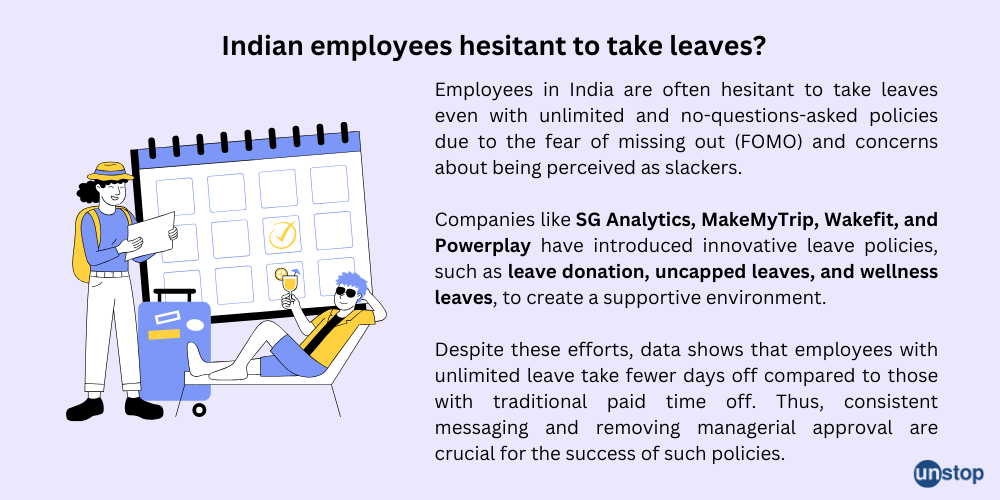
Some employees might not take advantage of the policy because they fear being perceived as less committed. Others might feel pressured to take less leave if their colleagues are not utilizing the policy. Ensuring a balanced approach and promoting a healthy leave culture is crucial.
Implementing an Open Leave Policy
The steps for implementing an open leave policy include:
Establish Clear Guidelines
Outline the policy's purpose, how it works, and the expectations for employees. Ensure that all employees understand that the policy is not about taking as much leave as possible but about fostering flexibility and well-being.
Communication and Training
Effective communication and training are key to the policy's success. Educate employees about the benefits and responsibilities associated with the Open Leave Policy. Provide training on time management and emphasize the importance of maintaining productivity and meeting work commitments.
Encourage a Healthy Leave Culture
Promote a healthy leave culture where taking time off is normalized and encouraged. Leaders should lead by example and take leave themselves, demonstrating that it's acceptable and valued. Regularly remind employees about the importance of taking time to recharge.
Monitor and Adjust
Continuously monitor the policy's impact on the organization. Gather feedback from employees and managers to identify any challenges or areas for improvement. Be prepared to adjust the policy as needed to ensure it remains effective and beneficial for all.
The Curious Case of Non-Utilisation of Open Leaves
At a London-based software company, CharlieHR, the introduction of an unlimited leaves policy faced significant challenges. Employees were reluctant to utilize the policy, fearing they would appear less committed or fall behind on their work. This led the CEO to revert to the traditional leave policy, recognizing that having too many choices made employees less likely to take any leave at all!
10 Companies With Open Leave Policy
- Netflix - Known for its no-vacation policy, Netflix allows employees to take as much time off as they need, focusing on results rather than hours worked.
- HubSpot - This marketing software company trusts its employees to manage their own time and take leave as needed.
- LinkedIn - LinkedIn's discretionary time off (DTO) policy allows employees to take leave as they see fit, with no set number of days.
- Virgin Group - Under Richard Branson's leadership, Virgin introduced an unlimited leave policy for its employees, emphasizing trust and flexibility.
- Evernote - The note-taking app company offers unlimited vacation to help employees maintain a healthy work-life balance.
- Grubhub - This food delivery company provides an Open Leave Policy, encouraging employees to take the time they need for personal matters.
- General Electric - GE has implemented an unlimited leave policy for some of its divisions, promoting flexibility and employee well-being.
- Kronos - The workforce management company offers unlimited vacation to its employees, emphasizing results over hours worked.
- Glassdoor - This company, known for its employee reviews platform, also offers an unlimited vacation policy.
- GitHub - The software development platform offers unlimited vacation, allowing employees to take the time they need to recharge and be productive.
Measuring Success and Impact
Here are some ways to help in measuring the impact of open leave policy:
Employee Satisfaction Surveys
One of the most effective ways to measure the success of an Open Leave Policy is through employee satisfaction surveys. Regularly survey employees to gather feedback on the policy and its impact on their well-being and productivity. High employee satisfaction scores can indicate the policy's success.
Productivity Metrics
Track productivity metrics to ensure that the Open Leave Policy does not negatively impact work output. Compare productivity levels before and after the policy's implementation. Look for trends in project completion rates, quality of work, and overall team performance.
Absenteeism and Turnover Rates
Monitor absenteeism and turnover rates to gauge the policy's effectiveness. A successful Open Leave Policy should ideally lead to lower absenteeism due to better work-life balance and reduced burnout. Additionally, lower turnover rates can indicate higher employee satisfaction and loyalty.
Qualitative Feedback
Gather qualitative feedback from employees and managers. Conduct interviews or focus groups to understand their experiences with the policy. This feedback can provide valuable insights into the policy's strengths and areas for improvement.
Conclusion
An Open Leave Policy represents a forward-thinking approach to employee well-being and productivity. By granting employees the freedom to take leave as needed, organizations can foster a culture of trust, responsibility, and engagement. While there are challenges to consider, careful planning, clear communication, and continuous monitoring can ensure the policy's success. As more organizations adopt Open Leave Policies, the workplace landscape will continue to evolve, prioritizing flexibility and employee satisfaction.
Frequently Asked Questions (FAQs)
Q1. What is an Open Leave Policy?
An Open Leave Policy is a flexible leave policy that allows employees to take as much leave as they need, provided their work commitments are met. It replaces traditional fixed leave quotas with a more trust-based approach.
Q2. How does an Open Leave Policy benefit employees?
An Open Leave Policy benefits employees by reducing stress and burnout, enhancing work-life balance, and providing greater autonomy over their time. It can lead to improved mental and physical health and higher job satisfaction.
Q3. What are the potential challenges of implementing an Open Leave Policy?
Challenges include the potential for abuse, unequal usage, impact on team dynamics, and legal and compliance issues. Clear guidelines, effective communication, and continuous monitoring are essential to address these challenges.
Q4. How can organizations ensure the success of an Open Leave Policy?
Organizations can ensure success by establishing clear guidelines, promoting a healthy leave culture, providing training, and continuously monitoring the policy's impact. Gathering feedback and being open to adjustments are also crucial.
Q5. Are there any examples of companies with successful Open Leave Policies?
Yes, companies like Netflix, HubSpot, and LinkedIn have successfully implemented Open Leave Policies. These companies have reported positive outcomes such as increased employee satisfaction, higher productivity, and reduced burnout.
Suggested Reads:
Login to continue reading
And access exclusive content, personalized recommendations, and career-boosting opportunities.
Don't have an account? Sign up

Never miss an
Update

Featured Opportunities


Top-Rated Practice by Students





Subscribe
to our newsletter


Blogs you need to hog!

Organize Hackathons: The Ultimate Playbook With Past Case Studies
Shivani Goyal

What is Campus Recruitment? How To Tap The Untapped Talent?
Shivangi Vatsal
Lateral Hiring: A Complete Guide To The Process, Its Benefits, Challenges & Best Practices
Srishti Magan
Step-By-Step Approach To Building A Winning Campus Recruitment Strategy
Srishti Magan

Comments
Add comment