


 Home
Home


HP Power Lab 3.0
Table of content:
- What is Paternity Leave and its Benefits?
- Understanding Paternity Leave Policies: Duration, Compensation, & Beyond
- How to Write a Paternity Leave Application (Step-by-Step Guide)
- Sample Paternity Leave Application/Letter (5 Templates)
- Paternity Leave Application for Government Employees
- Summarizing Paternity Leave
- Frequently Asked Questions about Paternity Leave Application

Paternity Leave Application: How-to, Format, Samples, And More
Here is your step-by-step guide on writing a paternity leave application and everything else you must know about this leave.
 0 min read
Paternity leave is gaining recognition for its positive impact on fathers and families. It refers to a period of time off from work granted to fathers following the birth or adoption of a child. The purpose of this type of leave extends beyond allowing new fathers to bond with their children as it also recognizes their role in caregiving and promotes gender equality within families. By providing an opportunity for fathers to participate actively in childcare responsibilities, paternity leave helps to strengthen family relationships. In this article, we will discuss how to write a paternity leave application and everything related, with examples and templates.
Supporting fathers in the workplace is essential for creating inclusive environments that value work-life balance. Recognizing that both mothers and fathers play significant roles in raising children, progressive organizations are increasingly adopting comprehensive paternity leave policies. These policies not only attract top talent but also boost employee morale, productivity, and retention rates. Let us explore this topic more in this article.
What is Paternity Leave and its Benefits?
Paternity leave is a legally sanctioned or company-granted period of paid or unpaid leave provided to a male employee upon the birth or adoption of a child. The goal is to allow fathers to take time off from work to support their partner, care for the newborn, and adjust to the responsibilities of parenthood. While the exact duration and compensation vary by country, company policy, and employment contract, paternity leave plays a crucial role in creating a balanced family dynamic and promoting the well-being of both parents and children.
Importance of Taking Paternity Leave
Here are some key benefits of taking paternity leave:
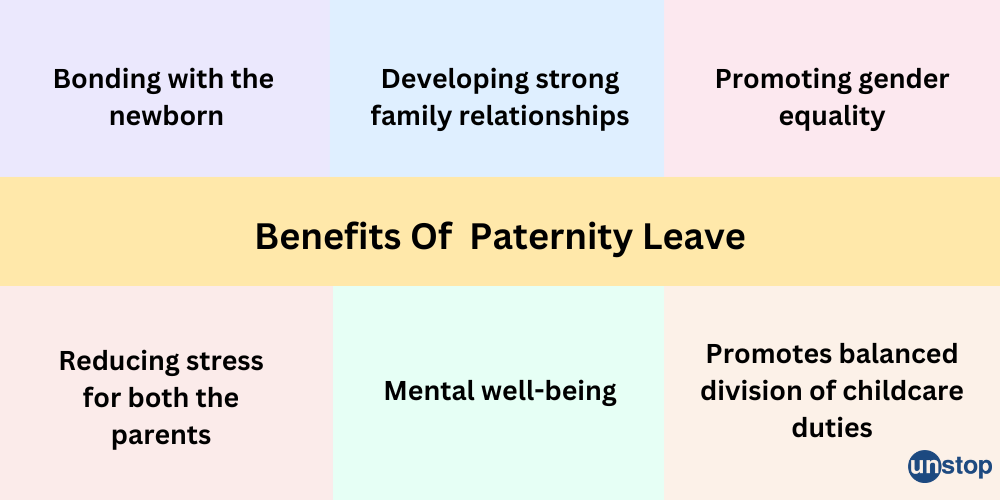
Bonding with the newborn and developing a strong relationship
Taking paternity leave provides fathers with the opportunity to bond with their newborns and develop a strong relationship right from the start. By spending quality time together, fathers can create a nurturing environment that fosters emotional connection and attachment. This early bonding experience lays the foundation for a lifelong relationship between father and child.
Promoting gender equality within the family dynamic
Paternity leave offers an important step towards promoting gender equality within the family dynamic. By taking time off work to care for their newborn, fathers actively participate in parenting responsibilities traditionally associated with mothers. This helps break down gender stereotypes and encourages a more balanced division of childcare duties between both parents.
Reducing stress levels for both parents during the early stages
The arrival of a newborn can be overwhelming, especially for first-time parents. Paternity leave provides fathers with an opportunity to support their partners during this transition period by sharing the responsibilities of caring for their child. By doing so, it helps alleviate stress levels for both parents, allowing them to navigate this new chapter together as a team.
Enhancing overall well-being and mental health
Taking paternity leave positively impacts the overall well-being and mental health of fathers. It allows them to prioritize family needs without compromising on job responsibilities, reducing feelings of guilt or anxiety about neglecting either aspect of their lives. This balance contributes to improved mental well-being, enabling fathers to be more present and engaged in both their personal and professional lives.
Also Read: Sabbatical Leave - Benefits, FAQs And Sample Leave Letter
Understanding Paternity Leave Policies: Duration, Compensation, & Beyond
Understanding paternity leave policies is crucial for expectant fathers who want to plan their time off effectively. These policies vary across organizations and can significantly impact how much time a father can spend with his newborn or adopted child.
- Some companies offer paid paternity leave as part of their employee benefits package, ensuring that new fathers can take time off without facing financial hardship.
- Paid leave allows fathers to be fully present during the initial days of parenthood without the added stress of income loss.
- On the other hand, some employers may not offer paid leave but allow unpaid paternity leave under specific conditions, either through internal policies or as part of broader labor laws.
- In such cases, employees may need to apply for leave using personal days, vacation time, or by coordinating with HR for formal approval.
Tip: It is best to review your company's paternity leave policy and consider government policies in the same regard. Being well-informed about these policies and pre-planning everything beforehand can go a long way.
Exploring additional benefits like flexible work arrangements or extended leaves
Beyond the standard leave duration and compensation, some progressive companies provide additional benefits to support new fathers during this life transition. These may include:
- Flexible work arrangements, such as modified hours or remote work options during the first few weeks after childbirth. These allow fathers to adjust to their new schedule as a parent.
- Extended paternity leave, where fathers can take extra time off beyond the mandated or default period, especially in workplaces that prioritize work-life balance.
- Gradual return-to-work plans help fathers ease back into their roles while continuing to support their families at home.
Understanding these options can help fathers make informed decisions and take full advantage of their organization’s paternity leave policies.
Also Read: How To Write A Maternity Leave Application?
How to Write a Paternity Leave Application (Step-by-Step Guide)
Writing a well-structured and professional paternity leave application ensures your request is clear, respectful, and aligned with company policies. Here’s a step-by-step guide to help you draft an effective paternity leave letter:
1. Address the Right Person
Start by addressing your letter or email to the appropriate authority—usually your immediate supervisor, team manager, or HR representative. If your organization follows a formal approval workflow, ensure you CC all relevant stakeholders.
Example:
To: [Manager’s Name], [Designation]
CC: HR Department
2. State the Purpose Clearly
Begin your application by clearly stating that you are writing to formally request paternity leave. Use straightforward, professional language.
Example:
I am writing to request paternity leave following the birth/adoption of my child.
3. Mention the Leave Duration
Include the specific dates for your planned leave—when it will start and when you expect to return to work. If your exact dates are uncertain, provide an estimated timeframe and note that you’ll confirm them closer to the expected due date.
Example:
I would like to avail paternity leave from [Start Date] to [End Date], totaling [X] working days.
4. Reference Company Policy (if applicable)
If your organization has a documented paternity leave policy, mention that your request is in accordance with it. This shows that you've done your due diligence and strengthens the legitimacy of your application.
Example:
As per our company’s paternity leave policy, I am eligible for [X] days of paid leave.
5. Add a Brief Explanation (Optional but Courteous)
You may choose to briefly express the personal significance of this time off and your intention to support your family during this important period.
Example:
I would like to be present during the early days of my child’s life to support my spouse and bond with my newborn.
6. Mention Work Handover Arrangements
Outline how you plan to manage your responsibilities in your absence. This could include delegating tasks to a team member or preparing a transition document.
Example:
I have briefed [Colleague's Name] on ongoing projects and will ensure a smooth handover before my leave begins.
7. Express Gratitude and Willingness to Coordinate
Conclude by thanking your manager for considering the request. You can also offer to assist with any planning or provide updates prior to your leave.
Example:
Thank you for your support and understanding. I am happy to discuss this further or make necessary arrangements to ensure business continuity.
Sample Paternity Leave Application/Letter (5 Templates)
Following are two sample paternity leave letters for your reference.
Template 1: For Leave Before The Delivery
[Your Name]
[Contact Information]
[Date][Manager/Recipient's Name]
[Manager/Recipient's Position]
[Company Name]
[Company Address]Subject: Application for paternity leave
Dear [Manager/Recipient's Name],
I am writing to formally request paternity leave from [ insert start date] to [end date]. My wife is expecting our first child on [expected date], and I would like to be present to support her during this critical period.
I understand that according to the company's policy, I am entitled to [number of days/weeks] of paternity leave. I would like to take the full duration of this leave to ensure that I can fully participate in the care and bonding with my newborn child.
I have made arrangements to delegate my responsibilities to [colleague's name] during my absence. I will provide them with all the necessary information and ensure a smooth transition of tasks. I will also be available for any questions or assistance remotely if needed.
I believe that taking paternity leave is not only beneficial for the well-being of my family but also for my overall productivity and commitment to the company. It will allow me to establish a strong bond with my child and contribute to their early development.
I have attached the necessary documentation, including the birth certificate or medical records, to support my request for paternity leave. Please let me know if any additional documentation is required.
I kindly request your approval for my paternity leave request. I assure you that I will make every effort to minimize any disruption to the team and complete any pending tasks before my leave begins.
Thank you for considering my request. I look forward to your positive response.
Yours sincerely,
[Your Name]
[Designation]
Template 2: For Leave After The Delivery
[Your Name]
[Contact Information]
[Date][Manager/Recipient's Name]
[Manager/Recipient's Position]
[Company Name]
[Company Address]Subject: Application for paternity leave
Dear [Recipient's Name],
I am writing to request paternal leave following the delivery of my child. As you may be aware, my wife gave birth to a baby girl last week, and I would like to take some time off to support my family during this important period.
I would like to request [number of weeks] of paternal leave, starting from [start date] and ending on [end date]. During this time, I will be fully dedicated to taking care of my partner and bonding with our newborn. I believe that this leave is crucial for both the well-being of my family and my own personal development as a father.
I have made arrangements to ensure that my responsibilities at work will be handled efficiently during my absence. I have discussed this with my team members, and they are fully supportive of my decision to take paternal leave. I will also provide detailed documentation of my ongoing projects and any necessary instructions to ensure a smooth transition during my absence.
I am confident in the abilities of my colleagues and believe that they will handle any challenges that arise in my absence. However, I will be available for any necessary or urgent communication during my leave.
Thank you for considering my request for paternal leave. I believe that this time away from work will not only benefit my family but also contribute to my overall well-being and ability to perform at my best when I return. I look forward to your positive response and appreciate your understanding in this matter.
Yours sincerely,
[Your Name]
Template 3: Sample Paternity Leave Application for Adoption
[Your Name]
[Contact Information]
[Date][Manager’s Name]
[Manager’s Position]
[Company Name]
[Company Address]Subject: Application for Paternity Leave (Adoption)
Dear [Manager’s Name],
I am writing to formally request paternity leave from [start date] to [end date] as my spouse and I are in the process of adopting a child. The adoption is expected to be finalized on [mention date], and I would like to be present during this critical time to support the child’s transition and bond with them.
As per the company policy on adoption-related leave, I understand I am eligible for [mention number of days/weeks] of paternity leave. I would like to avail the full duration for the well-being of the child and to ensure a smooth adjustment into our home.
I have coordinated with [colleague’s name] to ensure all responsibilities are handled efficiently in my absence. I will provide detailed updates and will remain reachable for any urgent queries.
Please let me know if any further documentation related to the adoption process is required. I kindly request your approval for this leave.
Thank you for your support and understanding.
Sincerely,
[Your Name]
[Designation]
Template 4: Short and Formal Paternity Leave Application
Subject: Request for Paternity Leave
Dear [Manager’s Name],
I would like to request paternity leave from [start date] to [end date] due to the birth of my child. I have made arrangements to ensure continuity of work during my absence and will be available for any urgent matters if needed.
Kindly grant approval for the same.
Best regards,
[Your Name]
[Designation]
Template 5: Paternity Leave Application via Email
Subject: Paternity Leave Request – [Your Name]
Dear [Manager’s Name],
I hope you are well. I am writing to request paternity leave starting from [start date] to [end date], as my spouse and I are expecting the arrival of our child. I would like to be present during this period to support my family.
I’ve ensured a handover of my responsibilities to [colleague’s name], and I’ll be available via email or phone if anything urgent arises.
Please let me know if any formal documentation is required. I appreciate your support and look forward to your approval.
Warm regards,
[Your Name]
[Designation]
[Contact Details]
Paternity Leave Application for Government Employees
Male employees working in the public sector seeking paternity leave should be aware of specific rules applicable to their situation. Compliance with relevant laws or regulations governing public sector employees is crucial, and navigating potential bureaucratic processes effectively can help expedite the approval of paternity leave.
Points to Remember for Applying for Paternity Leave as a Government Employee:
- Familiarize yourself with the policies: Review the paternity leave policies outlined by your employer, which may vary depending on whether you work at the central government or state level.
- Understand eligibility criteria: Determine if you meet the eligibility criteria set by your human resources department. This may include factors such as length of service, marital status, and documentation requirements.
- Complete required forms accurately: Go through the format of paternity leave applications and draft a formal leave request. Obtain the necessary forms from your HR department or office and fill them out accurately. Provide all requested information, including dates of intended leave and expected return to work.
- Attach supporting documents: Apart from official forms and a formal letter for leave, you may be required to include all supporting documents, such as proof of childbirth, medical certificates, marriage certificates, etc.
- Submit application within the specified timeframe: Ensure that you submit your paternity leave application within the designated timeframe specified by your employer's policies. Late applications may result in delays or denial of leave.
- Follow up on application status: Inquire about the progress of your application through appropriate channels within your organization's HR department. Stay proactive and seek clarification if needed.
- Plan workload management: If approved, plan ahead to manage your workload during your absence and communicate effectively with colleagues and superiors regarding handover responsibilities.
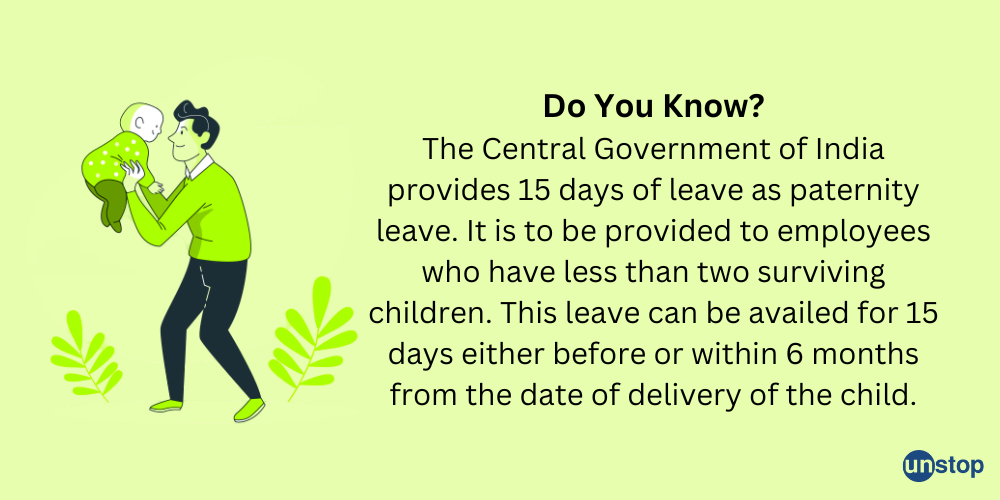
By following these guidelines tailored specifically for government employees seeking paternity leave, you can navigate the process smoothly and ensure compliance with relevant regulations. Remember to consult your HR department for any additional information or clarification required.
Summarizing Paternity Leave
Encouraging fathers to take advantage of their paternity leave rights is crucial for fostering a supportive and nurturing environment within families. By summarizing the key points discussed throughout this article, we hope to reinforce the positive impact of involved fatherhood on both families and society as a whole.
Firstly, it is important for expectant fathers to be aware of their rights and entitlements. Prompt approval of their application allows them to fully engage in the early stages of parenthood, creating a strong bond with their child from the start.
Having a tentative return date in mind ensures that fathers can plan accordingly and communicate effectively with their employers. This open dialogue between father and employer promotes understanding and facilitates a smooth transition back into the job after the leave period.
While some work-related issues may arise during an employee's absence, it is essential for organizations to respond positively and supportively. Encouraging flexibility in work arrangements helps alleviate any potential concerns or challenges faced by fathers upon their return.
Moreover, involving fathers in childcare responsibilities not only benefits the family but also contributes to gender equality in parenting roles. By actively participating in raising their children, fathers play a vital role in promoting work-life balance and parental support within society.
Frequently Asked Questions about Paternity Leave Application
Q1. Can I apply for paternity leave before my child is born?
Yes, many organizations allow employees to apply for paternity leave before their child's birth. It's advisable to check with your employer regarding their specific policies and requirements.
Q2. How long can I take off for paternity leave?
The duration of paternity leave varies depending on local laws and company policies. In some cases, it may range from a few days up to several weeks.
Q3. Is there any compensation during my paternity leave?
Compensation during paternity leave also varies depending on factors such as location and company policy. Some employers provide full pay during this period, while others offer partial pay or no pay at all.
Q4. Do I need to provide any documentation when applying for paternity leave?
Yes, most organizations require some form of documentation to support your paternity leave application. This may include a birth certificate or adoption papers, as well as any additional documents specified by your employer.
Q5. Can I take paternity leave if my partner and I adopt a child?
Absolutely! Paternity leave is not limited to biological fathers only. Many companies extend this benefit to fathers who adopt children as well. Check with your employer for specific details and requirements regarding adoption-related paternity leave.
Suggested Reads:
Login to continue reading
And access exclusive content, personalized recommendations, and career-boosting opportunities.
Don't have an account? Sign up

Never miss an
Update




Top-Rated Practice by Students






Subscribe
to our newsletter






Comments
Add comment