


 Home
Home


India's Biggest Creators' League
Table of content:
- Definition & Detailed Explanation Of Dead Stock
- Causes & Impact of Dead Stock
- Strategies For Managing Dead Stock
- Inventory Management Strategies
- Dealing With Overstock & Poor Sales
- Financial & Accounting Aspects For Dead Stock
- Frequently Asked Questions (FAQs)

Dead Stock: Definition, Causes & Strategies Explained
What is dead stock, and how can you take steps to manage it effectively? Read on to gain a detailed understanding of dead stock!
 0 min read
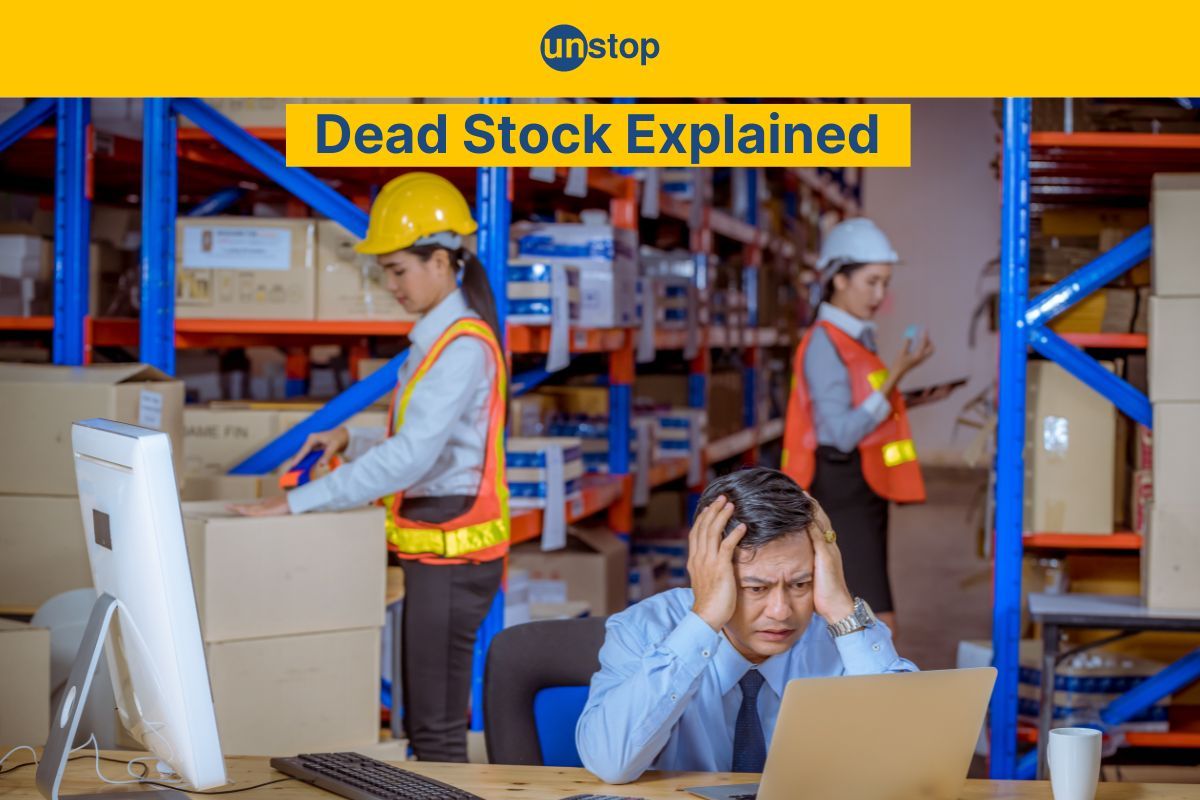
Dead stock can pose significant challenges for businesses, regardless of their size. Understanding the causes and impact of dead stock is essential for effective inventory management.
By addressing the root causes of dead stock and implementing strategic measures to manage inventory effectively, companies can reduce financial losses associated with excess or obsolete products.
This article explores strategies to minimize dead stock and optimize inventory, offering practical solutions for companies facing this issue.
Definition & Detailed Explanation Of Dead Stock
Dead stock basically means the goods and items that have not been sold and is unlikely to be sold in the future. It represents products or items that have become obsolete, outdated or are no longer in demand by customers.

This can include items that have been sitting on store shelves for an extended period without generating any sales activity.
Dead Stock: Its Impact On Resources & Profitability
Dead stock can have a significant impact on a business's resources and profitability. When products remain unsold, they tie up valuable resources such as warehouse space, capital, and labor.
This prevents businesses from utilizing these resources for more profitable purposes, tying up working capital that could otherwise be invested in other areas of the business.
The accumulation of dead stock can lead to financial losses for businesses. Not only does it result in a loss of revenue from unsold inventory, but it also incurs additional costs, such as storage fees and potential markdowns to clear out the stagnant stock.
Importance Of Identifying Dead Stock
Identifying dead stock is essential for implementing effective inventory management strategies. By regularly monitoring inventory levels and sales data, businesses can identify which products are not selling well or are no longer in demand.
This allows them to take proactive measures to minimize dead stock and optimize their inventory levels. By identifying dead stock early on, businesses can explore various options to mitigate its impact.
They may choose to offer discounts or promotions to incentivize customers to purchase these products before they become completely obsolete.
Alternatively, they may consider liquidation channels or partnerships with clearance retailers to offload excess inventory.
Properly managing dead stock also helps businesses improve their forecasting accuracy and reduce future instances of overstocking or understocking certain products.
How To Sell Dead Stock
Selling dead stock can be challenging, but it is not impossible. To sell dead stock, businesses can employ various strategies. It can be by offering discounts, bundling products, or running promotional campaigns.

Additionally, businesses can consider selling dead stock through online marketplaces, consignment stores, or liquidation sales. By effectively selling dead stock, businesses can free up valuable storage space, generate revenue from otherwise stagnant inventory, and improve overall profitability.
What Is Dead Stock In Accounts
Identifying dead stock is of utmost importance in accounts as it directly impacts a company's profitability and overall financial health. By identifying dead stock, businesses can take necessary actions such as implementing clearance sales, returning items to suppliers, or writing off the inventory to minimize losses.
It also helps in optimizing inventory management by reallocating resources towards more profitable items and avoiding overstocking. Additionally, identifying dead stock enables businesses to make informed decisions regarding purchasing, production, and target marketing strategies, ensuring efficient use of resources and preventing unnecessary expenses.
Overall, recognizing and addressing dead stock is crucial for maintaining a healthy balance sheet and maximizing profitability in the long run.
Causes & Impact Of Dead Stock
Let us study some of the notable causes and impact of dead stock:
Overestimating Demand & Inaccurate Forecasting
Overestimating demand and inaccurate forecasting are common causes of dead stock. When businesses miscalculate the demand for a product or inaccurately forecast future sales, they may end up with unnecessary excess inventory that becomes dead stock.
This happens when businesses misinterpret market trends that rely on outdated data or fail to consider external factors like seasonality or changing consumer preferences.
Impact
Let us also study the impact of dead stock:
Tying Up Capital & Occupying Storage Space
Dead stock not only impacts the company's bottom line but also ties up valuable capital. When products remain unsold for an extended period, the money invested in purchasing them is essentially locked away instead of being available for other crucial business operations.
Increased Holding Costs & Potential Obsolescence
As dead stock continues to sit idle in warehouses or storage facilities, it incurs additional holding costs related to storage, insurance, maintenance, and security. The longer the dead stock remains unsold, the higher these holding costs become, further impacting a company's profitability.
Moreover, another significant impact of dead stock is the risk of obsolescence. Products that are not sold within a reasonable timeframe run the risk of becoming outdated or irrelevant due to technological advancements or changes in consumer preferences.
This can result in a loss of value and potential revenue for businesses.
Write-Offs & Loss Of Potential Revenue
When companies realize that certain products have become dead stock with little hope of being sold at their original price or at all, they may need to write off these items from their books as losses.
This process involves recognizing the decreased value or complete loss associated with the unsold inventory. Write-offs directly affect a company's financial statements and can impact its overall profitability.
Strategies For Managing Dead Stock
Let us study some of the strategies for managing dead stock effectively:
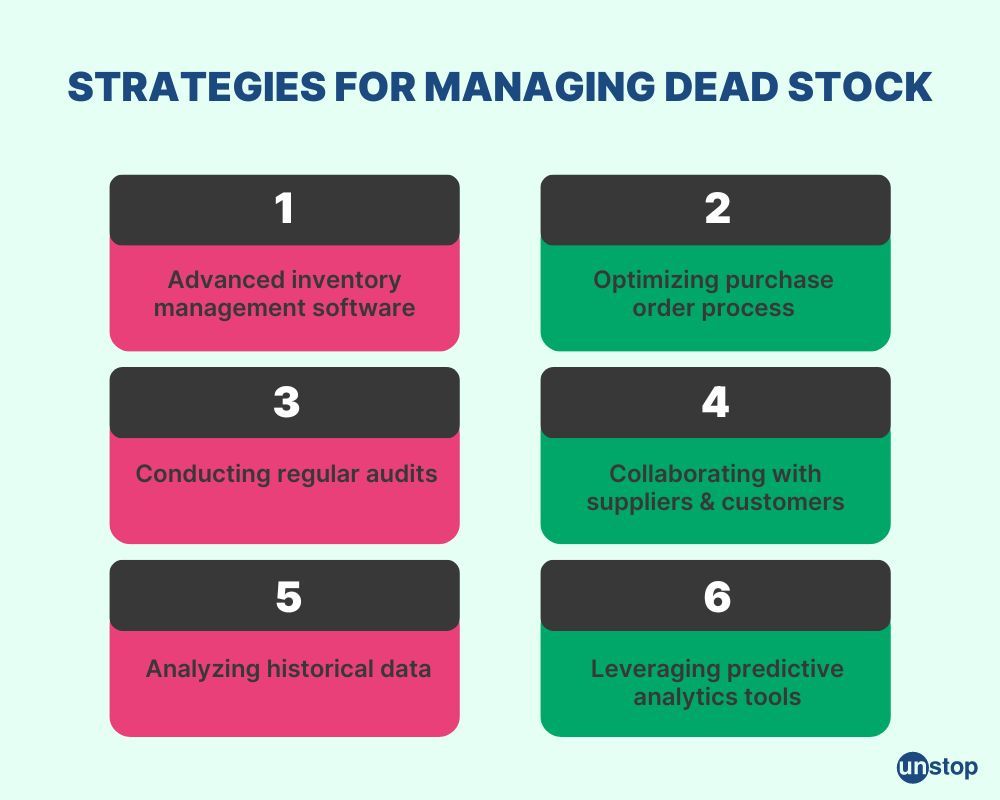
Advanced Inventory Management Software
One effective strategy for managing dead stock is implementing advanced inventory management software. These advanced software provide real-time visibility into inventory levels, allowing businesses to track and monitor their inventory accurately.
With features like automatic reorder points and notifications for low-stock items, businesses can proactively manage their inventory levels and avoid an unnecessary accumulation of dead stock.
Optimizing Purchase Order Process
Another strategy is optimizing the purchase order process by closely monitoring lead times from suppliers. By accurately forecasting demand and maintaining strong communication with suppliers, businesses can reduce lead times and avoid delays in receiving goods.
This ensures that products are received when needed, minimizing the chances of excess or obsolete inventory accumulating as dead stock.
Conducting Regular Audits
Conducting regular audits of existing inventory data helps identify slow-moving or obsolete items that may be at risk of becoming dead stock. By regularly reviewing product performance and identifying items with low turnover rates, businesses can take proactive measures.
It can effectively employ promotions or discounts to sell these items before they become dead stock.
Collaborating With Suppliers & Customers
Collaborating with suppliers and customers is another effective strategy for gathering market intelligence. By maintaining open lines of communication with suppliers, businesses can gain insights into factors that may affect supply chain management dynamics and ultimately impact customer demand.
Engaging with customers through surveys or focus groups provides opportunities for businesses to gather firsthand information about their preferences, buying habits, and anticipated needs.
Analyzing Historical Data
Analyzing data such as historical sales data and market trends is vital in improving demand forecasting accuracy. By studying past sales patterns, businesses can identify seasonal fluctuations, trends, and customer preferences that can impact future demand.
Leveraging Predictive Analytics Tools
Leveraging predictive analytics tools can provide valuable insights into future demand patterns. These tools use advanced algorithms to analyze historical sales data, market trends, economic indicators, and even weather patterns.
By incorporating these variables into the forecasting models, businesses can generate more accurate predictions of customer demand.
Inventory Management Strategies
Let us study some of the important inventory management strategies:
Just-In-Time (JIT) Inventory System
Implementing a just-in-time (JIT) inventory system can help minimize dead stock. With JIT, businesses only order and receive inventory as it is needed for production or customer demand. By avoiding excessive stockpiling, the risk of dead stock accumulation is reduced.
Adopting ABC Analysis
Adopting an ABC analysis categorizes inventory based on value and helps prioritize management efforts. This analysis divides inventory into three categories: A, B, and C. Category A includes high-value items that contribute significantly to revenue but may have low sales volume.
Category B consists of moderate-value items with moderate sales volume, while Category C contains low-value items with high sales volume. This categorization allows businesses to focus their attention on managing high-value items effectively while reducing the risk of dead stock in lower-value categories.
Reviewing & Adjusting Safety Stock
Regularly reviewing and adjusting safety stock levels can prevent excess inventory accumulation. Safety stock refers to the buffer inventory maintained to account for unexpected fluctuations in demand or supply chain disruptions.
By regularly evaluating historical data, market trends, and lead times, businesses can optimize safety stock levels to ensure they have enough inventory without overstocking and risking dead stock.
Automation & Real-Time Visibility
Tracking and managing inventory is made possible by using inventory management software that streamlines business processes. It does away with the need for manual data entry, reducing errors and saving time.
With this software, businesses can easily track stock levels across multiple locations, warehouses, or even online marketplaces.
Real-time visibility is another key advantage provided by inventory management software. It allows businesses to have an up-to-date view of their inventory at any given moment.
This real-time information enables better decision-making regarding purchasing, sales forecasting, and order fulfillment.
RFID Technology For Efficient Tracking
Radio Frequency Identification (RFID) tags attached to products or pallets contain unique identification information that can be scanned using RFID readers.
This technology enables accurate tracking without the need for manual scanning of barcodes.
By implementing RFID technology, businesses can improve accuracy in tracking stock movements throughout their supply chain. They can quickly locate items within a warehouse or track shipments in transit with ease.
This efficient tracking capability reduces errors, minimizes lead times, and optimizes overall operational efficiency.
Dealing With Overstock & Poor Sales
Let us study some of the ways on how to deal with overstock and poor sales:
Offering Discounts Or Promotions
When faced with excess inventory or poor sales, offering discounts or promotions is one effective way to deal with overstock. By reducing the prices of overstocked items, retailers can incentivize customers to make a purchase.
This approach not only helps clear out unsold inventory but also attracts new customers who may be enticed by the discounted prices.
Collaborating With Other Businesses
Another way to address overstock and poor sales is through collaboration with other businesses. By partnering for joint promotions or cross-selling opportunities, retailers can tap into each other's customer base and expand their reach.
For example, a clothing store could collaborate with a shoe retailer to offer bundled deals or package offers. It creates a partnership of win-win situations where both businesses benefit from increased sales and exposure.
Donating Dead Stock
Donating dead stock to charitable organizations can generate a positive brand identity. Instead of throwing away unused inventory, companies can choose to donate it to those in need.
This not only helps the less fortunate but also portrays the business as socially responsible and compassionate.
Exploring Recycling Options
Exploring recycling options for certain types of dead stock can reduce waste. Some materials used in deadstock items, such as fabric or packaging materials, may be recyclable.
By partnering with recycling facilities or implementing recycling programs, businesses can make sure that these overstock materials are reused instead of dumping them in landfills.
Financial & Accounting Aspects For Dead Stock
Accurately valuing and accounting for dead stock is vital in business. Properly managing dead stock can have a significant impact on profitability, tax liabilities, and overall financial reporting.
Valuation & Financial Statements
Dead stock needs to be accurately valued in order to reflect its true worth in the financial statements. This valuation is essential for determining the carrying costs associated with dead stock, which include storage expenses, insurance premiums, and any other costs incurred to maintain the inventory.
It is important for businesses to regularly assess their dead stock and adjust its value accordingly. This ensures that the balance sheet reflects an accurate representation of the amount tied up in non-performing inventory.
Impact On Profitability
Write-offs of dead stock can have a direct impact on a company's profitability. When dead stock is written off as a loss, it reduces the overall revenue generated by the business. This reduction in revenue affects profit margins and can ultimately result in lower profitability.
Furthermore, the cost associated with carrying dead stock can also eat into profits. Carrying costs include expenses such as storage fees, maintenance costs, and potential quality issues that may arise from storing inventory for extended periods.
Tax Liabilities
Dead stock write-offs can also affect tax liabilities for businesses. When writing off dead stock as a loss, companies may be eligible for tax deductions or credits depending on local tax regulations. These deductions help offset some of the financial losses incurred due to non-performing inventory.
Accurate documentation of write-offs is necessary to support any tax deductions claimed. Seeking professional guidance from accountants or tax experts can ensure that businesses navigate these complexities correctly.
Inventory Costing Methods
Implementing proper inventory costing methods is essential for accurate financial reporting. Two common methods used to calculate the cost of goods sold and the value of unsold goods in the inventory are FIFO (First-In, First-Out) and LIFO (Last-In, First-Out).
FIFO assumes that the oldest stock is sold first, while LIFO assumes that the most recent stock is sold first. The choice of inventory costing method can impact a company's financial statements, including the valuation of dead stock.
Conclusion
In conclusion, effective inventory management is essential in preventing dead stock and its negative impact on businesses. Knowledge about the causes of dead stock and implementing effective strategies can help minimize dead stock.
To ensure success in inventory management, businesses should also regularly evaluate their processes, monitor market trends, and adapt their strategies accordingly.
Frequently Asked Questions (FAQs)
1. What is dead stock?
Dead stock basically means the goods and items left unsold in the inventory over an extended period. It can include products that are outdated, damaged, or no longer in demand.
2. What are the causes and impacts of dead stock?
Dead stock can be caused by factors such as inaccurate demand forecasting, poor inventory management, changing consumer preferences, or ineffective marketing strategies. The impact of dead stock includes tying up valuable resources, occupying storage space, reducing cash flow, and potentially leading to financial losses for businesses.
3. How can effective demand forecasting prevent dead stock?
Effective demand forecasting involves analyzing historical sales data, market trends, consumer behavior, and other relevant factors to predict future demand accurately. By staying updated about customer preferences and anticipating market changes, businesses can adjust their inventory levels accordingly and avoid accumulating excess inventory that may turn into dead stock.
4. What are some disposal options for dead stock?
To dispose of dead stock efficiently, businesses can explore various options such as offering discounts or promotions to encourage sales, partnering with liquidation companies or wholesalers who specialize in buying excess inventory at reduced prices, donating the items to charitable organizations or nonprofits, or recycling them responsibly if applicable.
5. How can technological solutions help optimize inventory management?
Technological solutions like advanced inventory management systems and software provide real-time assessment and visibility of inventory levels. It also automates replenishment processes based on demand patterns and lead times.
They also enable accurate tracking of sales data and help businesses make informed decisions regarding purchasing quantities and timing to avoid excessive accumulation of dead stock.
Suggested reads:
Login to continue reading
And access exclusive content, personalized recommendations, and career-boosting opportunities.
Don't have an account? Sign up

Never miss an
Update

Featured Opportunities

Top-Rated Practice by Students






Subscribe
to our newsletter






Comments
Add comment